

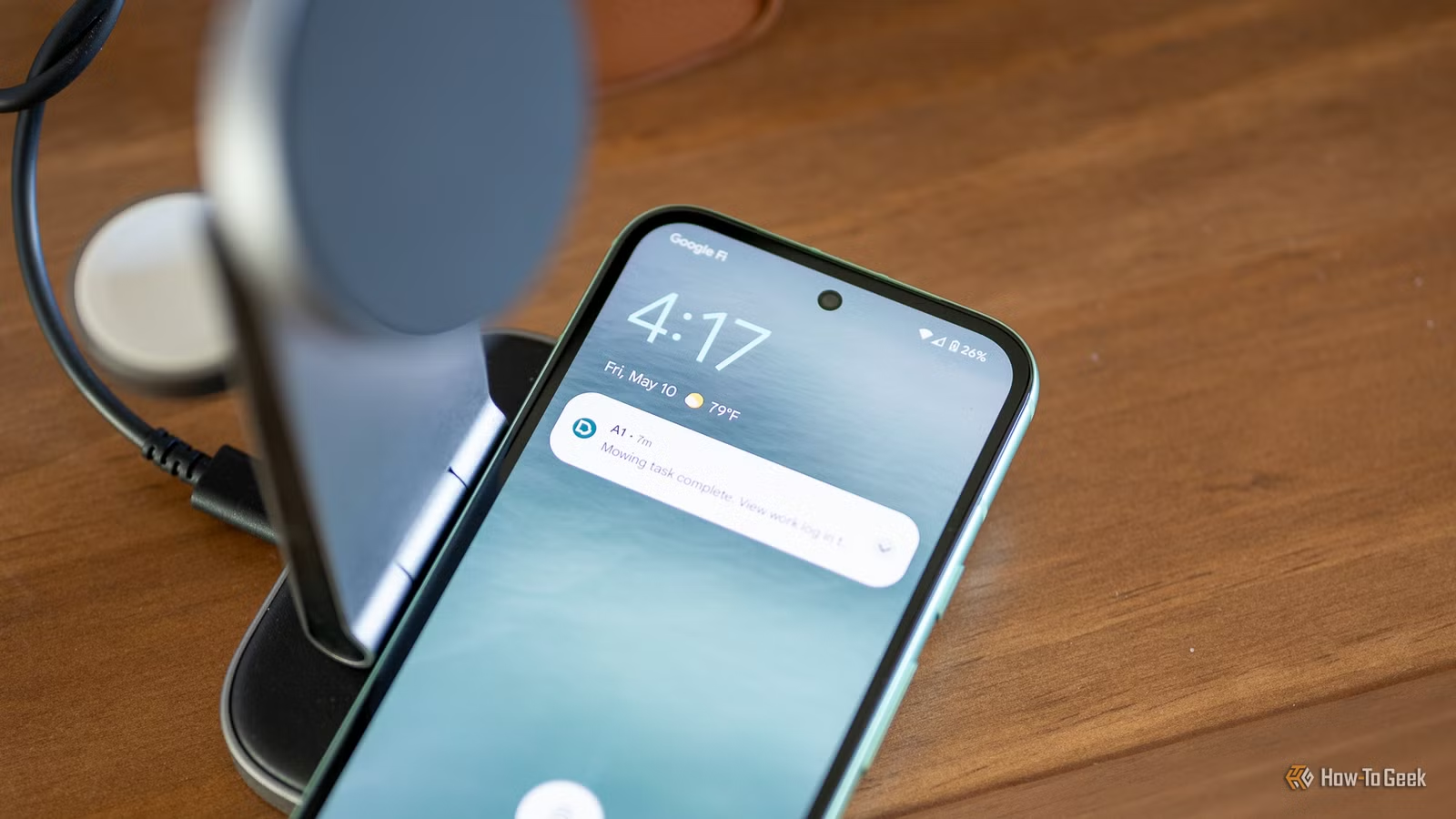
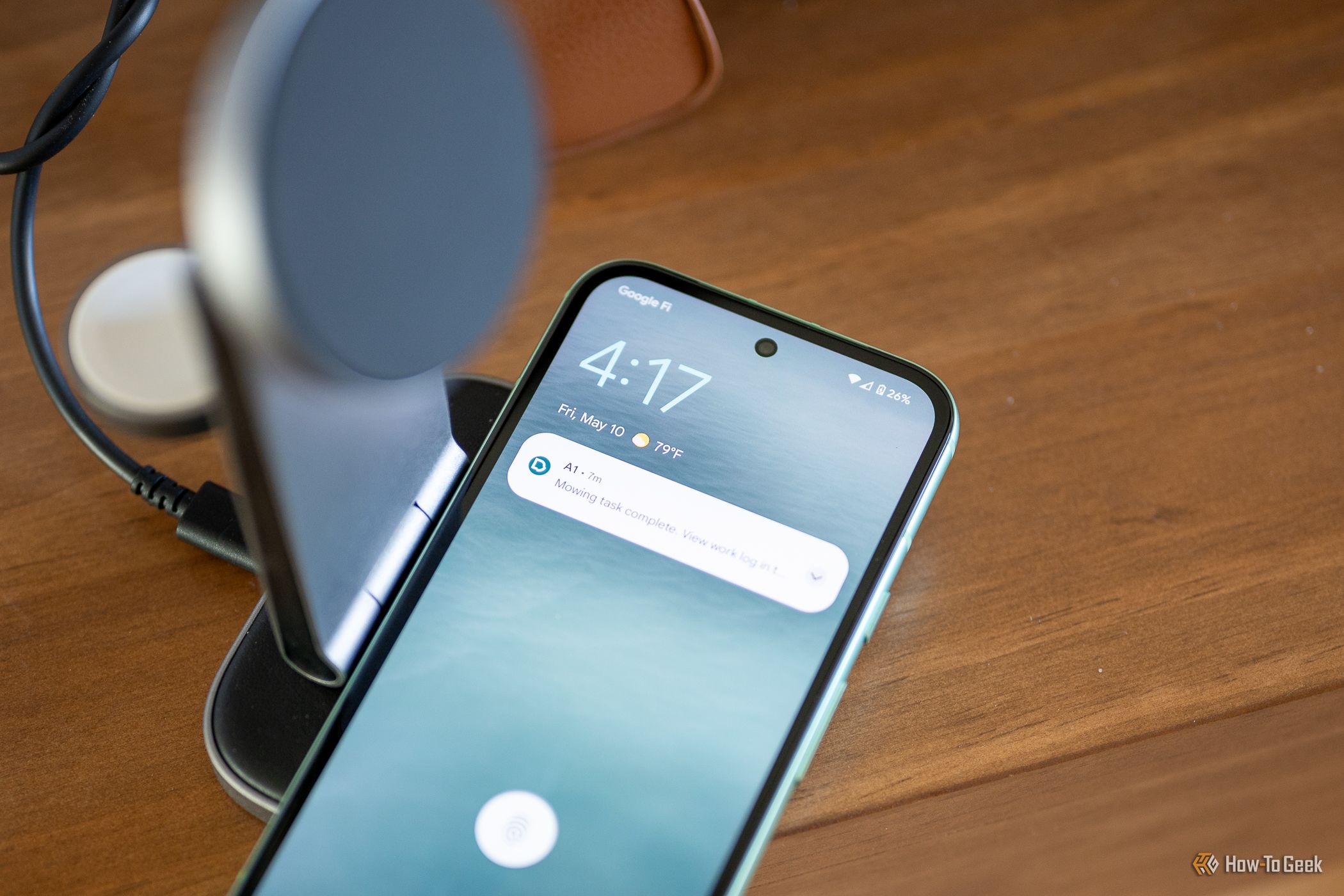
Wireless chargers are very convenient, whether you’re determined to minimize cord clutter or just tired of plugging in your phone every day. However, there’s a hidden cost: your charger is wasting electricity, and that’s costing you both money and time.
There are times when that convenience might outweigh every other factor. However, it’s sometimes better to find that USB cord. Here’s why wireless charging is so wasteful, and when it makes more sense to go the wired route.
Why does wireless charging waste electricity?
Basic physics makes it less efficient
Wireless power for phones, earbuds, and smartwatches revolves around inductive charging. The technology creates an alternating current (AC) inside the charger’s coil, producing a magnetic field that sends energy to a coil on your device. That AC electricity is converted to direct current (DC) and powers your hardware.
That process wastes electricity at multiple stages. You’re converting from AC to DC and back at the charger, from AC to magnetic fluxes and back, and from AC to DC again on your device. And when the wireless charger is producing AC at very high frequencies (around 140KHz), the Skin Effect reduces the effective conducting area by moving electrons away from the coil’s copper wire. That leads to energy being wasted as heat — part of why your phone can feel warm after a charging session.
This also assumes that you’ve placed your device perfectly on the charger and that there’s nothing else in between. If you haven’t, you won’t get optimal speed. Charging formats like MagSafe and Qi2 solve this by magnetically aligning your device and charger. However, even a thin case can reduce efficiency by creating more obstacles for electrons.
A wireless charger even draws power when you’re not using it. As it always has to be ready for charging, it’s constantly consuming a small amount of energy, no matter what’s going on. That draw tends to be small (iFixit saw an average of 0.2W), but many wired chargers shut off completely when not in use.
Wireless charging wastes money
You can save energy and the planet
Credit: Tim Rattray / How-To Geek
All that wasted electricity leads to significantly more power consumption than you’d need for an equivalent wired charge. The exact waste depends on the device, positioning, and the format, but even an ideal scenario with Qi2 (and its MagSafe equivalent) loses between 12 to 20 percent of energy even before you factor in the charger’s always-on state. That volume grows to 25 to 40 percent for conventional Qi charging.
A typical USB-C wired charge loses just 5 to 10 percent of the involved energy.
Related
Why I’ve Given Up on a Wire-Free Charging Future
Plug it in.
The money you waste might not be dramatic, but it can add up. A 15W MagSafe or Qi2 charger uses electricity equivalent to running a 10W LED lightbulb for 24 days straight, iFixit notes. And if you live with other people or have multiple devices, that demand will climb higher.
As such, it’s best to stick to wired charging if you’re looking to shrink your energy bills. It’s also kinder to the planet, as you’ll reduce the strain on the electrical grid.
Wireless charging wastes time
Plug in whenever you’re in a hurry
Credit: Justin Duino / How-To Geek
The electricity waste also limits the potential charging speeds. Qi2 and the latest MagSafe chargers peak at 25W. You will see as high as 100W, but that often requires brand-specific chargers with aggressive (read: noisy) cooling. As a rule, wireless charging is slower than its wired counterpart.
It’s easier to find fast wired charging. A Google Pixel 10 Pro supports up to 30W wired charging with a compatible adapter, while Samsung’s Galaxy S26 Ultra supports 60W. If you’re willing to use highly proprietary chargers, 80W to 100W is commonplace in devices like the OnePlus 15.
That disparity affects charging times. A Galaxy S26 Ultra takes 15 minutes to reach 50 percent power at 60W, while a Qi2 pad will take about 33 minutes. If you forgot to charge the night before, that can make the difference between lasting the workday and having to plug in at lunchtime. Bring out a cable if you rarely have an hour-plus to recharge.
Wireless charging is still okay, sometimes
This isn’t to say you should swear off wireless charging forever. A wireless charger in your car can save valuable time when you’re already late for work, not to mention free up a USB port for a passenger. Multi-device wireless chargers can help when you have limited cable space. And if you’ve ever snagged a cord and sent your phone flying, you’ll know why wireless charging can be safer.
It’s just important to remember that wireless charging comes at a cost, and that it might be worth taking a few seconds more to plug in. You might save yourself some headaches, even if going wired seems like a hassle at first.
