

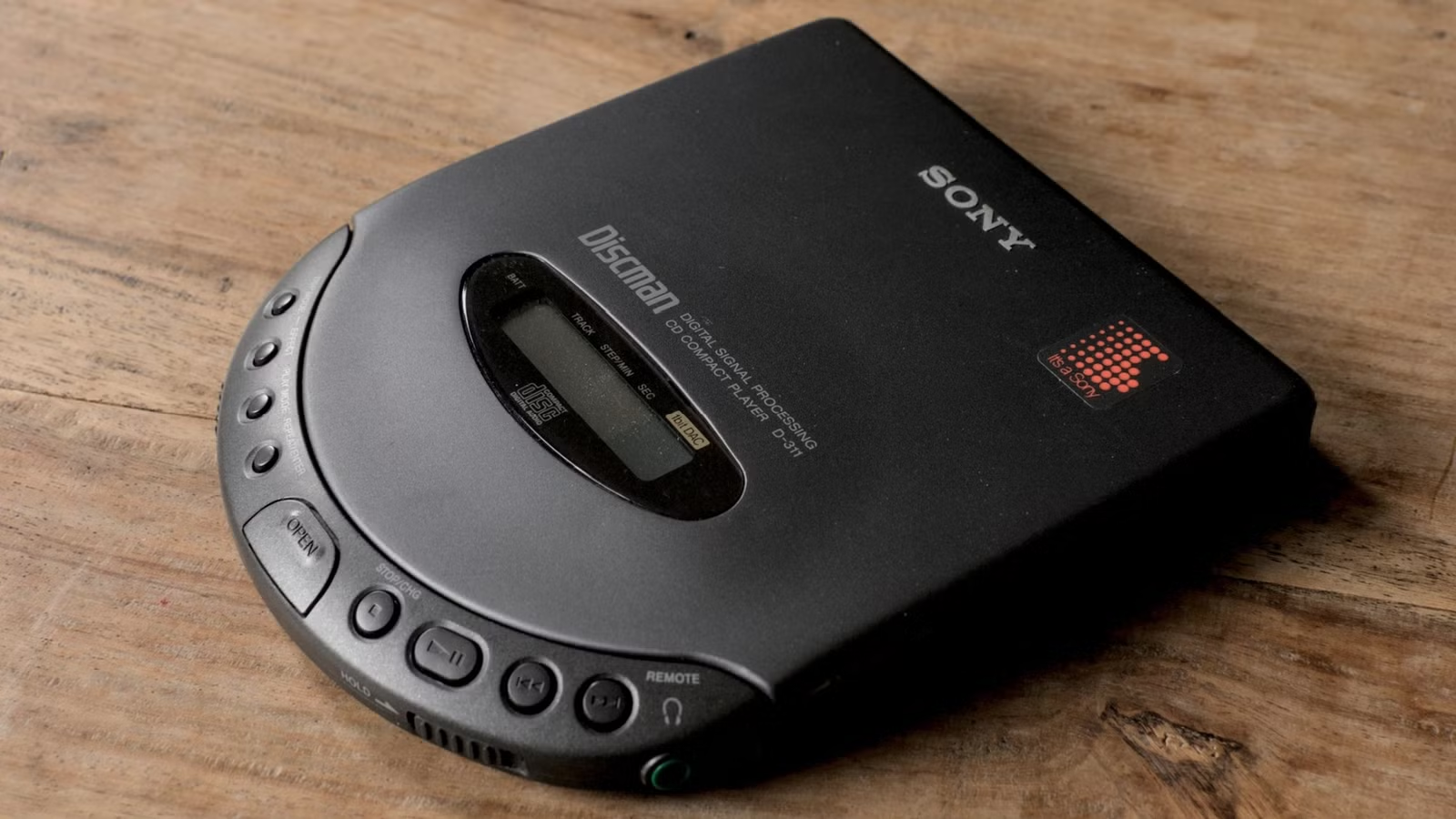
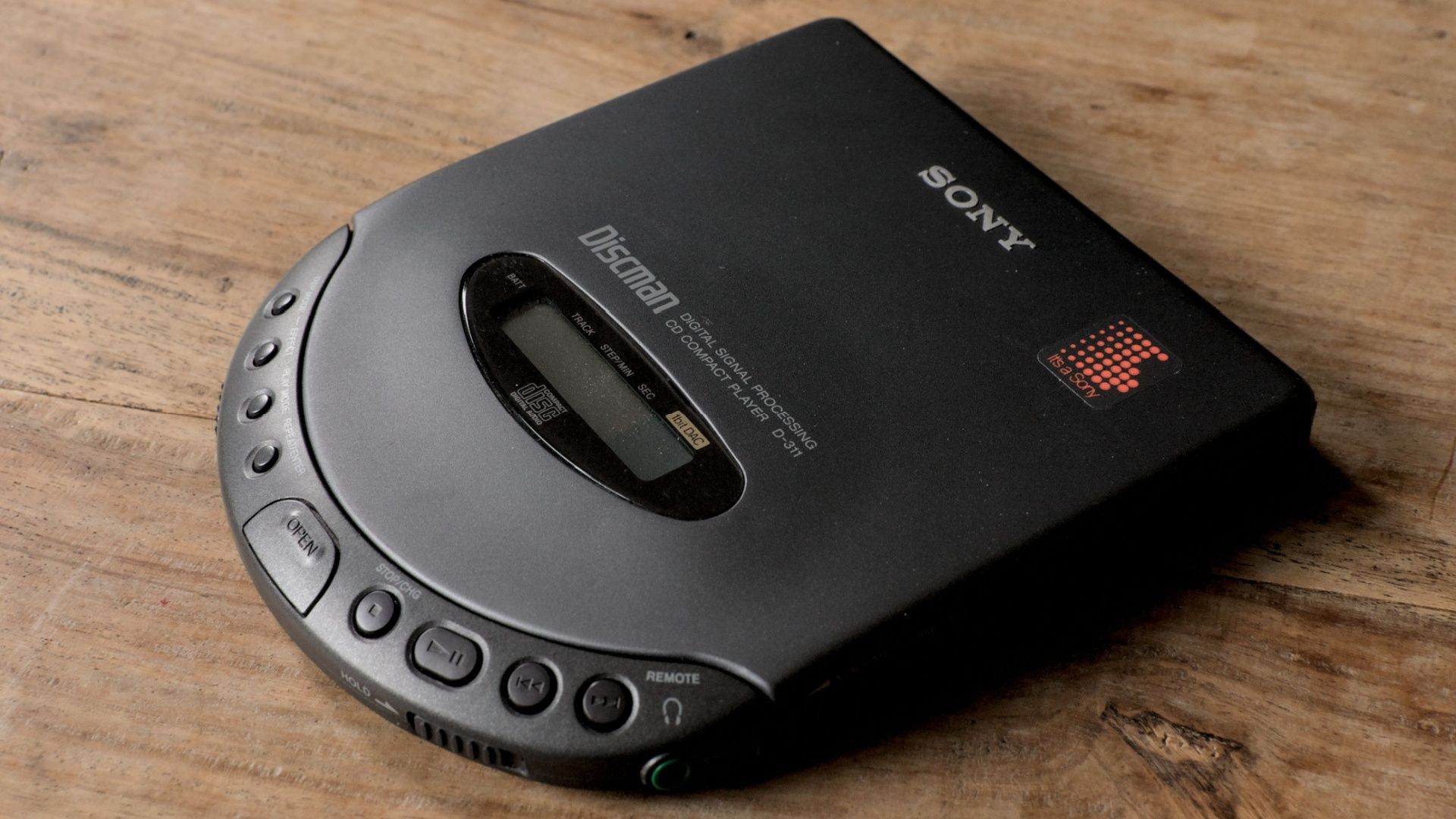
I still clearly remember the first portable CD player my parents bought me in the early 2000s. I’d always wanted one, but I had to make do with a cheap Walkman clone instead, dubbing CDs to tape using our home Hi-Fi.
With a portable player, I could finally take my small collection of CDs with me to school or on trips. Later, when I finally got a CD burner, I could make my own mixes too. Eventually, these portable players could even read MP3 CDs, which meant I only really needed one CD to get me through a whole day. For years there was nothing that could beat the quality of CD music on the go, but if you chose your player poorly and bought one that skimped on the RAM, you were in for a bad time.
Portable CD players had a fundamental problem: movement
Not even the Safety Dance was safe
Until portable CD players became a thing, a CD player was a device that sat on a stationary surface like a table. The player had internal and sometimes external shock absorbers so that external vibrations didn’t make the disc jump around and make the laser lose its place.
The way CD players work requires extreme precision. A laser fires at microscopic pits and lands laid out in a spiral pattern. It’s hard enough to keep it on target while standing still, but what about when jogging or dancing or doing any sort of movement?
Credit: Ben Krasnow
Early portable CD players weren’t really meant to be clipped to your body and play while you moved around actively. Instead, you were meant to sit quietly, holding it steady, or put it down on a stable surface. If not, the music would skip at the slightest provocation.
The early attempts at portable players tried to compensate with physical shock absorption. Just look at this Sony D-50 Discman. This is the world’s first portable CD player, launched in 1984, and it’s an absolute unit. Look at how thick that chonky boy is compared to the players that came later.
No matter what mechanical tricks they tried, CD player manufacturers ended up turning to the world of solid-state electronics to solve this mechanical issue.
Anti-skip protection worked by buffering audio in RAM
The old switcheroo
Credit: dan quiet life/Shutterstock.com
Sony called it ESP, or Electronic Skip Protection, but what it was in truth is a RAM buffer. Instead of piping the CD audio straight from the disc to your ears, it was fed into a small amount of memory and played from there. Solid-state memory is immune to being jostled, so if the laser lost alignment, it had some time to recover before running out of audio.
This technology debuted in 1995, and it changed everything. Not only could people who like to listen to music while walking or even jogging finally ditch their walkmans, but the players themselves could become drastically smaller. All those elaborate shock protection designs become obsolete overnight, nothing but dead weight.
So from the middle of the 1990s and onward, these players became much more compact and usable.
The amount of RAM determined how good anti-skip protection was
If you thought RAM was expensive now
Credit: visko127/Shutterstuck.com
Still, there’s no such thing as a free lunch. The reduction in mechanical complexity helped reduce costs, but RAM was not cheap. Remember it was during a time when a desktop computer might have 4–16 MB of RAM. You need about 0.146MB to store one second of CD audio. The 1995 Sony D-777 featured a 10-second anti-skip buffer. That’s almost 1.5MB in an era where a desktop computer might only have 4MB!
The D-777 launched at 32,800 Yen in Japan, which (based on some rough calculations) comes out to about $650 in today’s money. RAM in 1995 (based on even more rough calculations) came out to around $65 per MB (yes, MEGABYTE) depending on the type, so ostensibly there could have been over $100 of RAM in that player to offer a 10-second buffer.
Except, according to a 2001 Texas Instruments paper, it might not have been necessary to have that much memory to buffer that much sound. There’s a lossy compression method called ADPCM (adaptive differential pulse-code modulation), which can reduce the size of the audio down to a quarter of the original. However, it’s lossy, so you aren’t listening to true CD-quality audio! This is probably why ESP is a feature that most players let you turn off if you don’t need it.
RAM was a Discman’s most important spec
Would memory by any other name sound as sweet?
While portable CD players didn’t advertise RAM in megabytes on the box, they did effectively boast about memory in seconds of ESP.
As memory prices went down, so did ESP capacities and, I suppose, the need to compress audio. That no-name CD player my parents bought me in the 2000s had something like 20 seconds of anti-skip buffer, and there were models with far more before MP3 players would end its reign. Ironically, the hard-drive-based iPod from Apple also needed a RAM buffer for exactly the same reason CD players did: a spinning disc that didn’t like being moved.
