





People say it’s risky to start your own business; that it’s safer to stay where you are, in the job you’re in.
Once that was true, but not anymore.
With AI, global unrest and economic instability, many of us are already living with uncertainty, waiting to find out if we have a job today, tomorrow, or ever again.
More Australians are realising that traditional job security is no longer guaranteed, so instead of relying on employers for stability, they’re creating their own through side hustles, online businesses and passion projects.
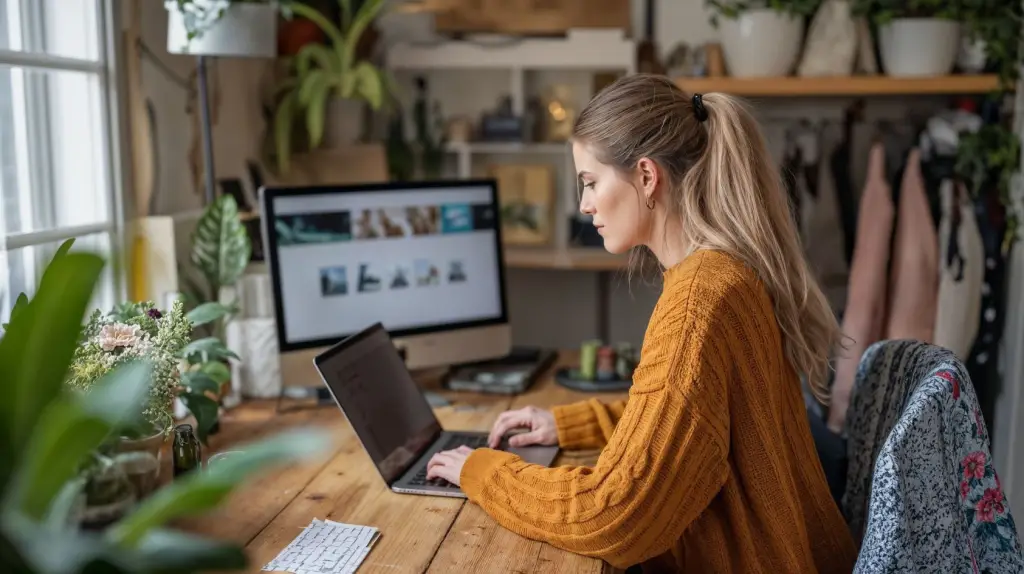
That’s why the real startup boom is no longer happening in places like Silicon Valley, but in suburban Australia, where people are building businesses from kitchen benches, spare rooms and laptops, often while still fully employed.
What was once considered a side hustle is now becoming a pathway to income, independence and, in some cases, global scale.
Get the best of Startup Daily straight to your inbox
Want to know the latest in startup news? Subscribe to our daily news and analysis coverage on what’s happening to ANZ startups, investors and the broader ecosystem. And best of all, it’s FREE!
By continuing, you agree to our Terms & Conditions and Privacy Policy.
After speaking with many of Australia’s most successful online entrepreneurs, one thing became clear. The founders who win are not smarter, richer or better connected. They simply act before conditions are perfect and are willing to take more, and bigger, risks than most.
Here’s what superstar founders like Kirsten Tibballs, Shaun Wilson and Carla Oates do differently.
Start small
If you’ve watched MasterChef Australia, you’ll know Kirsten Tibballs. She’s a regular guest judge, has over a million followers and has her own TV show dedicated to all things chocolate. What most people don’t know is how she got started.
She left school at 15 for a baking apprenticeship. The hours were brutal, 2am to 5pm, but she loved it. Years later, after competing internationally, she was invited to run a weekend chocolate-making workshop in a supplier’s warehouse. She took bookings via fax, set up at a trestle table and got started. The course sold out. Demand grew, so she launched her own cooking school and ran more classes. They sold out too.
To scale, she filmed her classes and put them online. She uploaded her range of kitchen tools to the site, hyperlinking them to recipes so students could buy the same equipment she used. Today, she has over 20,000 members in her online community, plus a global speaking career, brand partnerships, cookbooks and a retail distribution business.
Takeaways:
- Start small, test demand, then turn what works into an online course.
Solve a problem
Carla Oates started with a simple goal: to help soothe her daughter’s eczema.
As a beauty journalist, she’d tested thousands of products and knew most treated the symptoms, but not the causes, so she returned to what had worked for her as a teenager with a similar skin condition: food.
From her Bondi kitchen, she experimented with broths, ferments and wholefoods. Within weeks, her daughter’s skin improved. Friends noticed, word spread, and health stores started calling, wanting to stock this magical elixir.
She made more batches, delivered orders between her writing work and built a simple website to spread the word. That’s how The Beauty Chef began. That’s when things accelerated. Vogue featured her, TVSN invited her onto their shopping network, and Mecca and Sephora became stockists.
What started as a home remedy became a global category, ingestible beauty, with The Beauty Chef leading the way.
Takeaways:
- Solve a real problem, build a simple website and let word of mouth do the work.
Take risks
“I need a tan for the Melbourne Cup, but I don’t have time to get one.”
That offhand comment sparked Bondi Sands, a self-tanning brand that became a $450 million business in just over a decade. It started in a cramped Melbourne apartment; just two founders mixing formulas, funding it with mortgages, doing whatever it took to get traction.
The breakthrough came when Priceline placed an order. Then came the backlash.
“I’ve turned green. I look like Kermit the Frog,” one customer said. They admitted their second batch formula hadn’t been tested properly and had to recall 20,000 units. The cost? $330,000. It nearly broke them.
But they kept going.
In 2018, and still bootstrapping, they paid Kylie Jenner $300,000 for a single Instagram post.
It was a big risk, but Shaun Wilson understood that attracting global attention required global leverage. The post went viral, triggered the algorithm and put them on the radar of global retailers like Walgreens and Walmart.
In 2023, they sold to Kao Corporation for over $450 million.
Takeaways:
- Own your errors, take risks and think big.
Turn your passion into profit
You don’t have to go big to be successful.
Dylan Schwerdt works in a bank by day but trades Pokémon cards by night. He works about 10 hours a week on his side hustle and makes $100,000 a year.
His business model?
He buys Pokémon cards in the US, sells them in Australia and pockets the price difference. He spotted the opportunity on a trip to New Orleans, where he saw the cards in a gaming shop selling for 50% less than in Australia. Months later, stuck at home with a broken arm, he set up a test. He bought a few cards and listed them on eBay. He didn’t have a website, a brand or any proof of demand, but it worked. People bought them almost instantly.
He kept going.
He catalogued the thousands of cards he had lying around from when he was a kid and sourced vintage box sets when they became available. The business grew. He now spends his annual leave travelling to Pokémon conferences around the world sourcing new stock. He loved Pokémon as a kid and still does. The difference is he’s now getting paid for it.
“I mostly do it while I’m watching TV,” he says.
Takeaways:
- Sell what you know, sell what you have and keep things simple.
Now is the moment
Don’t wait until everything is perfect to launch your side hustle.
Do what these founders have done – launch early, test often, learn from feedback and turn your passion into profit.
- Bernadette Schwerdt is the author of Secrets of the New Online Entrepreneurs.


