

We all love open-source projects. In fact, some of these open source apps are so good that Microsoft should build them into Windows. However, with every success comes a dozen stories of open-source projects that were so outlandish that they never reached the finish line despite being in development for over two decades.
I’ve spent a fair share of time tinkering with these long-running projects, and most of them share the same problem. Big ambition, small developer base, and a moving target that keeps slipping out of reach. Some boot to a desktop but can’t open a modern website. Others have been stuck in beta for so long that the word has lost its meaning. And one of them has been technically “in development” since the early 90s without ever shipping a stable kernel. Here are four open-source projects that are still chasing the finish line after 20+ years.
ReactOS
A Windows clone stuck in 2001
ReactOS is what you get if Windows had gone open source. The project started in 1998 with a clear goal: rebuild Windows NT from scratch so it could run Windows applications and drivers without using a single line of Microsoft code. It’s been at it for 27 years now, and the result is impressive in some ways and disappointing in others.
I tested ReactOS in a virtual machine, and the setup felt like a trip back to 2001. The blue text-based installer mirrors the Windows XP setup screen, and the desktop that follows looks like something you’d boot into on a Pentium 4. The system can run many legacy 32-bit Windows applications, and it comes with a built-in Application Manager that works like a basic app store for compatible software.
In practice, older apps like Office XP, 7-Zip, and Firefox run with varying degrees of success. Modern apps that need newer libraries either crash or refuse to launch. Browsing the modern web is the bigger problem. Chrome struggles, and most sites detect the outdated browser and refuse to load properly.
ReactOS isn’t a daily driver, and it probably never will be. But it does prove that recreating Windows from scratch is possible, even if the finish line keeps moving every time Microsoft ships a new version.
Haiku OS
Still in beta after two decades
Image taken from Haiku website.Credit: Haiku
Haiku is the spiritual successor to BeOS, the multimedia-focused operating system from the 90s that quietly disappeared in 2000. The Haiku project picked up where Be Inc. left off and has been recreating BeOS with modern hardware support ever since. The first alpha release came out in 2009. The first beta arrived in 2018, nearly a decade later. And as of today, Haiku is still officially in beta.
The strange part is that Haiku actually feels polished in places where it counts. It boots fast, the installer is straightforward, and the desktop drops you straight into a working environment without a login screen. The Deskbar on the side of the screen is original BeOS code that Be Inc. open-sourced before the company shut down. Everything else is rebuilt from scratch.
What lets Haiku down is the software ecosystem. The pre-installed WebPositive browser can’t render most modern websites properly. The HaikuDepot app store has a small catalog by default, and you have to dig through filters to see what’s actually available. There’s no real office suite, no mainstream productivity tools, and the apps that do exist feel like they belong to a different era.
OpenOffice
A once-great office suite frozen in time
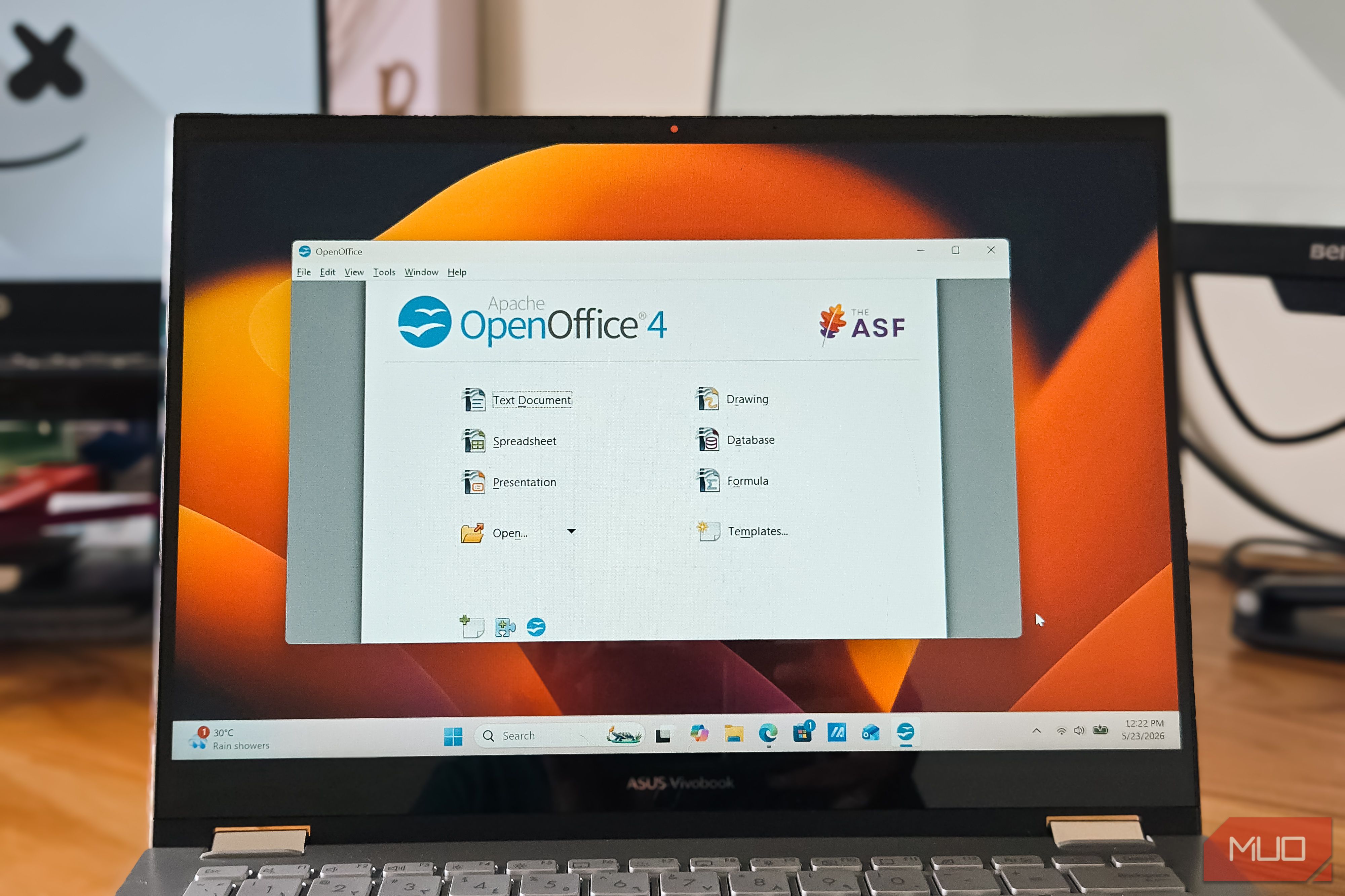
Tashreef Shareef / MakeUseOfCredit: Tashreef Shareef / MakeUseOf
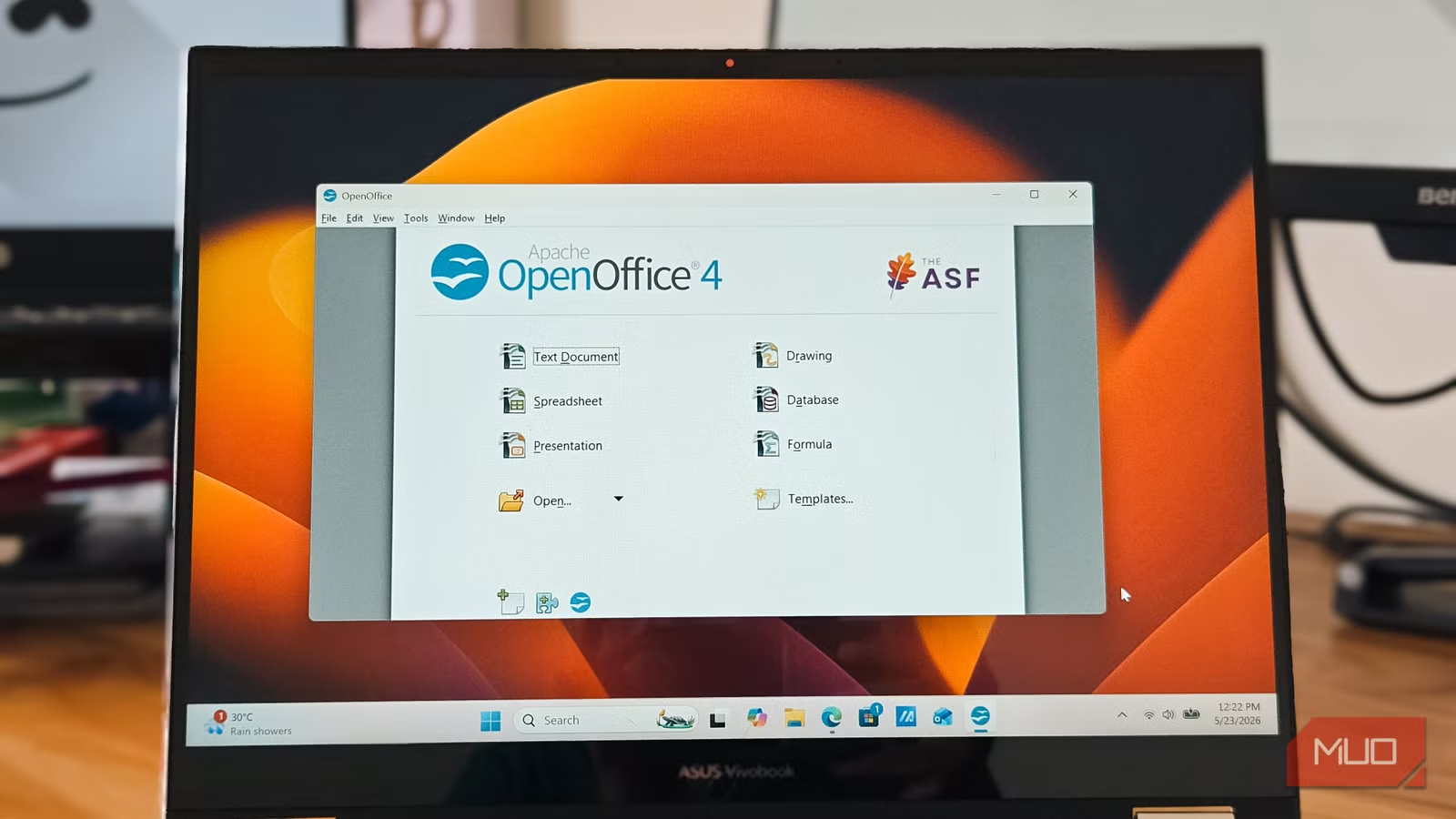
OpenOffice is different from the others on this list because it’s not stuck in beta. It’s a stable, finished product. The problem is that it stopped meaningfully evolving over a decade ago. Apache OpenOffice’s last major version came out in 2014, and since then, the project has only pushed minor releases. Meanwhile, the rest of the office software world has moved on, and so have most of its users.
The numbers tell the full story. In 2019 alone, LibreOffice recorded over 15,000 code commits. OpenOffice managed 595. Over the same period, LibreOffice shipped 13 major releases and 87 minor ones, while OpenOffice barely moved. Even Apache OpenOffice’s own contributors have admitted the project lacks the manpower to keep up.
The functional gaps are obvious if you try to use it today. OpenOffice can’t export to modern Microsoft formats like .docx and .xlsx. It doesn’t support document signing for ODF, OOXML, or PDF files. It’s missing the spreadsheet performance improvements and modern interface options that LibreOffice has shipped over the years. There are plenty of free alternatives to Microsoft Office that get more done with less friction, and LibreOffice is the obvious one.
OpenOffice still has strong brand recognition from its heyday in the early 2000s, but development has been essentially dormant for years. It’s the open-source equivalent of a coffee shop that’s still technically open but hasn’t restocked the menu since 2014.
GNU Hurd
The kernel that never quite shipped
Afam Onyimadu / MUO
GNU Hurd is the project that holds the “still unfinished” crown with little competition. The Free Software Foundation announced Hurd back in 1990 as the official kernel for the GNU operating system. The plan was to build a pure microkernel Unix on top of Mach, with most services running in userspace for better modularity and robustness. That was 35 years ago. Hurd is still not ready for production use.
Part of the problem is the design itself. Writing a microkernel-based Unix turned out to be much harder than the GNU team expected. While they were working on Hurd, Linus Torvalds put together Linux as a “small quick hack” that wasn’t even meant to compete with it. Linux became the most widely deployed kernel on the planet. Hurd never caught up.
The other problem is that Hurd keeps restarting. The project moved from Mach to the L4 microkernel, which required a major rework, and then considered moving away from L4, too. Each architectural reset pushes the finish line further out. Around 2010, the Hurd team got it stable enough that Debian could ship a GNU/Hurd variant, but the system reportedly crashed under basic real-world load.
Hurd is fascinating as a research project, but as a kernel meant to power a real operating system, it has been “almost ready” for so long that the phrase has lost all meaning.
The thin line between ambitious and unfinished
Open source thrives on ambition, and ambition is exactly what these four projects have in spades. ReactOS wants to rebuild Windows. Haiku wants to keep BeOS alive. OpenOffice wanted to be the open answer to Microsoft Office. Hurd wanted to redesign the Unix kernel from first principles. None of them have technically failed. They just haven’t crossed the finish line, and most of them probably never will in any meaningful sense.
That doesn’t make them useless. ReactOS keeps legacy software alive, Haiku preserves a piece of computing history, and Hurd is a genuine research playground. But if you want a project that ships, you’ll want to look elsewhere.
