
Close Menu
Tech Nova Mindset – Empower Innovation and Forward Thinking

    Subscribe to Updates

    Get the latest creative news from FooBar about art, design and business.

    What's Hot

    AT&T Is Automating Away Jobs—and Its Old Telecom Empire

    September 23, 2026

    Smart glasses are already causing havoc in India

    September 23, 2026

    Viture’s Vonder Glasses Are Meant to Map Your Mind

    September 23, 2026
    Facebook X (Twitter) Instagram
    Trending
    • AT&T Is Automating Away Jobs—and Its Old Telecom Empire
    • Smart glasses are already causing havoc in India
    • Viture’s Vonder Glasses Are Meant to Map Your Mind
    • AI Models Built From Rat Brains Just Got Closer to Reality
    • Don’t be fooled by this summer of AI hype 
    • Barbara Mazzolai Is Cultivating Sustainability Robotics
    • Three-Year-Old Boy’s Metastatic Cancer Disappears After Two Shots of Experimental Cell Therapy
    • How to Claim Your Cut of Apple’s $250 Million Siri Settlement
    Tech Nova Mindset – Empower Innovation and Forward Thinking
    • Home
    • Gadgets
    • Reviews
    • Tech News
    • Future Tech
    • AI & Robotics
    • How-To Guides
    • More
      • Cybersecurity
      • Startups & Innovation
    Tech Nova Mindset – Empower Innovation and Forward Thinking
    Home»AI & Robotics»Tailoring AI solutions for health care needs
    AI & Robotics

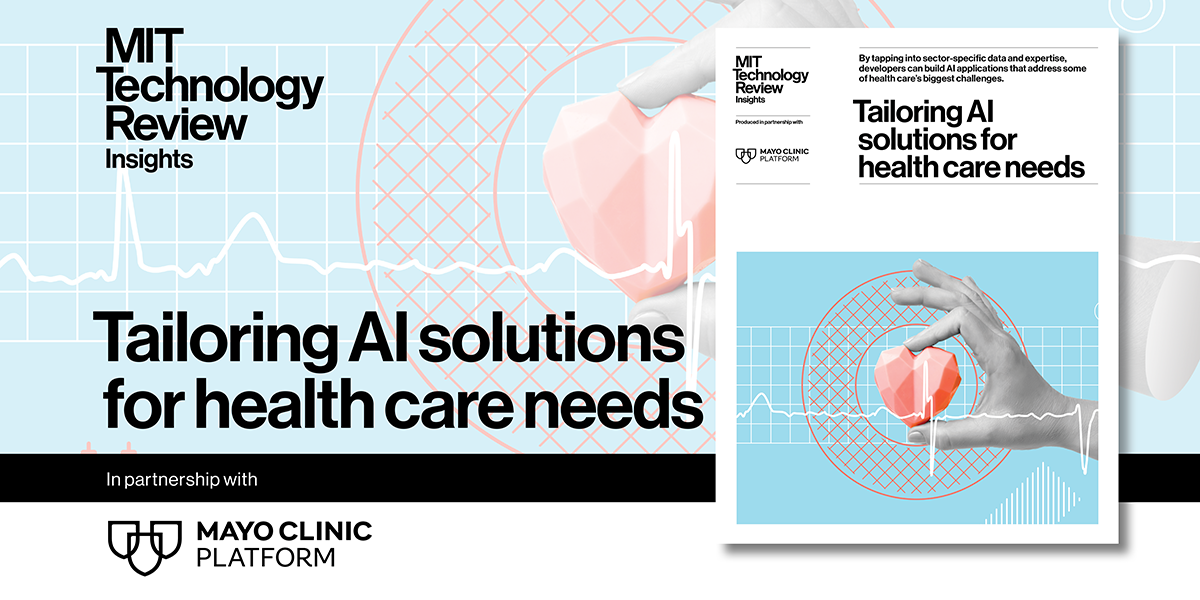
    Tailoring AI solutions for health care needs

    kirklandc008@gmail.comBy kirklandc008@gmail.comMay 4, 2026No Comments3 Mins Read
    Facebook Twitter Pinterest LinkedIn Tumblr Email
    Tailoring AI solutions for health care needs
    Share
    Facebook Twitter LinkedIn Pinterest Email

    AI applications for health care are proliferating rapidly. The U.S. Food and Drug Administration has approved more than 1,300 AI-enabled medical devices, mostly for interpreting diagnostic images. More than half of these were approved in the past three years, with the earliest dating as far back as 1995. Non-radiological applications carry out tasks as diverse as tracking sleep apnea, analyzing heart rhythms, and planning orthopedic surgeries.

    AI applications that do not count as medical devices— for example, those that handle scheduling and administrative tasks—are more difficult to track but are also rapidly increasing. AI can help coordinate complex tasks and workflows that are often conventionally managed by whiteboards and sticky notes. Such functions may well outstrip clinical uses in their impact on health systems. A recent survey of technology leaders found that 72% said their top priority for AI was reducing caregiver burden and improving caregiver satisfaction, while over half (53%) cited workflow efficiency and productivity.

    Any health care-related application can potentially impact patient care, whether directly or indirectly, and AI apps that are poorly designed or inadequately trained and validated can put patients at risk. Providers recognize that risk: In the same survey, 77% said immature AI tools are a significant barrier to adoption. Regulators and lawmakers are also keeping an eye on the risks as development and adoption burgeon, though the U.S. regulatory picture is still in flux, as a 2024 report to Congress on AI in health care observes.

    To tackle some of the technical challenges, many health care providers are partnering with application developers to build AI solutions. In a recent study, McKinsey found that 61% of health care organizations intend to pursue partnerships with third-party vendors to develop customized generative AI solutions as a primary strategy as opposed to building them in-house or buying off-the-shelf products.

    But health care-specific AI applications must also be tailored to the nuanced clinical needs of medical providers as well as the complex business and regulatory considerations of the wider sector. This is where developers can benefit from working with a partner with a deep understanding of the health care environment to tailor applications to what providers want and need most. Doing so helps to position AI products for maximum impact and value, avoiding the pitfalls unique to the health care environment.

    Download the report.

    This content was produced by Insights, the custom content arm of MIT Technology Review. It was not written by MIT Technology Review’s editorial staff. It was researched, designed, and written by human writers, editors, analysts, and illustrators. This includes the writing of surveys and collection of data for surveys. AI tools that may have been used were limited to secondary production processes that passed thorough human review.

    care health Solutions Tailoring
    Share. Facebook Twitter Pinterest LinkedIn Tumblr Email
    kirklandc008@gmail.com
    • Website

    Related Posts

    AT&T Is Automating Away Jobs—and Its Old Telecom Empire

    September 23, 2026

    Smart glasses are already causing havoc in India

    September 23, 2026

    Viture’s Vonder Glasses Are Meant to Map Your Mind

    September 23, 2026
    Leave A Reply Cancel Reply

    Top Posts

    Nothing CEO says phone prices are going to keep going up

    June 12, 20267 Views

    The best VPN routers of 2026: Expert tested and reviewed

    June 14, 20263 Views

    Google DeepMind Plans to Track AGI Progress With These 10 Traits of General Intelligence

    March 21, 20263 Views
    Stay In Touch
    • Facebook
    • YouTube
    • TikTok
    • WhatsApp
    • Twitter
    • Instagram
    Latest Reviews

    Subscribe to Updates

    Get the latest tech news from FooBar about tech, design and biz.

    Recent Posts
    • AT&T Is Automating Away Jobs—and Its Old Telecom Empire
    • Smart glasses are already causing havoc in India
    • Viture’s Vonder Glasses Are Meant to Map Your Mind
    • AI Models Built From Rat Brains Just Got Closer to Reality
    • Don’t be fooled by this summer of AI hype 

    AT&T Is Automating Away Jobs—and Its Old Telecom Empire

    September 23, 2026

    Smart glasses are already causing havoc in India

    September 23, 2026

    Viture’s Vonder Glasses Are Meant to Map Your Mind

    September 23, 2026

    AI Models Built From Rat Brains Just Got Closer to Reality

    September 23, 2026
    Facebook X (Twitter) Instagram Pinterest
    • About Us
    • Contact Us
    • Privacy Policy
    • Terms and Conditions
    • Disclaimer
    © 2026 TechNovaMindset. Designed by By Pro.

    Type above and press Enter to search. Press Esc to cancel.