

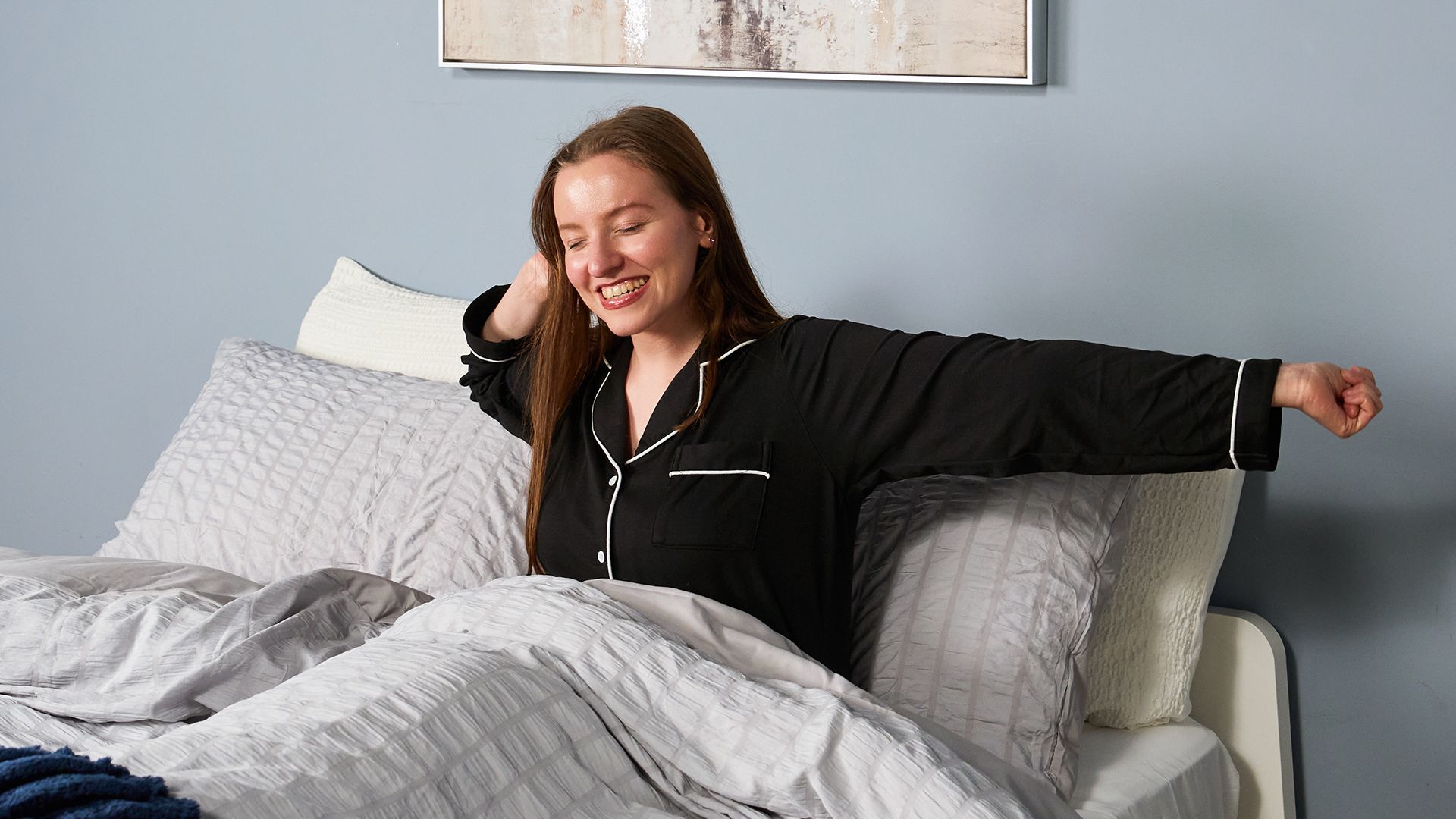
Ever woken up from a bad night’s sleep feeling like you’ve aged a decade overnight? It’s not just in your head, as recent research suggests that regularly under or over-sleeping can accelerate markers of biological aging.
A study published in Nature found that the sleep duration sweet spot to slow biological aging sits between 6.4 and 7.8 hours. Sleeping less than six hours or more than eight hours a night, however, is linked to a broad range of health risks, including brain, heart and muscular aging.
If you’re struggling to hit that sweet spot, researchers note that sleep duration is a “modifiable” factor; so we asked the experts what simple changes can help you start sleeping more (or less, as the case might be.)
You may like
Key takeaways: At a glance
- Getting under six hours of sleep is linked to broad health issues including cardiovascular disease and poor immune response
- Over eight hours of sleep is associated with chemical imbalances in the brain, including depression and ADHD
- Scientists identify the sweet spot as between 6.4 to 7.8 hours sleep a night
- As sleep duration is a modifiable metric, improving sleep hygiene can potentially lead to slower biological aging
- A set sleep time and wake time are expert back ways to create a regular sleep schedule
What is the sleep sweet spot?
Researchers analyzed the data of roughly 500,000 participants in the UK BioBank to measure the correlation between sleep duration and biological age markers.
The results showed a “U-shaped” pattern, with spikes occurring at either end of the sleep duration spectrum. Sleeping under six hours or over eight hours were both linked to faster biological aging.
(Image credit: Getty Images)
So how much sleep do you need? Using this data, researchers narrowed down a sleep duration sweet spot between 6.4 and 7.8 hours (with fluctuations based on organ and sex.)
Hitting this sweet spot doesn’t mean you’re necessarily going to wake up feeling refreshed every morning — this study focused less on the immediate impact of a good night’s sleep and more on the long-term effects of consistently sub-par sleep.
However, sticking to this perfect duration might help you feel fresher later in life, as it’s been linked to slower biological aging.
How does sleep impact longevity?
“How old are you?’ is a fairly simple question (albeit a bit impolite in many circumstances.)
Now, how old are your organs?
What to read next
That’s a trickier one to answer, but researchers have developed a series of “aging clocks” to measure how your organs age compared to your chronological age — and how your sleep duration impacts this aging process.
They noted that shorter sleep duration shows “broader systemic associations” with disease, including increased risk of cardiovascular, metabolic and musculoskeletal conditions such as osteoarthritis and soft tissue disorder.
(Image credit: Getty Images)
Long sleep duration, on the other hand, is linked to “brain-related traits” such as major depressive disorder, ADHD and alcohol dependence.
Sleep duration alone isn’t responsible for poor health and the study notes further research is needed to explore how much sub-optimal sleep duration increases disease risk versus existing conditions negatively impacting sleep. But there’s growing evidence that your sleep plays a key role in your longevity.
There is good news. As the researchers note, sleep duration is “modifiable”, and by focusing on your sleep hygiene you can potentially promote healthier biological aging — and maybe even extend your lifespan.
3 expert-tips for getting the right amount of quality sleep
Better sleep health is a matter of consistent good habits and once you’ve found your routine, you’ll hardly notice you’re doing it at all…
1. Anchor your bedtime
Following the 7:1 sleep rule can potentially add four years to your lifespan and it’s based on two simple principles: roughly seven hours sleep a night and falling asleep within a one hour window every night.
To set your sleep window, begin by picking an anchor time. This is your ideal bedtime — when you want to fall asleep. Your sleep window then extends 30 minutes either side of your anchor point.
(Image credit: Future)
For example, if your ideal bedtime is 10.30 p.m., then your sleep window is between 10 p.m. and 11 p.m.
Setting a bedtime and sticking to it helps train your body to sleep, as your internal clock recognizes that it’s time to wind-down. As a result, when you climb into bed, you’re primed to drop off.
2. Create a simple wind-down routine
Consistent timing isn’t the only way to teach your body to sleep.
“I recommend creating a small, consistent wind-down cue in the evening that can help signal to your body and mind that it’s time for bed,” advises Dr. Shelby Harris, sleep specialist at BetterSleep (not involved with the study.) “It doesn’t need to be perfect, just repeatable.”
Your circadian rhythm recognizes this pre-bed routine as a cue that you’re ready to sleep, like putting your pajamas on and turning off the light. It’s an important part of good sleep hygiene and it doesn’t have to be complex.
“It could be as simple as dimming the lights or stepping away from your phone 15–20 minutes before bed,” says Dr. Harris.
3. Set a wake up time
A good night’s sleep starts when you wake up in the morning.
“Getting up at roughly the same time every day – even if your bedtime varies – helps regulate your internal clock and improves sleep quality over time,” explains Dr. Harris.
(Image credit: Future)
She recommends you “anchor” your wake up and while it might feel like a drag when your alarm first chimes, in time your body will anticipate this wake up and start preparing for the day.
And it’s important to stick to your anchor time — yes, even over the weekend. Weekend lie-ins might seem like a chance to catch up on lost sleep but they could be the cause of your poor kip. When you wake up late, you struggle to drift off at bedtime, leaving you more tired when your alarm goes off.
By following these tips, your body can form a sleep schedule and you’ll find it easier to naturally hit that sleep duration sweet spot.
Follow Tom’s Guide on Google News and add us as a preferred source to get our up-to-date news, analysis, and reviews in your feeds. Subscribe to Tom’s Guide on YouTube and follow us on TikTok. Finally, you can visit our dedicated Tom’s Guide Savings Squad hub for expert help on getting the best products for less.
