
Close Menu
Tech Nova Mindset – Empower Innovation and Forward Thinking

    Subscribe to Updates

    Get the latest creative news from FooBar about art, design and business.

    What's Hot

    Star Catcher Is About to Beam Power Between Two Satellites for the First Time

    October 2, 2026

    Whatever AI Safety Is, It’s Not This

    October 2, 2026

    Trump’s ‘Morally Binding’ AI ‘Accord,’ the Rise of AI Agents, and Extremists on the Ballot

    October 1, 2026
    Facebook X (Twitter) Instagram
    Trending
    • Star Catcher Is About to Beam Power Between Two Satellites for the First Time
    • Whatever AI Safety Is, It’s Not This
    • Trump’s ‘Morally Binding’ AI ‘Accord,’ the Rise of AI Agents, and Extremists on the Ballot
    • An AI “mind-reading” tool can reconstruct what you’re looking at based on a brain scan
    • The Download: AI “mind-reading” and creative uses for small batteries
    • Electricity Theft Is Rampant, but Delhi Found a Fix
    • How smaller, distributed batteries could help the grid
    • The Battle to Be Your Personal AI Agent Is Here
    Tech Nova Mindset – Empower Innovation and Forward Thinking
    • Home
    • Gadgets
    • Reviews
    • Tech News
    • Future Tech
    • AI & Robotics
    • How-To Guides
    • More
      • Cybersecurity
      • Startups & Innovation
    Tech Nova Mindset – Empower Innovation and Forward Thinking
    Home»AI & Robotics»Star Catcher Is About to Beam Power Between Two Satellites for the First Time
    AI & Robotics

    Star Catcher Is About to Beam Power Between Two Satellites for the First Time

    kirklandc008@gmail.comBy kirklandc008@gmail.comOctober 2, 2026No Comments3 Mins Read
    Facebook Twitter Pinterest LinkedIn Tumblr Email
    Star Catcher Is About to Beam Power Between Two Satellites for the First Time
    Share
    Facebook Twitter LinkedIn Pinterest Email

    Ambitious plans for orbital data centers and factories face a major problem—getting enough power. A startup will soon test a new fix by transmitting power from one spacecraft to another using lasers.

    Satellites typically rely on solar panels and batteries for power, but strict weight budgets restrict how much hardware they can bring with them. That’s becoming more of a problem as companies pursue power-hungry activities in space like AI and manufacturing.

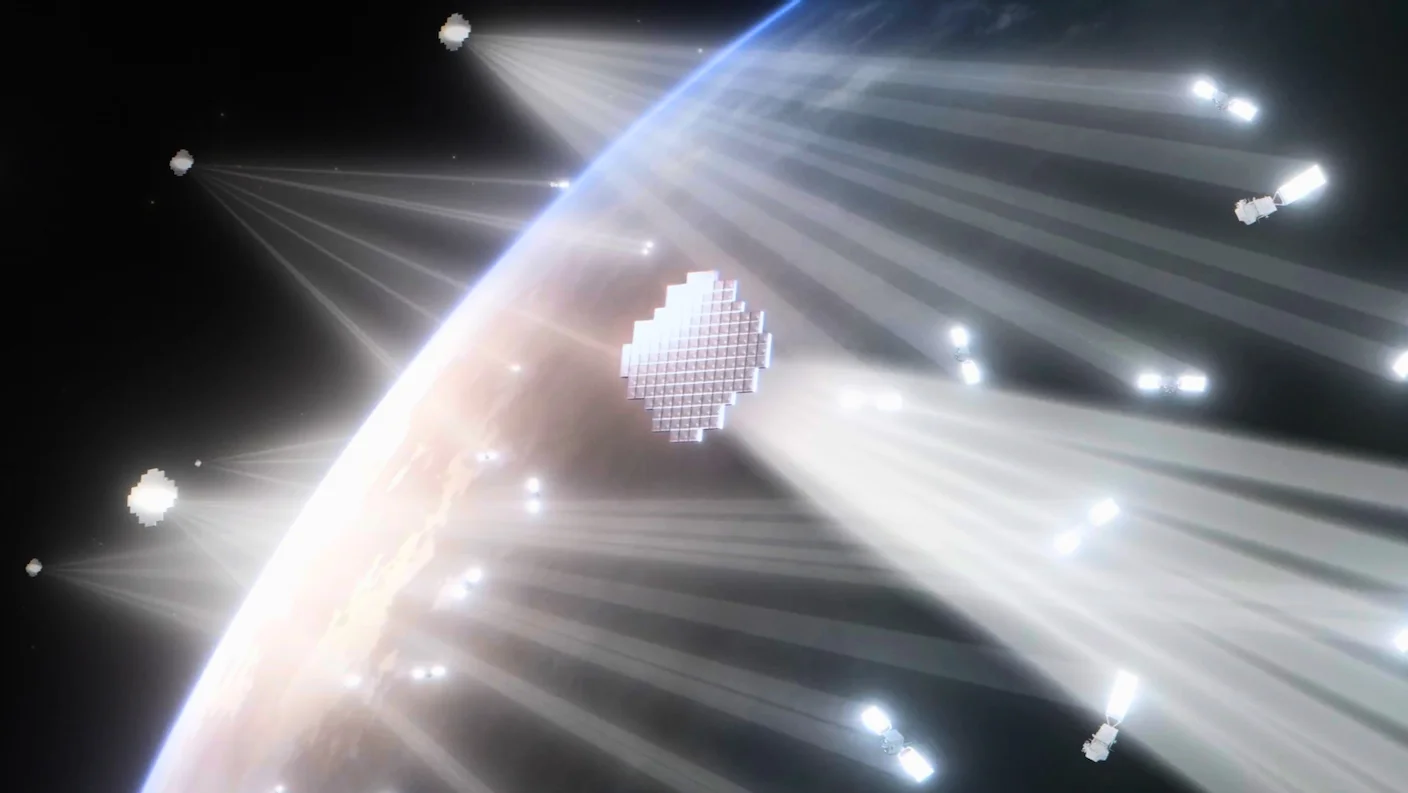
    Florida-based Star Catcher thinks the solution is to set up an “orbital power grid” using satellites to gather solar energy, convert it into laser light, and beam it to other spacecraft. Earlier today, the company launched a prototype designed to test the idea by transmitting power to another free-flying spacecraft for the first time.

    “Every major application driving the space economy—from real-time national security intelligence to AI-powered orbital computing and Earth observation—is limited by power,” Andrew Rush, Star Catcher’s cofounder and CEO, said in a press release. “

    “We are closer to activating an orbital power grid than most can imagine; flying this prototype in only two years is meaningful evidence of the capability of our team and what’s to come.”

    The company’s satellites, which it calls “power nodes,” are designed to concentrate diffuse sunlight with an array of lenses and convert it into laser beams that can be pointed at other spacecraft.

    The light is also transformed into wavelengths that maximize transmission efficiency and can be easily turned into power by solar panels already commonly used on satellites. The company claims this will allow satellites to generate up to 10 times more power than when using standard sunlight, no modifications or upgrades needed.

    As well as keeping older spacecraft, whose panels and batteries have degraded, operational longer, the technology could also allow manufacturers to fit smaller batteries and solar panels on new satellites, leaving more space for other hardware.

    That’s the idea at least. The company has already tested key parts of its technology stack, including beaming a record-breaking 1.1 kilowatts to solar panels at NASA’s Kennedy Space Center in 2025, followed by a space-based test of its satellite tracking software later the same year.

    A ground-based test of Star Catcher’s power beaming technology.

    But the satellite launched today, called Protostar, will be the first time Star Catcher tests the whole system in space, from collecting solar energy to locating and tracking a target and transmitting power to it. The spacecraft will attempt to beam power to a cubesat that launched on the same mission.

    “Part of this demonstration is testing how much power is received by the cubesat as it moves away from Protostar and comparing that against our models,” Rush told Wired.

    Star Catcher still has a long way to go though. The record-breaking power delivery it managed on the ground is still far below the amount needed to power a large commercial satellite. And significant challenges remain when it comes to tracking targets precisely, managing heat, and building equipment that can survive for years in space, Hanieh Fattahi, a Max Planck Institute researcher, told Wired.

    The company is already working on a follow-up satellite, which it says is designed to beam “operational levels of power” to other spacecraft. And there appears to be plenty of commercial interest—Star Catcher says it has signed 10 power purchase agreements with companies alongside more than 40 letters of intent.

    All eyes will be on Protostar to see if it can live up to the company’s expectations. If it succeeds, it will show that a satellite’s power supply doesn’t have to be fixed at launch, opening up a host of new possibilities for space-based industries.

    Beam Catcher Power Satellites Star time
    Share. Facebook Twitter Pinterest LinkedIn Tumblr Email
    kirklandc008@gmail.com
    • Website

    Related Posts

    Whatever AI Safety Is, It’s Not This

    October 2, 2026

    Trump’s ‘Morally Binding’ AI ‘Accord,’ the Rise of AI Agents, and Extremists on the Ballot

    October 1, 2026

    An AI “mind-reading” tool can reconstruct what you’re looking at based on a brain scan

    October 1, 2026
    Leave A Reply Cancel Reply

    Top Posts

    Nothing CEO says phone prices are going to keep going up

    June 12, 20267 Views

    The best VPN routers of 2026: Expert tested and reviewed

    June 14, 20263 Views

    Google DeepMind Plans to Track AGI Progress With These 10 Traits of General Intelligence

    March 21, 20263 Views
    Stay In Touch
    • Facebook
    • YouTube
    • TikTok
    • WhatsApp
    • Twitter
    • Instagram
    Latest Reviews

    Subscribe to Updates

    Get the latest tech news from FooBar about tech, design and biz.

    Recent Posts
    • Star Catcher Is About to Beam Power Between Two Satellites for the First Time
    • Whatever AI Safety Is, It’s Not This
    • Trump’s ‘Morally Binding’ AI ‘Accord,’ the Rise of AI Agents, and Extremists on the Ballot
    • An AI “mind-reading” tool can reconstruct what you’re looking at based on a brain scan
    • The Download: AI “mind-reading” and creative uses for small batteries

    Star Catcher Is About to Beam Power Between Two Satellites for the First Time

    October 2, 2026

    Whatever AI Safety Is, It’s Not This

    October 2, 2026

    Trump’s ‘Morally Binding’ AI ‘Accord,’ the Rise of AI Agents, and Extremists on the Ballot

    October 1, 2026

    An AI “mind-reading” tool can reconstruct what you’re looking at based on a brain scan

    October 1, 2026
    Facebook X (Twitter) Instagram Pinterest
    • About Us
    • Contact Us
    • Privacy Policy
    • Terms and Conditions
    • Disclaimer
    © 2026 TechNovaMindset. Designed by By Pro.

    Type above and press Enter to search. Press Esc to cancel.