
Close Menu
Tech Nova Mindset – Empower Innovation and Forward Thinking

    Subscribe to Updates

    Get the latest creative news from FooBar about art, design and business.

    What's Hot

    Page Not Found | WIRED

    August 2, 2026

    This Week’s Awesome Tech Stories From Around the Web (Through August 1)

    August 1, 2026

    Nobody Knows if OpenAI’s and Anthropic’s AI Hacking Sprees Are Illegal

    August 1, 2026
    Facebook X (Twitter) Instagram
    Trending
    • Page Not Found | WIRED
    • This Week’s Awesome Tech Stories From Around the Web (Through August 1)
    • Nobody Knows if OpenAI’s and Anthropic’s AI Hacking Sprees Are Illegal
    • The Man Who Understood Risk: Robert N. Charette retires.
    • 7 States’ Water Systems Hit by Cyberattacks Likely Tied to Iran
    • Gemini Robotics 2 Brings Google’s AI Into the Physical World
    • This AI Assistant Wants to Make Up for Your Boyfriend’s Incompetence
    • Europe Approves Bionic Eye to Restore Vision Lost to Blindness
    Tech Nova Mindset – Empower Innovation and Forward Thinking
    • Home
    • Gadgets
    • Reviews
    • Tech News
    • Future Tech
    • AI & Robotics
    • How-To Guides
    • More
      • Cybersecurity
      • Startups & Innovation
    Tech Nova Mindset – Empower Innovation and Forward Thinking
    Home»Future Tech»Scientists Have Identified a New Fossil Species of Axolotl in Mexico
    Future Tech

    Scientists Have Identified a New Fossil Species of Axolotl in Mexico

    kirklandc008@gmail.comBy kirklandc008@gmail.comJuly 4, 2026No Comments3 Mins Read
    Facebook Twitter Pinterest LinkedIn Tumblr Email
    Scientists Have Identified a New Fossil Species of Axolotl in Mexico
    Share
    Facebook Twitter LinkedIn Pinterest Email

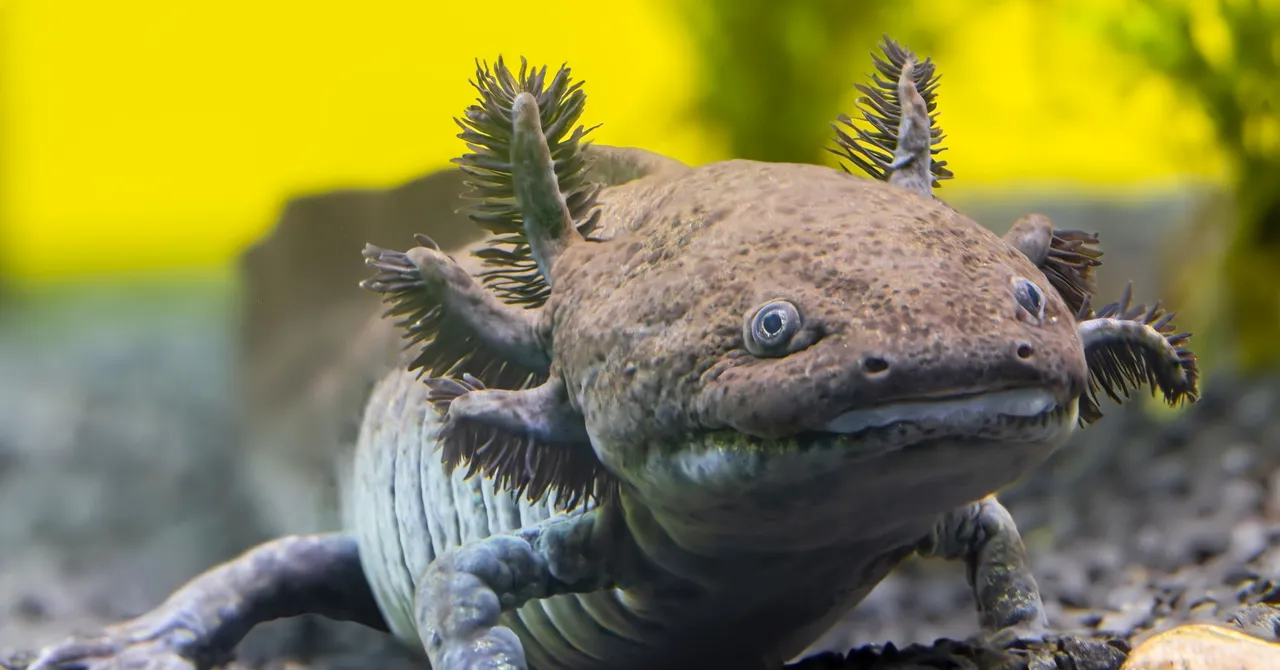
    Researchers at the Zaragoza School of Advanced Studies (FES Zaragoza) at the National Autonomous University of Mexico (UNAM) have identified a new fossil species of axolotl in the state of Hidalgo.

    Named Ambystoma quetzalcoatli, it is the first fossil salamander species to be formally described in Mexico and the oldest known record of the genus Ambystoma ever documented in the country. According to the researchers, the discovery provides an important new piece of the puzzle for understanding the origin and evolution of the biodiversity that characterizes modern Mexican fauna.

    The fossils were discovered in the municipality of Atotonilco el Grande, in Hidalgo, a region that was once home to an extensive freshwater lake system covering roughly 85 square kilometers. The lakes likely formed when the course of the Amajac River was temporarily blocked. This temperate, subhumid environment has yielded fossils of numerous plants, diatoms, gastropods, ostracods, beetles, and fish. Until now, however, the amphibian remains recovered from the site had never been formally studied or described.

    The researchers examined a dozen fossil salamander specimens collected in the early 2000s by the FES Zaragoza Paleobotany Research Group. Many of the fossils were exceptionally well preserved, with complete, articulated skeletons that allowed for a detailed anatomical analysis and a precise assessment of their morphology.

    The remains were initially identified as belonging to a species of the genus Ambystoma, the group that includes modern axolotls. However, a team led by researchers Jorge Herrera Flores and María Patricia Velasco de León revisited the material using modern techniques, including computed tomography (CT) scanning and detailed anatomical comparisons with living species, to determine its identity more accurately.

    Their analysis revealed that the fossils collected nearly three decades ago belonged to an entirely new species, distinguished from modern axolotls by several significant anatomical differences.

    According to the study, published in Palaeontologia Electronica, the fossils display distinctive features of the skull and skeleton that are absent in living species. Among the most notable are an elongated opening on the top of the skull, a differently structured palate, variations in the arrangement of several cranial bones, and the presence of 17 trunk vertebrae. This last characteristic is particularly significant, as modern axolotls have 16 or fewer trunk vertebrae.

    To establish the fossils’ identity, the researchers compared them with 13 living Ambystoma species, including several endemic to Mexico, such as the Xochimilco axolotl (Ambystoma mexicanum), as well as tiger salamanders from Mexico and the United States. They relied on three-dimensional imaging and CT scans available through international scientific collections.

    Images of the fossil of the newly described axolotl species Ambystoma quetzalcoatli in Mexico.

    Cortesía UNAM/Jorge Herrera Flores

    Axolotl fossil identified Mexico Scientists species
    Share. Facebook Twitter Pinterest LinkedIn Tumblr Email
    kirklandc008@gmail.com
    • Website

    Related Posts

    Why Scientists Redesigned the Botox Enzyme With AI

    July 28, 2026

    Scientists Are Designing CRISPR Gene Editors With AI

    July 24, 2026

    How AI helps scientists design the next generation of medicines

    July 24, 2026
    Leave A Reply Cancel Reply

    Top Posts

    Nothing CEO says phone prices are going to keep going up

    June 12, 20267 Views

    Google DeepMind Plans to Track AGI Progress With These 10 Traits of General Intelligence

    March 21, 20263 Views

    The AirPods 4 and Lego’s brick-ified Grogu are our favorite deals this week

    October 12, 20253 Views
    Stay In Touch
    • Facebook
    • YouTube
    • TikTok
    • WhatsApp
    • Twitter
    • Instagram
    Latest Reviews

    Subscribe to Updates

    Get the latest tech news from FooBar about tech, design and biz.

    Recent Posts
    • Page Not Found | WIRED
    • This Week’s Awesome Tech Stories From Around the Web (Through August 1)
    • Nobody Knows if OpenAI’s and Anthropic’s AI Hacking Sprees Are Illegal
    • The Man Who Understood Risk: Robert N. Charette retires.
    • 7 States’ Water Systems Hit by Cyberattacks Likely Tied to Iran

    Page Not Found | WIRED

    August 2, 2026

    This Week’s Awesome Tech Stories From Around the Web (Through August 1)

    August 1, 2026

    Nobody Knows if OpenAI’s and Anthropic’s AI Hacking Sprees Are Illegal

    August 1, 2026

    The Man Who Understood Risk: Robert N. Charette retires.

    August 1, 2026
    Facebook X (Twitter) Instagram Pinterest
    • About Us
    • Contact Us
    • Privacy Policy
    • Terms and Conditions
    • Disclaimer
    © 2026 TechNovaMindset. Designed by By Pro.

    Type above and press Enter to search. Press Esc to cancel.