



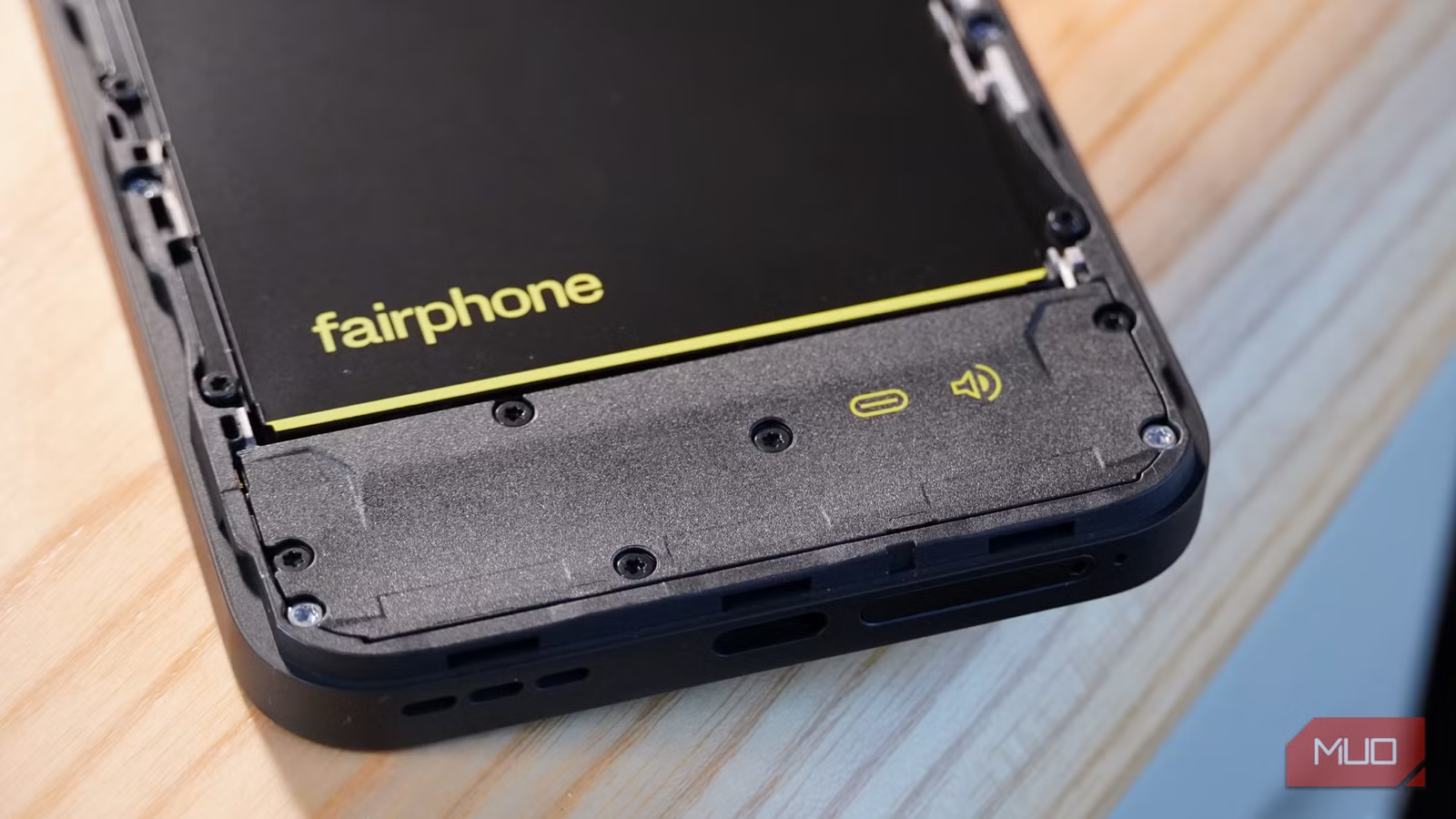
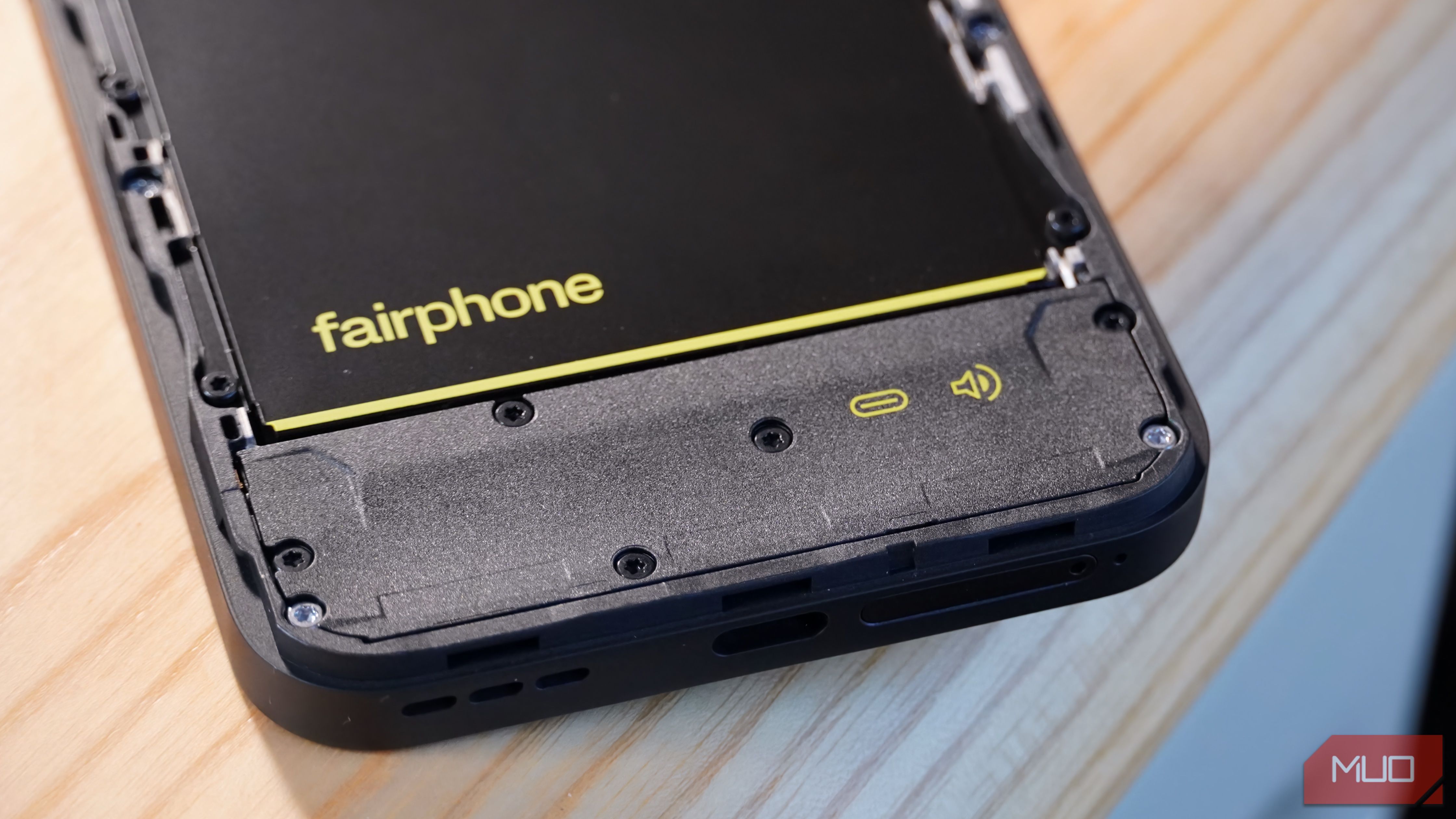

Phone makers have spent the best part of a decade making your smartphone battery harder to reach than Fort Knox. We’ve all been there: sealed glass backs, proprietary adhesive, pentalobe screws — the full works.
But now, a new law is forcing smartphone manufacturers to rethink phone design. It’s definitely not because phone developers want to, that’s for sure, but it’s absolutely going to impact smartphone design, starting from now.
Related
Why charging your phone overnight isn’t bad anymore
Charging your smartphone overnight isn’t nearly as dangerous as everyone makes out.
The EU’s new battery rules are already affecting smartphone designs
And other hardware, too
In February 2024, the European Union’s Battery Regulation (2023/1542) came into force. With it came a whole new raft of rules designed to reduce e-waste, improve battery sustainability, and standardize rules across all EU member states.
Of course, standardizing for the EU doesn’t mean the ruling will only apply to Europe. The European region buys around 25 percent of the global smartphone supply each year, but smartphone manufacturers aren’t switching up a quarter of their manufacturing processes to account for this.
Instead, it means the EU’s Battery Regulation is pushing manufacturers to offer much better access to batteries, displays, charging ports, and more, in a bid to help folks worldwide keep fixing phones instead of chucking them at the first sign of trouble, with user-replaceable batteries and other parts a core part of the focus.
In conjunction, the EU also codified a separate ruling requiring manufacturers to make critical parts available within 5-10 working days and to keep them in stock for 7 years after the end of sales of the product model, again forcing manufacturers to keep parts in stock longer to combat e-waste.
It all means that smartphone manufacturers care a whole lot more about your battery, and it’s only going to intensify after February 2027.
What “user-replaceable” actually means
It’s not like slotting in a new set of AAs
“User-replaceable” brings up some strong ideas about popping the back off a smartphone and instantly slotting in a new one. Unfortunately, it’s not that simple, and the regulation doesn’t really cover battery tech to that degree. But it does have some provisions for making it easy.
The rule says batteries must be “readily removable and replaceable” by the end user without “specialized tools — unless provided free of charge with the product.” Furthermore, adhesive bonds that require heat treatment or solvents are banned, and if a manufacturer needs you to use a specific screwdriver head type to remove the battery, they must include it (or provide one on request).
In that, the EU battery rulings push smartphone manufacturers to make phones servicable in a way most of us would like, but they’re not “hot-swappable” in the sense that hardware changes are plug and play.
There’s already something tangible to look at on this front, mind. Since June 2025, every smartphone sold in the EU has to carry a standardized energy label — think the efficiency ratings you’d find on a washing machine, but for your phone. As an EU stipulation, smartphones sold in the US don’t carry the bright yellow EnergyGuide label, but given that the devices will run to the same specs, it’ll be easy enough to check.
Mixed messaging about a “get out clause”
The EU’s information is a complete mess
Amir Bohlooli / MUOCredit: Amir Bohlooli / MUO
Basically, there are two regulations affecting smartphone batteries running in parallel, and that’s where all the confusion is coming from.
When I started writing this article, I’d planned a section detailing how, although the EU had gone strong on battery reforms, it had left a tantalizing backdoor for the big manufacturers — and maybe it has, for a period. If a smartphone battery remained at 80 percent after 1,000 battery cycles and the device carries at least IP67 water and dust resistance, it was considered exempt, as laid out in Annex II of Regulation (EU) 2023/1670, the EU’s Ecodesign Regulation, first issued in 2009.
The new Battery Regulation (2023/1542) oversees end-of-life, replaceability obligations from February 2027, including user-replaceable, recycling, and battery passport elements, and is the newer regulation.
BUT here’s the thing: the newer regulation still hasn’t completely replaced the old one. Yes, it’s very confusing, and is also 100 percent subject to change, hence why there is a huge amount of differing opinions on who will be exempt in the future. At the time of writing, as I understand the situation:
- 2023/1670 (Smartphone Ecodesign) remains in force, which means the battery exemption carve-out is still legitimate.
- 2023/1542 (Battery Regulation) adds more replacability obligations on top of that, but according to the document, it actually defers to 2023/1670, where the two overlap, which could also mean the exemption remains in place.
- 2024/1781 (Amendment to 2023/1542) will replace 2023/1670 (first issued in 2009), but is still awaiting smartphone-specific language regarding batteries and exemptions (if at all).
What it means is that despite all the bluster about the EU’s Battery Regulation coming into force in February 2027, the original exemption won’t be immediately replaced. At least, that’s how I’m reading it all — if I’m wrong, please leave a comment, and I’ll happily update this information.
Related
I stopped buying cheap USB chargers after learning what “PPS” actually does for my phone
Not all USB-C chargers are the same, and most people are unfamiliar with PPS chargers.
So, how does all of this affect your smartphone?
Flagships, mid-range, and budget all get some impact
So, if you’re still with me, the big losers in all of this aren’t necessarily going to be the flagship manufacturers, as they can absorb some of the cost of the changes and have large, global networks. I mean, they probably won’t do much absorbing, because when does that ever happen, but in theory, it could.
Mid-range and budget smartphones are definitely going to struggle with this the most. Not hitting the IP67 threshold or having a battery that can’t cope with the 80 percent/1,000 cycle rule means you’re cut off from an entire continent of potential sales. Given the EU bought more than 300 million new phones in 2025, that’s some drop-off.
Some smartphone manufacturers are already complying with the regulations, too. The Fairphone 6 is completely compliant because it matches the Fairphone company’s ethos. But the more surprising device is the Samsung Galaxy XCover 7, from Samsung’s little-known rugged device line. But, actually, that’s pretty much it for now.
However, Apple, Samsung, and Google are all making various large strides towards compatibility. For example, the iPhone 16 rolled out Apple’s electrically-released tape adhesive, which releases the battery from the phone with a small voltage; it’s also expanded its Self Service Repair Store coverage. The other two tech giants are also working on making battery replacement vastly more simple.
The long and the short of the EU’s ruling, though, is that post-2027, batteries will become a lot easier to manage, even with the existing carve-out, because the big tech companies know that the exemption won’t exist for long.
SoC
Qualcomm Snapdragon 7s Gen 3
Operating System
/e/OS
Rear camera
50MP Sony Lytia 700C
Others
Repairable with a single T5 screwdriver


