

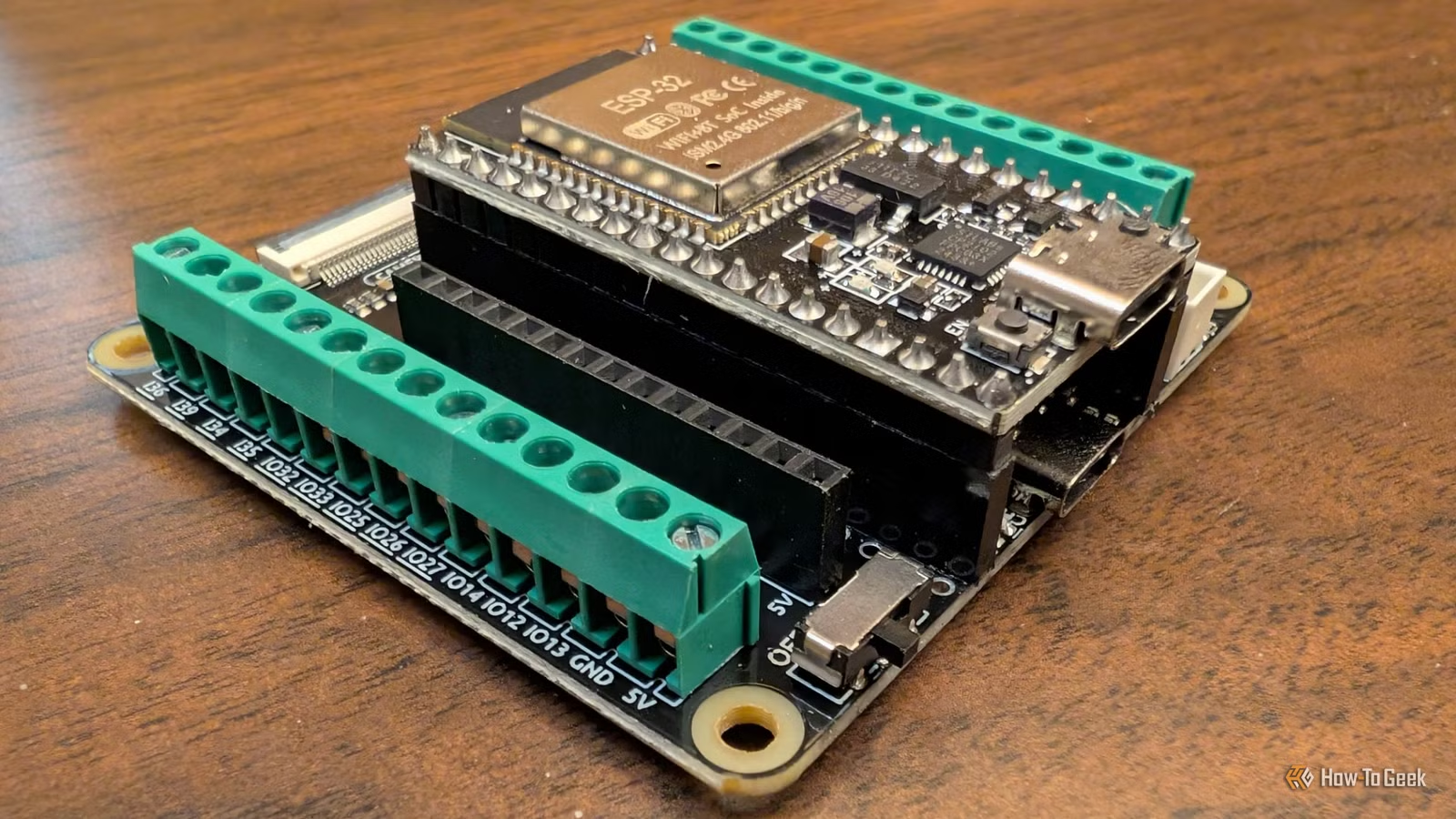
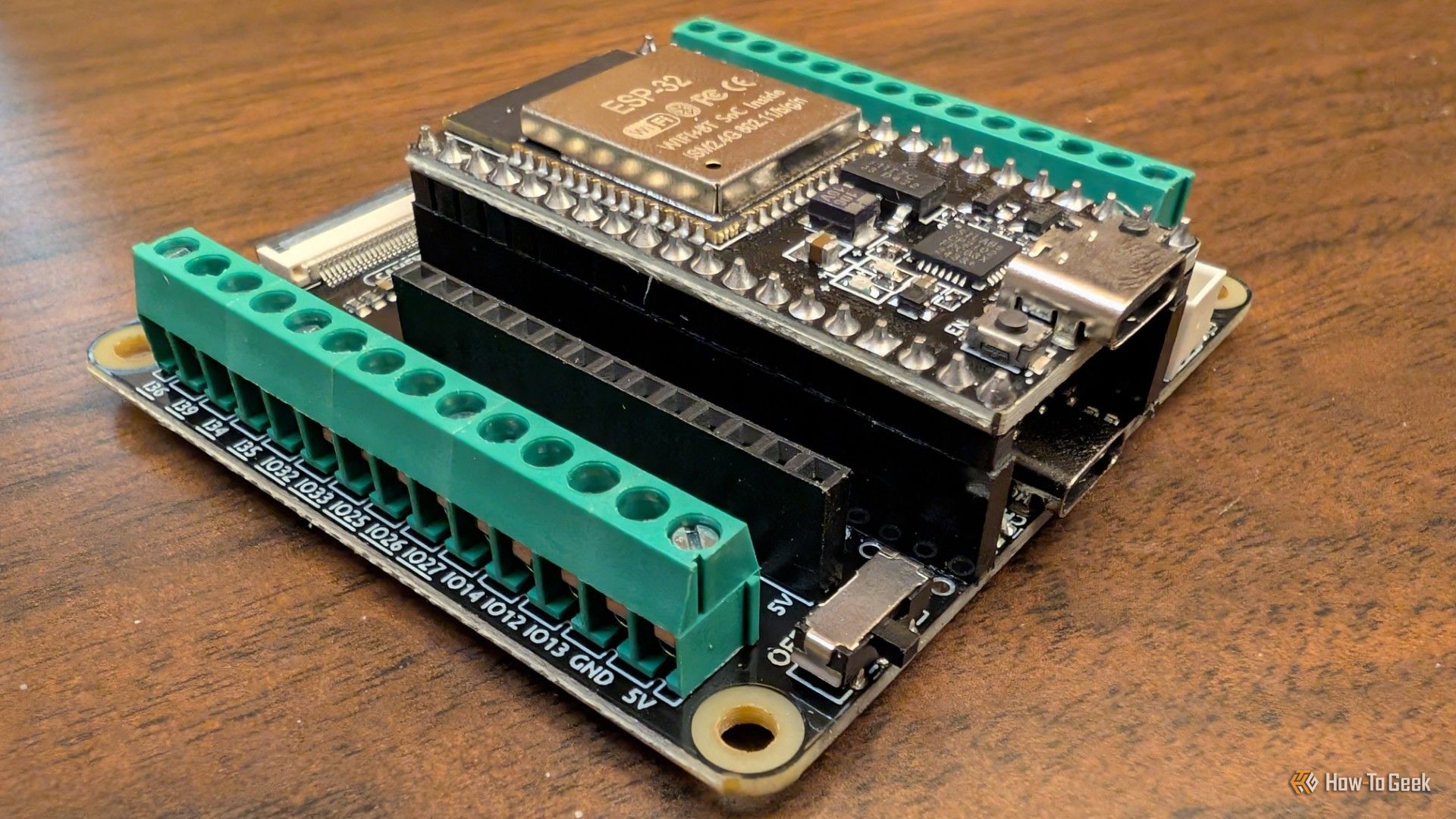
Buying an ESP32 development board can be a little confusing for a newcomer. These dev kits are available from a variety of different manufacturers at slightly different prices, and some even come embedded in other devices.
So what’s in a name?
The “ESP32” part refers only to the chip
Third parties manufacture development boards too
Espressif Systems designs and manufactures the ESP32 system-on-chip, which you can think of as the brain of the operation. Which chip you have (for example, the ESP32-S3) determines performance, wireless features like mesh networking, and total RAM.
In order for you to put the chip to use in a project, it needs to be implemented onto a circuit board alongside other components like a USB port, pin headers, a power regulator, LEDs, and more. To make things slightly confusing, Espressif also produces “official” development boards like the ESP32-S3-DevKitC-1.
Credit: Espressif Systems
But the company also sells its chips wholesale to third-party manufacturers, who then implement them on their own products, including dev kits for the average hobbyist. When you see an ESP32 board (or any similar microcontroller) that’s branded, that’s what you’re buying.
Popular brands include Seeed Studio, Adafruit, SparkFun, LilyGo, WeAct Studio, and more. You’ll also find many boards on AliExpress that either lack branding completely or come from brands that aren’t easily traceable. These are often cheaper than so-called “premium” offerings from companies like Seeed Studio and Adafruit.
When you buy a board from a third party, you’re buying their implementation of the chip. It’s still compatible with the official Espressif software development kit (SDK), and it works with the same long list of third-party SDKs. On top of this, it might come with some improvements or extras that make your life a little easier.
Quality control, USB-C, and wireless performance
Why you should pick one brand over another
Let’s take a look at the official Espressif ESP32-S3-DevKitC-1 again for a moment. It’s a pretty average-looking offering, with soldered pin headers for attaching accessories, boot and reset buttons, and a single RGB LED light in the middle.
Two criticisms of this official offering are that Espressif chose to use micro USB and that the board itself is larger than it needs to be. Now take a look at Seeed Studio’s XIAO ESP32-S3 instead. It lacks pin headers altogether, and the form factor is a lot smaller. The boot and reset buttons are absolutely tiny, and there’s an extra LED.
Credit: Patrick Campanale / How-To Geek
Another notable difference is that Seeed Studio’s XIAO line uses USB-C throughout, which makes charging and flashing the chips more practical in an age where most of us are happy to see the back of micro USB. Seeed Studio further iterates on this with different versions that use the same base ESP32 chip.
The XIAO ESP32-S3 Plus costs marginally more (41 cents, to be precise) but includes twice the flash storage (16MB) and more I/O pins, at the cost of greater power consumption. Buying from a third party gives you more options to shop around and find a chip that perfectly suits your next project, whether you want the lowest possible power draw, smallest possible chip, or the best possible performance.
There are other factors at play here too. Quality control is generally seen as better on chips from so-called “reputable” companies. I’ve seen more than a few complaints among hobbyists about cheap chips exhibiting very poor Wi-Fi or Bluetooth performance, something you can theoretically fix by adding a better antenna.
You might also encounter a greater rate of dud chips from cheaper manufacturers, owing to this lapse in quality control. If you have a habit of killing your microcontrollers, cheap might be good. On the other hand, you might not want to minimize the chance of hardware letting you down if you already doubt your own abilities.
Embedded devices go even further
Match your chip with displays and more
The ESP32 and similar microcontrollers often wind up embedded in other devices, including retail-ready smart home sensors and similar controllers. Another example of this is displays, including LCD, OLED, and E-Ink varieties.
Take Seeed Studio’s ReSpeaker Lite with ESP32-S3, XIAO 7.5-inch ePaper Panel, M5Stack’s Stopwatch Dev Kit, as examples. Buying hardware that already has your chip of choice embedded in it saves you time and effort while locking you into a form factor. You’re trading the freedom to mix and match for convenience.
Brand
Seeed Studio
CPU
ESP32-S3R8
The reSpeaker Lite Voice Assistant Kit includes a two-mic array, a pre-soldered XIAO ESP32-S3 controller, and an XMOS XU316 audio processor with onboard natural language understanding, interference cancellation, acoustic echo cancellation, noise suppression, and automatic gain control. Hooked up a 5W speaker, you can create your own local voice assistant that you can connect to Home Assistant via ESPHome.
That’s the beautiful thing about the state of microcontrollers in 2026. You can choose something that suits your use case, desired form factor, and price range. You can follow easy tutorials and create simple smart home sensors with frameworks like ESPHome, or you can go it alone and use an SDK you’re familiar with to come up with your own gadgets.
Looking for an ESP32 starter project? Try creating a smart home device that solves real problems.
