

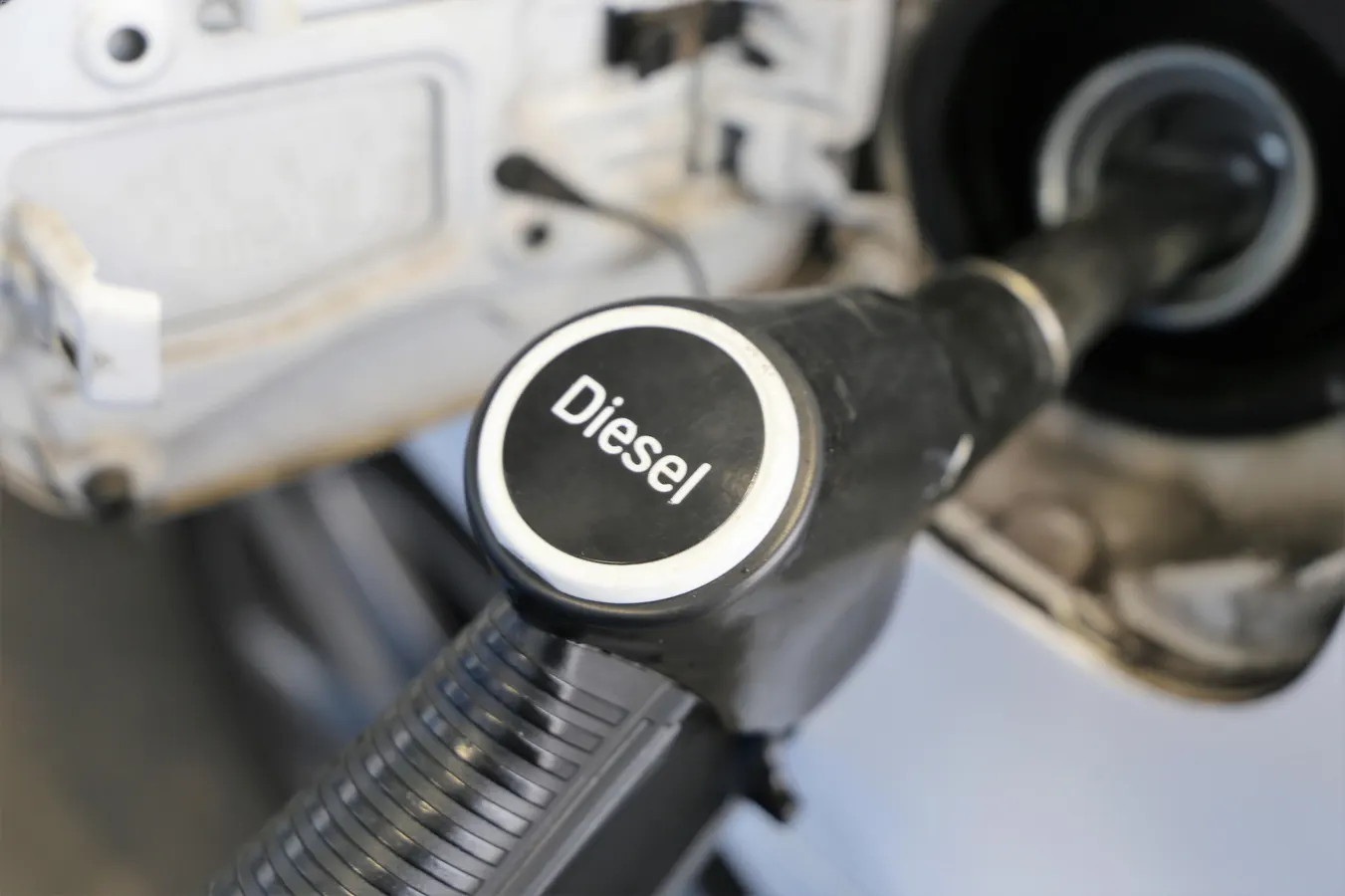
Stellantis is has quietly added diesel options back onto some key car models.
getty
If you read certain publications, or look at the US market, you might be led to believe that the EV revolution is failing. Ford posted a huge $8.2 billion loss for 2025, blaming its struggles in this market for the shortfall. General Motors postponed the 2024 launch of its first electric Buick in the USA indefinitely. But Stellantis has gone even further. The company seems to think its own woes with electrification could be mitigated by a return to diesel.
Stellantis Does Diesel After Falling Behind In EVs
Stellantis owns Jeep, Dodge, Chrysler, Ram, Abarth, Alfa Romeo, Citroen, DS, Fiat, Lancia, Maserati, Opel, Peugeot, and Vauxhall. That’s quite a portfolio with plenty of brands that potentially fit electric options well, but its first generation of EVs were hedged bets, seeming to all have the same drivetrain (from compacts to vans). Since then, the company has been improving, with great options like the Abarth 600e and Vauxhall / Opel Grandland. The Leapmotor joint venture, producing the bargain T03 and C10, also looked promising. It was never going to be a big seller at its astronomical price, but the Maserati GranTurismo Folgore is the best electric sportscar currently on the market.
However, if you look at the top 25 selling BEVs in Europe in 2025, where electric options reached 19.5% of the market, up 4.1% from 2024, only one Stellantis vehicle, the budget-friendly Citroen e-C3, made the list. When it comes to brands, Peugeot was in 13th place, Citroen in 16th, Opel in 19th and Leapmotor in 24th. So the picture wasn’t all bad, but Stellantis EVs lag far behind Volkswagen and its Group marques, like Skoda and Audi. Despite its recent issues, Tesla sold more BEVs than Stellantis, too, and even premium BMW wasn’t far behind all Stellantis brands put together.
The Citroen e-C3 is Stellantis’s bestselling EV model.
© 2023 Bloomberg Finance LP
You’d think that the reaction to this would be “we need to build better electric cars”, but instead Stellantis has surreptitiously reintroduced diesel versions of some of its most popular models, including the Peugeot 308 and DS No. 4. This is a strange decision considering only 7.7% of the European market was diesel cars in 2025, with figures continuing to plunge. In the UK market, diesels are already at just 5.33% share, and in Norway only seven cars of any combustion type were sold in January. So Stellantis might sell a few additional cars in some countries by offering more drivetrain choice, but reentering a declining market doesn’t seem very likely to revive the company’s fortunes in a big way.
The Stellantis strategy in the US makes a little more sense. With the Trump administration’s rollback of green initiatives and incentives, and the US EV market’s already more limited electric penetration than Europe or China, there is still plenty of life left in selling combustion. Brands like Jeep, Dodge Chrysler and Ram have a strong heritage in ICE, with legendary engines like the V8 Hemi. There will be plenty of buyers for these for a while in the USA, although the export options will continue to diminish as other global markets inexorably go electric.
Stellantis Goes Against EV Battery Trends
For now, reanimating ICE might make some revenue for Stellantis in the USA. But the writing is on the wall for combustion in 2026. There are BEVs arriving this year that compete head-to-head with ICE both on range and charging / refueling speed. The new BMW iX3 boasts 500 miles of WLTP range (400 miles in the EPA test) and charging up to 400kW that can add 231 miles in ten minutes, this is one car that is ready for any journey. The forthcoming Volvo EX60 offers slightly more range, and these two vehicles will be just the beginning as the downsides of electric disappear.
The BMW iX3 will arrive capable of 500 WLTP miles, dispelling range anxiety.
AFP via Getty Images
New battery chemistries are starting to hit trial stages too (finally). FAW in China has trialed solid-state and semi-solid-state batteries through its Hongqi brand. Solid-state batteries have long been considered the “holy grail” of EVs, but so far, they have remained like hydrogen – due in a couple of years, every year. But FAW plans to introduce vehicles using them by 2027, with early samples achieving up to 400Wh/kg densities already. Not to be left behind, Dongfeng is promising vehicles with solid-state batteries capable of 1,000km (620 miles) of range by November this year, and BYD is planning to introduce the technology by 2027. Even Volkswagen Group has been showing off a Ducati motorbike with solid-state batteries from US specialist QuantumScape.
Also in China, Changan and CATL will be launching a vehicle with sodium-ion batteries branded Naxtra in mid-2026, the Changan Nevo A06. Sodium-ion batteries offer similar density to current Lithium Iron Phosphate cells but with much better cold weather performance, including triple the discharge power at -30C. Sodium-ion batteries are also safer with a reduced risk of thermal runaway, faster charging and a lot lower production cost. Sodium is the sixth most abundant element, potentially reducing battery raw material costs by up to 40%.
Stellantis Can’t Resist The Inevitable
While the EU has rolled back its 2035 ban on combustion, this is only going to create a partial delay. Back in 2020, I predicted that 2023 or 2024 would be the tipping point for EVs, but that was before the true impact of Covid was realized and before Russia invaded Ukraine, causing further global economic ructions. The date has been pushed a bit further into the future, but now 2026 is looking like an important year, and possibly the time when EV capabilities match those of ICE for similar money, or even less.
This makes the Stellantis return to diesel even more surprising. Only museums invest in the past. The companies that will thrive in the future look towards the direction of innovation. Diesel engines had their brief period of success due to lower CO2 emissions, before we realized that the other pollution they produce can have more immediate downsides on our health. Diesel’s potential for decent fuel economy and long ranges on a single tank might still make them attractive for drivers who do lots of miles, particularly in the commercial sector. But with the technological advances in batteries rolling out – not to mention the faster charging that is accompanying them – any attempt to dial back the clock on combustion looks increasingly doomed.
