
Close Menu
Tech Nova Mindset – Empower Innovation and Forward Thinking

    Subscribe to Updates

    Get the latest creative news from FooBar about art, design and business.

    What's Hot

    This Week’s Awesome Tech Stories From Around the Web (Through August 8)

    August 8, 2026

    How to Disable Gemini in Gmail and Google Docs

    August 8, 2026

    How ideas of a vast censorship network moved from the online fringe to Trump policy

    August 8, 2026
    Facebook X (Twitter) Instagram
    Trending
    • This Week’s Awesome Tech Stories From Around the Web (Through August 8)
    • How to Disable Gemini in Gmail and Google Docs
    • How ideas of a vast censorship network moved from the online fringe to Trump policy
    • The Pivot From Tech Expert to Organizational Leader
    • Scientists Used AI to Create 16 New Viruses
    • The Download: a censorship conspiracy theory and the first virus created by AI
    • V2X Technology Gets a 5G Cellphone Network Solution
    • AI may respond differently to bosses and subordinates
    Tech Nova Mindset – Empower Innovation and Forward Thinking
    • Home
    • Gadgets
    • Reviews
    • Tech News
    • Future Tech
    • AI & Robotics
    • How-To Guides
    • More
      • Cybersecurity
      • Startups & Innovation
    Tech Nova Mindset – Empower Innovation and Forward Thinking
    Home»Reviews»New 3D device computes using living brain cells — bioelectronic device uses 3D electronic mesh design paired with living tissue
    Reviews

    New 3D device computes using living brain cells — bioelectronic device uses 3D electronic mesh design paired with living tissue

    kirklandc008@gmail.comBy kirklandc008@gmail.comApril 24, 2026No Comments3 Mins Read
    Facebook Twitter Pinterest LinkedIn Tumblr Email
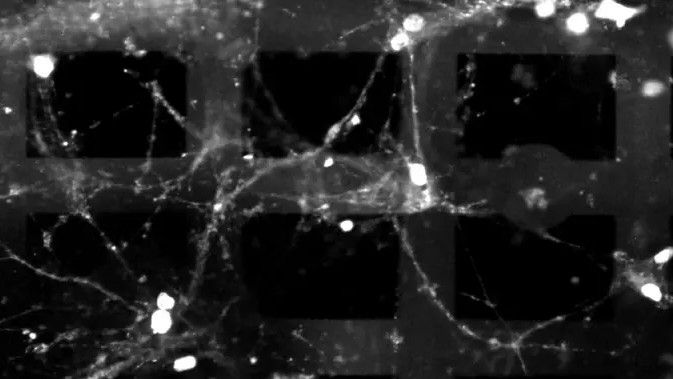
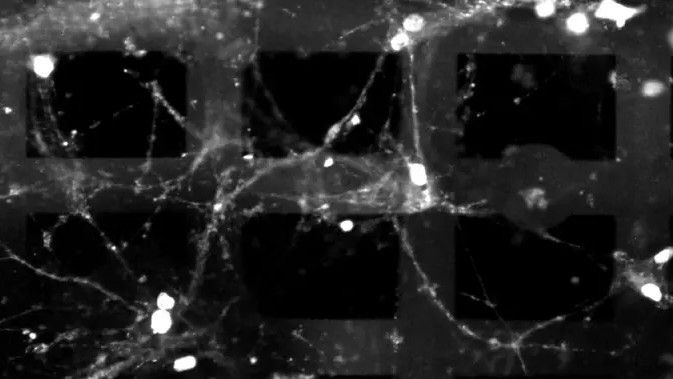
    Biological neurons growing over and through a layer of a 3D electronic mesh.
    Share
    Facebook Twitter LinkedIn Pinterest Email

    Researchers at Princeton University have created a three-dimensional neural network device that combines living brain cells and advanced embedded electronics. According to a recent press release, this 3D bioelectronic computer was programmed to differentiate patterns using computational techniques.

    Basically, we are looking at living brain cells performing computational tasks outside the brain, using embedded electronics. This is not the first time scientists have used brain cells to perform computation. In previous attempts, scientists cultivated 2D cultures in petri dishes or 3D clusters, probing and monitoring activity from the outside.

    The Princeton research took a different approach. To build the device, the team created a 3D mesh of microscopic wires and electrodes supported by a thin layer of epoxy. They then cultured tens of thousands of neurons into a vast 3D network that can perform computation, using the mesh as a scaffold.

    Article continues below

    You may like

    According to the researchers, this new approach “enabled them to record and stimulate the neurons’ electrical activity at a much finer scale than past approaches”. Over the course of six months, they observed how the network developed, tested techniques to reinforce or weaken links between key neurons, and eventually trained an algorithm to identify recurring pulse patterns.

    To test the system, the researchers presented two distinct patterns in separate experiments, and it successfully differentiated the patterns in both cases. The team aims to progressively scale the device to perform increasingly complex tasks.

    According to the paper’s first author, Kumar Mritunjay, a postdoctoral researcher in electrical and computer engineering, the technology could “not only help uncover the computing secrets of the brain but can also assist in understanding and possibly treating neurological diseases.”

    The original aim of the research was to investigate fundamental problems in neuroscience by studying the activities of living brain cells. That aim remains. However, the researchers realized that it could also play a role in solving one of AI’s key bottlenecks: power consumption.

    Get Tom’s Hardware’s best news and in-depth reviews, straight to your inbox.

    “The real bottleneck for AI in the near future is energy,” said Fu. “Our brain consumes only a tiny fraction — about one millionth — of the power consumed by today’s AI systems to perform similar tasks,” said Tian-Ming Fu, assistant professor of Electrical and Computer Engineering and member of the research team.

    The researchers hope the device may reveal some of the secrets behind this, making it possible to replicate the discoveries and solve AI’s power consumption problem.

    The paper was published in the journal Nature Electronics.

    bioelectronic Brain Cells computes design device electronic living Mesh paired tissue
    Share. Facebook Twitter Pinterest LinkedIn Tumblr Email
    kirklandc008@gmail.com
    • Website

    Related Posts

    A New Device Eases One of the Most Annoying Parts of Routine Physicals

    August 5, 2026

    Improving the Capabilities of Cognitive Radar and Electronic Warfare Systems

    July 27, 2026

    This Is Donald Trump’s AI Brain Trust

    July 27, 2026
    Leave A Reply Cancel Reply

    Top Posts

    Nothing CEO says phone prices are going to keep going up

    June 12, 20267 Views

    Google DeepMind Plans to Track AGI Progress With These 10 Traits of General Intelligence

    March 21, 20263 Views

    The AirPods 4 and Lego’s brick-ified Grogu are our favorite deals this week

    October 12, 20253 Views
    Stay In Touch
    • Facebook
    • YouTube
    • TikTok
    • WhatsApp
    • Twitter
    • Instagram
    Latest Reviews

    Subscribe to Updates

    Get the latest tech news from FooBar about tech, design and biz.

    Recent Posts
    • This Week’s Awesome Tech Stories From Around the Web (Through August 8)
    • How to Disable Gemini in Gmail and Google Docs
    • How ideas of a vast censorship network moved from the online fringe to Trump policy
    • The Pivot From Tech Expert to Organizational Leader
    • Scientists Used AI to Create 16 New Viruses

    This Week’s Awesome Tech Stories From Around the Web (Through August 8)

    August 8, 2026

    How to Disable Gemini in Gmail and Google Docs

    August 8, 2026

    How ideas of a vast censorship network moved from the online fringe to Trump policy

    August 8, 2026

    The Pivot From Tech Expert to Organizational Leader

    August 7, 2026
    Facebook X (Twitter) Instagram Pinterest
    • About Us
    • Contact Us
    • Privacy Policy
    • Terms and Conditions
    • Disclaimer
    © 2026 TechNovaMindset. Designed by By Pro.

    Type above and press Enter to search. Press Esc to cancel.