
Close Menu
Tech Nova Mindset – Empower Innovation and Forward Thinking

    Subscribe to Updates

    Get the latest creative news from FooBar about art, design and business.

    What's Hot

    How One Startup Built a (Mostly) China-Free Robot

    August 4, 2026

    The 2026 R&D Benchmark Report: Waste, AI and the Race to Market

    August 4, 2026

    Is AI making us dumber? Maybe not. But our skills are at risk

    August 4, 2026
    Facebook X (Twitter) Instagram
    Trending
    • How One Startup Built a (Mostly) China-Free Robot
    • The 2026 R&D Benchmark Report: Waste, AI and the Race to Market
    • Is AI making us dumber? Maybe not. But our skills are at risk
    • Is This Poker Player Bluffing? The AI Thinks So
    • The Download: US robot restrictions, and ICE’s DNA grab
    • ‘Everyone Is Doing It’: The Truth About AI in Hollywood
    • Did an AI Music App Just Snitch on the Song of the Summer?
    • Trump’s AI protectionism has come for robotics
    Tech Nova Mindset – Empower Innovation and Forward Thinking
    • Home
    • Gadgets
    • Reviews
    • Tech News
    • Future Tech
    • AI & Robotics
    • How-To Guides
    • More
      • Cybersecurity
      • Startups & Innovation
    Tech Nova Mindset – Empower Innovation and Forward Thinking
    Home»Tech News»‘My phone is about to die and I don’t want to buy anything’ — I tested Google Maps’ Ask Maps AI and it actually helped
    Tech News

    ‘My phone is about to die and I don’t want to buy anything’ — I tested Google Maps’ Ask Maps AI and it actually helped

    kirklandc008@gmail.comBy kirklandc008@gmail.comMarch 24, 2026No Comments6 Mins Read
    Facebook Twitter Pinterest LinkedIn Tumblr Email
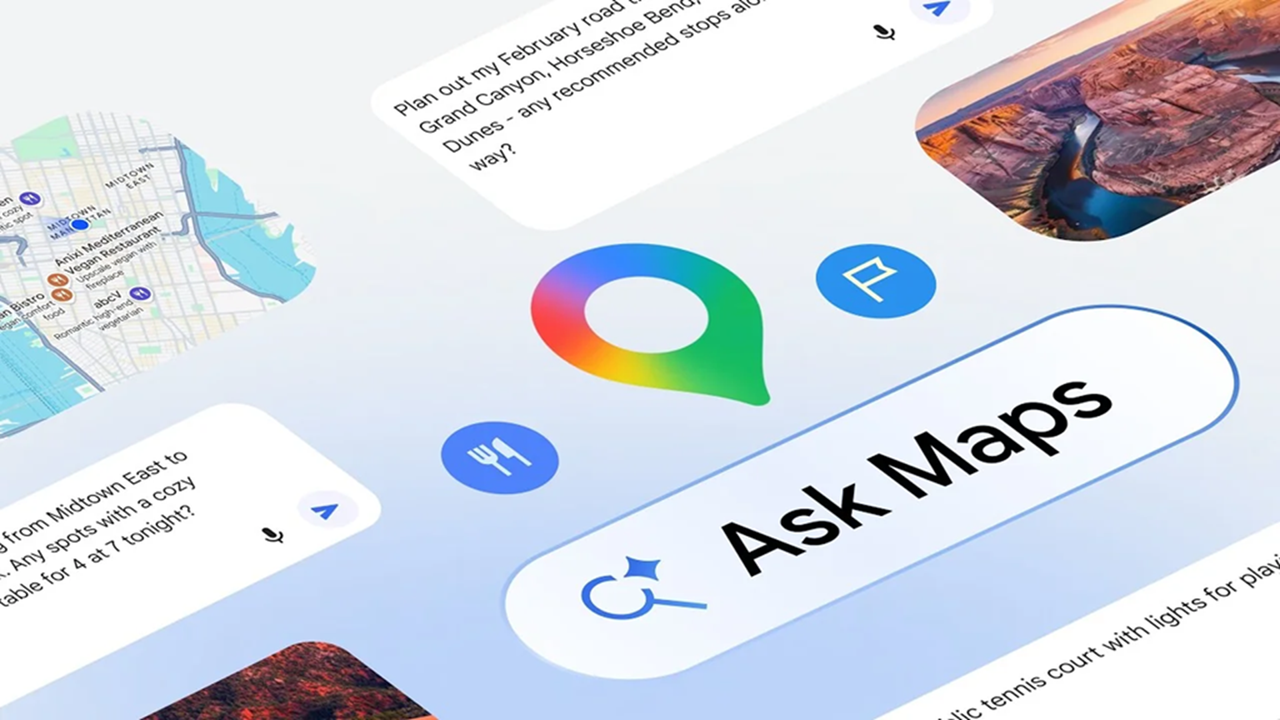
    Google Ask Maps
    Share
    Facebook Twitter LinkedIn Pinterest Email

    Google Maps has spent years perfecting directions. Now it is trying to understand intentions.

    With the rollout of its new Ask Maps feature, Google is nudging one of its most widely used apps into a different role. It no longer just helps you find places. It tries to interpret what kind of place you actually want. Instead of typing in something like “restaurant” or “parking,” you can now ask questions that sound like something you would say out loud, the kind of slightly vague, slightly emotional requests that used to stump a search bar.

    I began testing it with a question that felt mildly inconvenient in real life but almost impossible for a traditional map. “My phone is about to die and I don’t want to buy anything. Where can I charge it nearby?”

    Article continues below

    You may like

    The answer that came back felt like good advice. “Try a public library or transit hub,” it suggested, then dropped pins for nearby options. One listing included a short summary pulled from reviews that mentioned plenty of outlets and open seating.

    That tone carries through most of the experience. Ask Maps does not simply return locations. It tries to narrate them.

    Encouraged by that first result, I leaned further into ambiguity. “I need somewhere quiet to sit for an hour that is not a coffee shop.” The AI offered libraries again, along with a bookstore and a park. One entry noted a “calm environment with comfortable seating,” while another described a “relaxed atmosphere in the evenings.” It was helpful, though slightly more generic. The system seemed confident about categories, though perhaps not nuance.

    That pattern turned into the rhythm of testing. When the request lined up neatly with real-world data, the answers felt sharp. When the request drifted into something more subjective, the responses became more literal.

    Sign up for breaking news, reviews, opinion, top tech deals, and more.

    There were still moments where it felt like something had clicked.

    I tried a question that could have come straight from a text thread. “Find me a place to meet friends halfway that feels cozy and not too loud.” The result was a short list of restaurants positioned between two neighborhoods, each with a small note about atmosphere. One was described as having “warm lighting and moderate noise levels,” another as “popular for small groups and relaxed dining.” The locations made sense geographically, but what stood out was how the descriptions matched the tone of the question.

    That is where Ask Maps begins to feel like more than a novelty. It is not just matching keywords. It is translating intent into suggestions.


    What to read next

    Under the hood, the system is pulling from a massive dataset that includes hundreds of millions of places and an even larger pool of user reviews. The AI stitches that information together into short summaries. You get a condensed version that highlights what matters.

    That compression is one of the feature’s strongest qualities. It saves time in a way that feels immediate.

    Still, the limits are easy to find if you push a little. I asked for “a hidden gem that is easy to get to tonight.” The response leaned heavily on highly rated places that were anything but secret. The AI had clearly equated “hidden gem” with “highly reviewed,” which is not the same thing.

    Scenic walks

    Another attempt aimed for something more abstract. “Somewhere I can walk around and feel like I am in a different place.” The results included a scenic waterfront, a park, and a busy shopping district. One description highlighted “secret and slightly surreal atmosphere.”

    Even in those moments, the underlying shift is hard to ignore. A map app is now attempting to answer questions about mood, atmosphere, and personal preference. That alone would have sounded unrealistic not long ago.

    The feature becomes more convincing when it leans into structured scenarios. I tried planning a day out with a prompt that felt closer to a real use case. “I want a scenic drive with somewhere good to stop for lunch.” The response included a suggested route, estimated travel time, and a few stops along the way. Each stop came with a short explanation, such as “known for views” or “casual dining with local favorites.” It was not a full itinerary, but it felt like the beginning of one.

    That is where Ask Maps starts to hint at its long-term potential. It is not just about answering questions. It is about helping you move from idea to plan without leaving the app.

    Personalized Travel

    There is also a subtle layer of personalization running through all of this. Google Maps already knows what you have searched for, where you have been, and what you have saved. Ask Maps builds on that context, which is why results can feel tailored even when the question is vague. It is doing more than reading your words. It is factoring in your history.

    For most users, that will feel helpful. It reduces the effort required to find something that fits. At the same time, it makes the experience a little less predictable. The same question asked by two different people could lead to different answers, shaped by their past behavior.

    That tradeoff is becoming familiar across AI tools. You gain convenience and speed, but you rely more on the system’s interpretation. Most of the time, that interpretation is close enough.

    Ask and receive

    Ask Maps works more often than it doesn’t. It handles practical questions with ease, navigates vague requests better than expected, and stumbles mainly when language drifts into something highly subjective.

    More importantly, it changes how you think about using Maps in the first place. Instead of translating your needs into keywords, you can describe them directly. The app meets you halfway.

    That shift may seem small, but it reflects a larger change in how digital tools are evolving. Interfaces are becoming less about commands and more about conversation. The burden of precision is moving away from the user and onto the system.

    Google Maps, of all places, is becoming part of that trend.

    It is still a map. It still gets you where you need to go. But it is also starting to understand why you might want to go there, and that turns a familiar tool into something that feels quietly new.

    Follow TechRadar on Google News and add us as a preferred source to get our expert news, reviews, and opinion in your feeds. Make sure to click the Follow button!

    And of course you can also follow TechRadar on TikTok for news, reviews, unboxings in video form, and get regular updates from us on WhatsApp too.

    The best business laptops for all budgets

    Our top picks, based on real-world testing and comparisons

    Buy die Dont Google helped Maps Phone Tested
    Share. Facebook Twitter Pinterest LinkedIn Tumblr Email
    kirklandc008@gmail.com
    • Website

    Related Posts

    Private Claude Chats Exposed in Google and Bing Search Results

    July 27, 2026

    Stop scrolling: Light’s $299 flip phone and its retro specs could change your life

    July 25, 2026

    Google gives developers an AI bug hunter that also writes patches

    July 25, 2026
    Leave A Reply Cancel Reply

    Top Posts

    Nothing CEO says phone prices are going to keep going up

    June 12, 20267 Views

    Google DeepMind Plans to Track AGI Progress With These 10 Traits of General Intelligence

    March 21, 20263 Views

    The AirPods 4 and Lego’s brick-ified Grogu are our favorite deals this week

    October 12, 20253 Views
    Stay In Touch
    • Facebook
    • YouTube
    • TikTok
    • WhatsApp
    • Twitter
    • Instagram
    Latest Reviews

    Subscribe to Updates

    Get the latest tech news from FooBar about tech, design and biz.

    Recent Posts
    • How One Startup Built a (Mostly) China-Free Robot
    • The 2026 R&D Benchmark Report: Waste, AI and the Race to Market
    • Is AI making us dumber? Maybe not. But our skills are at risk
    • Is This Poker Player Bluffing? The AI Thinks So
    • The Download: US robot restrictions, and ICE’s DNA grab

    How One Startup Built a (Mostly) China-Free Robot

    August 4, 2026

    The 2026 R&D Benchmark Report: Waste, AI and the Race to Market

    August 4, 2026

    Is AI making us dumber? Maybe not. But our skills are at risk

    August 4, 2026

    Is This Poker Player Bluffing? The AI Thinks So

    August 4, 2026
    Facebook X (Twitter) Instagram Pinterest
    • About Us
    • Contact Us
    • Privacy Policy
    • Terms and Conditions
    • Disclaimer
    © 2026 TechNovaMindset. Designed by By Pro.

    Type above and press Enter to search. Press Esc to cancel.