

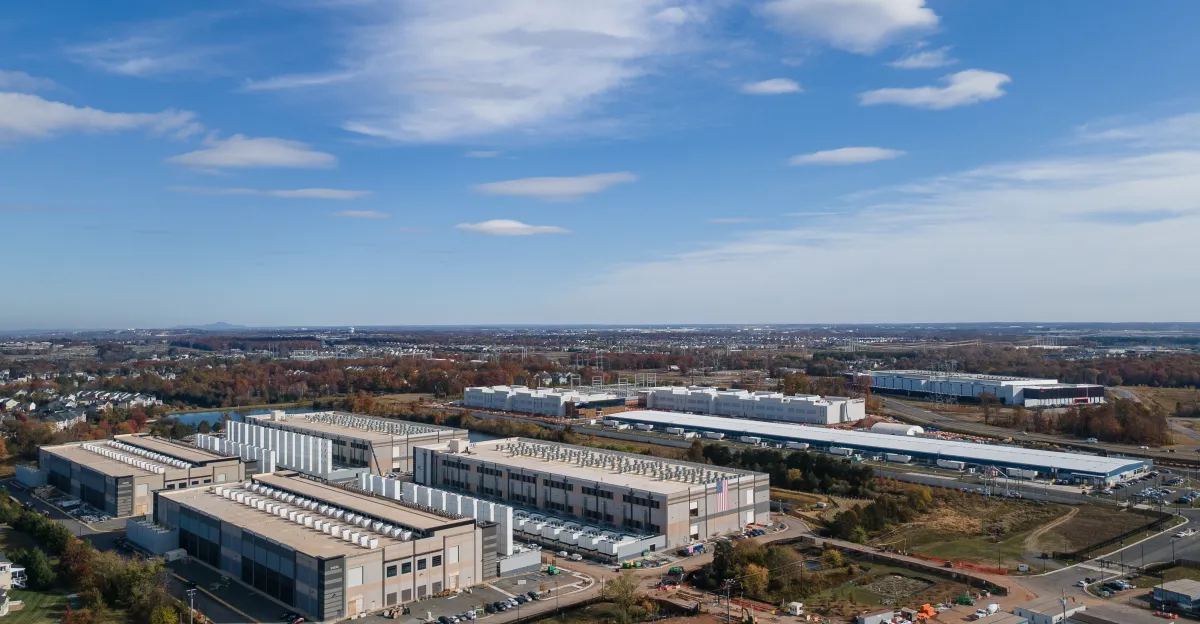
Microsoft wants to design more efficient data centers using materials that allow electricity to flow with zero resistance. If these new materials, called high-temperature superconductors, can make it to market, Microsoft thinks it could be a game changer for how data centers and the energy infrastructure they connect to are built.
Tech companies are facing backlash over how much power generative AI demands, delays connecting to power grids that lack the infrastructure to meet those demands, and the impact construction of new data centers has on local residents. High-temperature superconductors (HTS) could potentially shrink the amount of space needed for a data center and the transmission lines feeding it power.
“Microsoft is exploring how this technology could make electrical grids stronger and reduce the impact data centers have on nearby communities,” Microsoft GM of Global Infrastructure Marketing Alistair Speirs wrote in a blog published today.
“The future data center will be superconducting”
Today’s centers — and most of our energy infrastructure — rely on old-school copper wires, which conduct electricity pretty efficiently. HTS cables, however, can move an electrical current with zero resistance, slashing the amount of energy lost in the process. It also allows for cables that are lighter and more compact. You’ll already find HTS in MRI machines, and more recently used in short stretches for power lines in dense metropolitan areas including Paris and Chicago.
So far, though, their use has been limited in part because HTS cables have been more complicated and expensive to use in energy systems than copper cables. To reach zero resistance, the HTS would need to be cooled to very low temperatures — likely using liquid nitrogen. And the HTS “tape” that forms the basis of superconducting cables is typically made with rare-earth barium copper oxide material. While a superconducting cable only requires a small amount of rare-earth material, the supply chain for the rare earth element is still largely concentrated in China. A bigger challenge, experts tell The Verge, will be increasing the manufacturing capacity for this tape enough for it to be affordable.
That’s starting to change as a result of the power demands of generative AI. In recent years, tech companies have fueled research into the development of a nuclear fusion power plant, long considered the holy grail of clean energy. Much of the HTS tape manufactured today goes toward fusion research, and growth in that department has managed to lower costs for the material.
“That actually helped the supply chain and manufacturer variety, and even some of the costing of HTS … for us to, like, oh, ‘Well, let’s think about that. Now things have changed a little bit,’” says Husam Alissa, director of systems technology at Microsoft.
Microsoft is primarily interested in using HTS in two ways, Alissa tells The Verge. Inside a data center, smaller cables would allow for more flexibility in how the electrical rooms and racks of hardware are laid out. With funding from Microsoft, Massachusetts-based superconducting company VEIR demonstrated last year that HTS cables at a data center could deliver the same amount of power with about a 10x reduction in cable dimension and weight compared to conventional alternatives.
“The future data center will be superconducting … High power, more efficient, more compact,” says Ziad Melhem, professor in practice in the physics department at Lancaster University who sits on the editorial board for the Superconductivity Global Alliance. (Melhem disclosed that he previously worked at Oxford Instruments, which supplied Microsoft with components for its quantum computer system.)
Outside of the data center, Microsoft is open to working with energy companies to support the buildout of long-distance power lines using HTS. Expanding transmission lines has been one of the biggest bottlenecks when it comes to updating the power grid, connecting data centers, and building out more power supply. The process of getting approvals to build such large infrastructure across multiple jurisdictions can be long and arduous.
With power lines made from HTS, the amount of space needed for those power lines could shrink significantly. While overhead transmission lines might spread out over an area around 70 meters in width, superconducting cables might only need 2 meters of clearance, according to the Microsoft blog. The smaller area ostensibly shaves down the time and cost needed for construction.
“This is an obvious evolution of the use of this technology,” says Dennis Whyte, a professor of nuclear science and engineering at MIT. Whyte has not worked directly with Microsoft, but co-leads an effort to build a fusion machine called SPARC that’s a collaboration between MIT and a company called Commonwealth Fusion Systems that’s received funding from Bill Gates’ Breakthrough Energy Ventures.
The additional interest in HTS for data centers could also allow fusion companies get more of the material for less money, helping propel advances in nuclear fusion technology as well. Microsoft has separately inked a deal with another company developing a fusion power plant in Washington state. “It’s come full circle,” Whyte says.
Follow topics and authors from this story to see more like this in your personalized homepage feed and to receive email updates.
- AnalysisClose
Analysis
Posts from this topic will be added to your daily email digest and your homepage feed.
FollowFollow
See All Analysis
- EnergyClose
Energy
Posts from this topic will be added to your daily email digest and your homepage feed.
FollowFollow
See All Energy
- MicrosoftClose
Microsoft
Posts from this topic will be added to your daily email digest and your homepage feed.
FollowFollow
See All Microsoft
- ReportClose
Report
Posts from this topic will be added to your daily email digest and your homepage feed.
FollowFollow
See All Report
- ScienceClose
Science
Posts from this topic will be added to your daily email digest and your homepage feed.
FollowFollow
See All Science
- TechClose
Tech
Posts from this topic will be added to your daily email digest and your homepage feed.
FollowFollow
See All Tech
