
Close Menu
Tech Nova Mindset – Empower Innovation and Forward Thinking

    Subscribe to Updates

    Get the latest creative news from FooBar about art, design and business.

    What's Hot

    This Week’s Awesome Tech Stories From Around the Web (Through August 8)

    August 8, 2026

    How to Disable Gemini in Gmail and Google Docs

    August 8, 2026

    How ideas of a vast censorship network moved from the online fringe to Trump policy

    August 8, 2026
    Facebook X (Twitter) Instagram
    Trending
    • This Week’s Awesome Tech Stories From Around the Web (Through August 8)
    • How to Disable Gemini in Gmail and Google Docs
    • How ideas of a vast censorship network moved from the online fringe to Trump policy
    • The Pivot From Tech Expert to Organizational Leader
    • Scientists Used AI to Create 16 New Viruses
    • The Download: a censorship conspiracy theory and the first virus created by AI
    • V2X Technology Gets a 5G Cellphone Network Solution
    • AI may respond differently to bosses and subordinates
    Tech Nova Mindset – Empower Innovation and Forward Thinking
    • Home
    • Gadgets
    • Reviews
    • Tech News
    • Future Tech
    • AI & Robotics
    • How-To Guides
    • More
      • Cybersecurity
      • Startups & Innovation
    Tech Nova Mindset – Empower Innovation and Forward Thinking
    Home»Future Tech»James Webb Takes Long, Hard Look Inside Uranus
    Future Tech

    James Webb Takes Long, Hard Look Inside Uranus

    kirklandc008@gmail.comBy kirklandc008@gmail.comMarch 2, 2026No Comments4 Mins Read
    Facebook Twitter Pinterest LinkedIn Tumblr Email
    James Webb Takes Long, Hard Look Inside Uranus
    Share
    Facebook Twitter LinkedIn Pinterest Email

    Sign up to see the future, today

    Can’t-miss innovations from the bleeding edge of science and tech

    Uranus, the seventh planet from the Sun, has only been visited once by NASA’s Voyager 2 spacecraft, which performed a flyby of the ice giant in 1986. It came within just tens of thousands of miles of the planet’s cloud tops, where it appeared as a surprisingly “drab” light-blue orb in the blackness of space, over a billion miles from Earth.

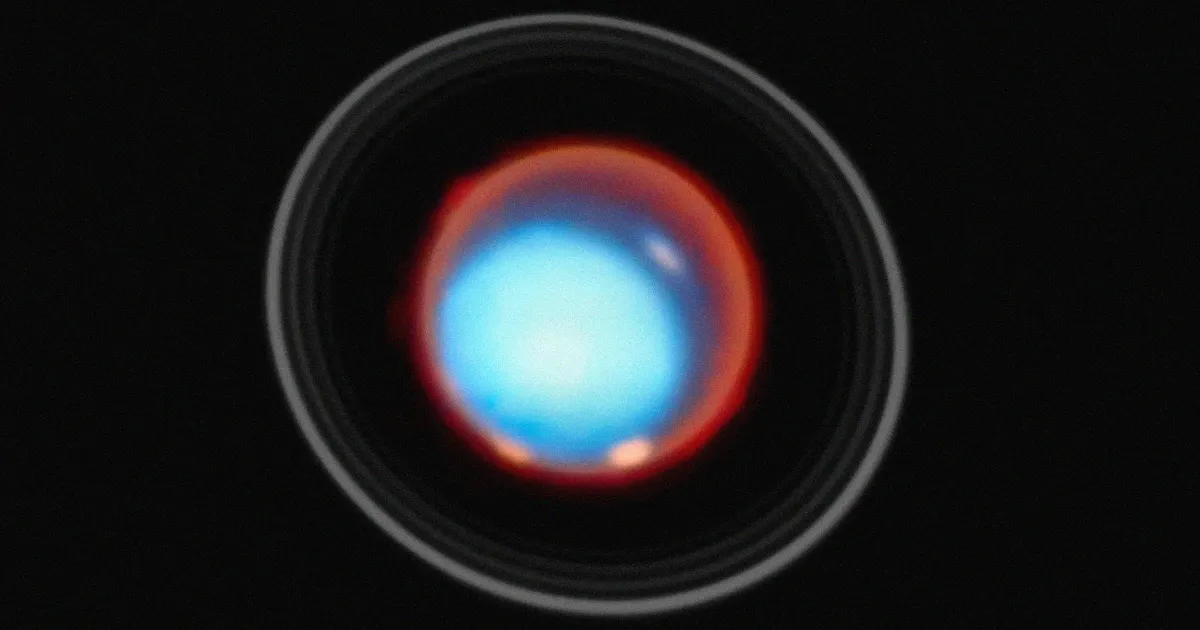
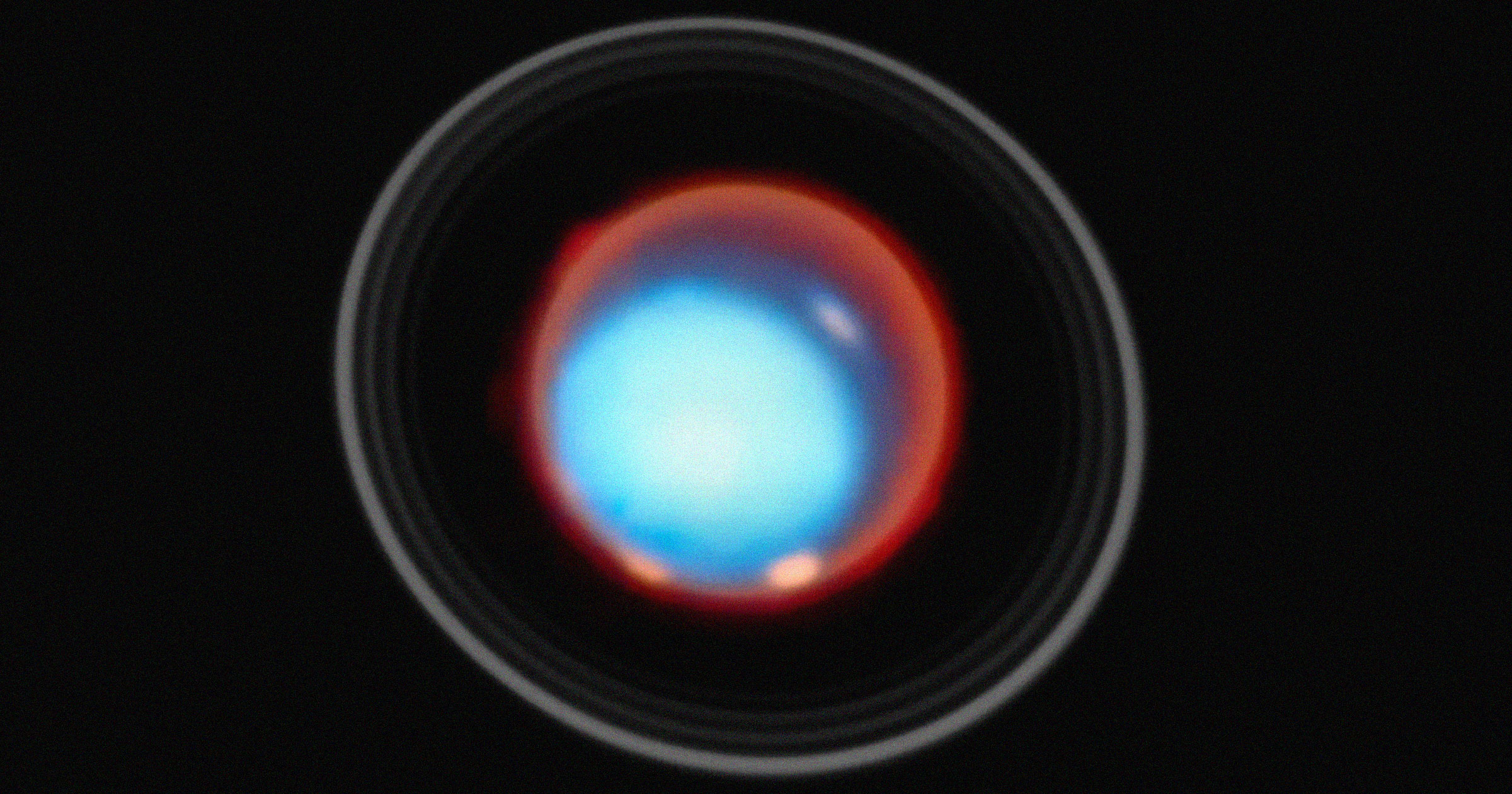
    Now, thanks to recent observations by NASA’s groundbreaking James Webb Space Telescope, we’re getting an unprecedented peek inside the layers of its upper atmosphere.

    The observatory’s Near-Infrared Spectrograph (NIRSpec) instrument observed Uranus for almost a full rotation just over a year ago, showing how the planet’s ionosphere, a thin layer in the planet’s upper atmosphere that’s ionized by solar radiation, is interacting with its magnetic field.

    It’s the most detailed picture of the planet’s atmosphere yet, demonstrating where auroras form on its surface. It also sheds light on the planet’s unusually tilted magnetic field. Uranus is the only planet whose equator is almost at a right angle to its orbit, an astonishing tilt of 97.77 degrees. Its magnetic axis, on the other hand, has a large tilt relative to its rotation axis, making its magnetosphere a significant outlier compared to other planets.

    “This is the first time we’ve been able to see Uranus’s upper atmosphere in three dimensions,” said Northumbria University PhD student Paola Tiranti, lead author of a new paper published in the journal Geophysical Research Letters, in a statement. “With Webb’s sensitivity, we can trace how energy moves upward through the planet’s atmosphere and even see the influence of its lopsided magnetic field.”

    The latest findings also support existing theories that Uranus’ upper atmosphere is still cooling, a trend that was first observed in the early 1990s, when near-infrared observations began.

    Thanks to the planet’s unusual tilt, auroras act in a surprisingly different way. As on Earth, Uranian auroras are the result of charged particles from the Sun colliding with atmospheric gases, causing dancing colors to appear in the night sky. But while they’re most commonly seen around our world’s north and south poles, the situation is drastically different on Uranus.

    “Uranus’s magnetosphere is one of the strangest in the Solar System,” Tiranti explained. “It’s tilted and offset from the planet’s rotation axis, which means its auroras sweep across the surface in complex ways.”

    In the case of Uranus, auroras appear as glowing patches of orange and red light that extend past the edges visible in JWST observations.

    “These auroral detections are hugely important because they are a direct manifestation of the planet’s internal magnetic field,” JWST interdisciplinary scientist Heidi Hammel, who was not involved in the study, told Scientific American. “We really have no other way to probing the magnetic field remotely without a spacecraft in situ.”

    The findings could inform future visits to the distant ice giant. But when we’ll have a chance to get another, closer look four decades after Voyager 2’s flyby remains as uncertain as ever. Tight budgets have endangered interplanetary missions as of late, and it remains to be seen whether a trip to Uranus will still be in the cards in the coming years.

    “Webb has now shown us how deeply those effects reach into the atmosphere,” Tiranti said in the statement. “By revealing Uranus’s vertical structure in such detail, Webb is helping us understand the energy balance of the ice giants. This is a crucial step towards characterising giant planets beyond our Solar System.”

    More on Uranus: Scientists Say That Uranus Appears to Have a Girlfriend

    hard James long Takes Uranus Webb
    Share. Facebook Twitter Pinterest LinkedIn Tumblr Email
    kirklandc008@gmail.com
    • Website

    Related Posts

    Struggling with a hard life choice? AI future selves have tips

    July 24, 2026

    I tested MSI’s latest gaming laptop, and it works just as hard as it plays

    July 20, 2026

    A hard drive reliability check on 341,263 drives, from 4TB to past 20TB

    July 17, 2026
    Leave A Reply Cancel Reply

    Top Posts

    Nothing CEO says phone prices are going to keep going up

    June 12, 20267 Views

    Google DeepMind Plans to Track AGI Progress With These 10 Traits of General Intelligence

    March 21, 20263 Views

    The AirPods 4 and Lego’s brick-ified Grogu are our favorite deals this week

    October 12, 20253 Views
    Stay In Touch
    • Facebook
    • YouTube
    • TikTok
    • WhatsApp
    • Twitter
    • Instagram
    Latest Reviews

    Subscribe to Updates

    Get the latest tech news from FooBar about tech, design and biz.

    Recent Posts
    • This Week’s Awesome Tech Stories From Around the Web (Through August 8)
    • How to Disable Gemini in Gmail and Google Docs
    • How ideas of a vast censorship network moved from the online fringe to Trump policy
    • The Pivot From Tech Expert to Organizational Leader
    • Scientists Used AI to Create 16 New Viruses

    This Week’s Awesome Tech Stories From Around the Web (Through August 8)

    August 8, 2026

    How to Disable Gemini in Gmail and Google Docs

    August 8, 2026

    How ideas of a vast censorship network moved from the online fringe to Trump policy

    August 8, 2026

    The Pivot From Tech Expert to Organizational Leader

    August 7, 2026
    Facebook X (Twitter) Instagram Pinterest
    • About Us
    • Contact Us
    • Privacy Policy
    • Terms and Conditions
    • Disclaimer
    © 2026 TechNovaMindset. Designed by By Pro.

    Type above and press Enter to search. Press Esc to cancel.