

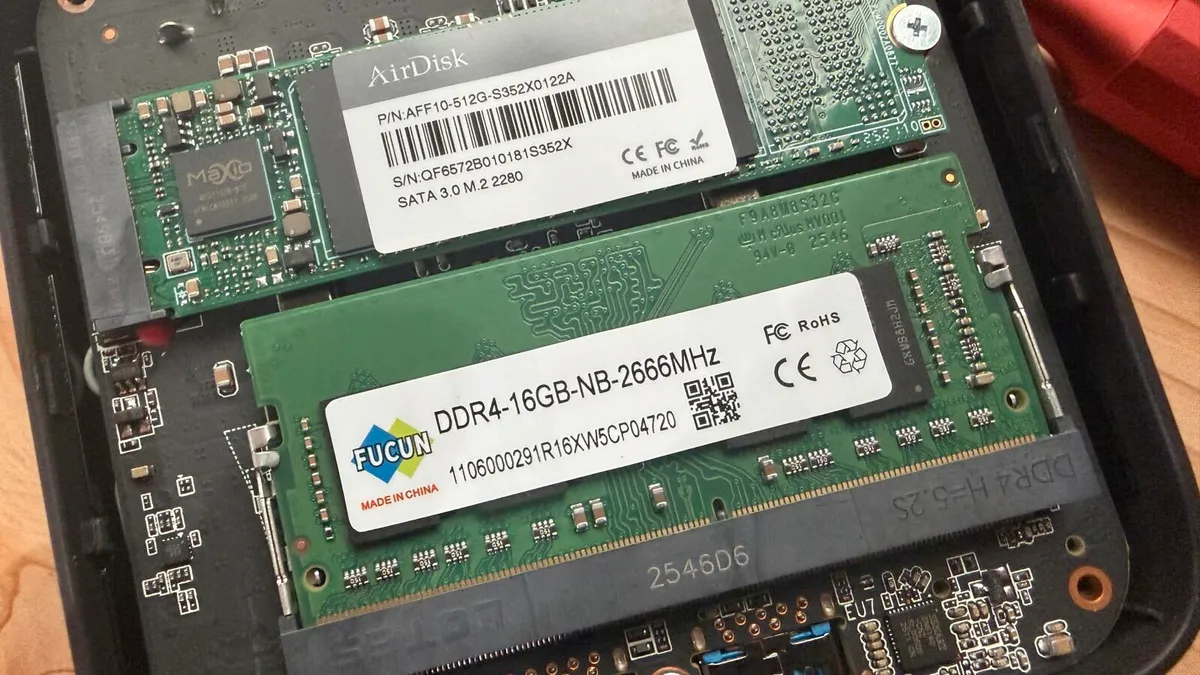
Adrian Kingsley-Hughes/ZDNET
Follow ZDNET: Add us as a preferred source on Google.
ZDNET’s key takeaways
- Rising RAM prices have made upgrading your PC more expensive.
- Virtual RAM is a less expensive way of boosting an older computer’s performance.
- Virtual RAM has limited use cases because it can’t match the speed of physical RAM.
It’s been a rough seven months or so for shoppers. Prices for RAM and PCs have surged to record levels, fueled in part by the rise of generative AI and broader economic turmoil. Because of the price shifts, upgrading your old computer — or buying a new system — is now more expensive than ever. There is some good news. RAM prices have recently started to drop, but only slightly; memory and hardware remain very expensive.
Also: The best all-in-one computers of 2026: Expert tested and reviewed
Affordability remains a major problem, though there is a solution, albeit a limited one: virtual RAM. Also known as virtual memory, this resource management feature allows PC owners to use a portion of their device’s storage drive as an extension of system memory. As Lenovo explains, “it creates the illusion of a larger, continuous memory space”, as if your computer has access to more resources.
It’s a neat way to stretch your computer’s memory past its limits. However, it comes with important caveats. Virtual RAM is only a temporary solution for enhancing PCs with limited memory, not an outright replacement for physical RAM.
Why is virtual memory not a true RAM alternative?
Virtual RAM just can’t perform as well as physical RAM. It trades speed and responsiveness for extra resources. PC gaming brand Corsair makes this point, stating that even the fastest SSDs are “almost 10 times slower than RAM, and a hard drive is hundreds of times slower.” Remember: RAM is designed for high-speed, temporary storage of active data, while SSDs and hard drives are built for long-term storage.
To put this into perspective, let’s look at a real-world example using my PC and compare the speed of my 32GB of DDR4 RAM to the speed of my PCIe 4.0 NVMe SSD.
You can find the theoretical maximum bandwidth of your memory by multiplying the MT/s value by the number of bytes sent per transfer.
Also: 3 ways I safely retire every Windows PC – and why you shouldn’t skip these critical steps
My desktop’s RAM runs at 2400 MT/s (megatransfers per second) and has two 64-bit channels (8 bytes). So, 2,400 MT/s × 8 bytes equals 19,200 MB/s (megabytes per second).
Compare that to the speed of my SSD. Using CrystalDiskMark, I measured its read speeds of ~6,700 MB/s and write speeds of ~6,200 MB/s. That’s less than one-third of the speed.
Even with a high-end SSD, the speed difference between my RAM and storage drive is significant. My DDR4 RAM can hit 19,200 MB/s, while the SSD peaks at 6,700 MB/s. Virtual RAM on my PC will be slower, have higher latency, and be less responsive overall.
Jack Wallen/ZDNET
There’s also the problem of memory thrashing. Thrashing occurs when a computer spends more time moving data between the RAM and the storage drive, which can result in freezing, heavy lag, and poor performance. Lenovo, in another post, states that certain memory management techniques, such as page replacement algorithms, can lower the likelihood of thrashing, but nothing is perfect.
Where does virtual RAM help?
Although I’ve focused so far on the limitations of virtual RAM, virtual memory can be a genuinely helpful tool in the right circumstances. The key is using it responsibly. I recommend using virtual RAM to temporarily boost the performance of lightweight machines.
Low-cost laptops don’t often have a lot of memory to spare, so resources can be quickly exhausted. In such situations, virtual memory can help a system run smoothly, prevent crashes, and improve overall stability.
Also: How much RAM does your PC actually need in 2026? A Windows and Mac expert weighs in
A good example of a device that can benefit from virtual memory is the Acer Aspire Go 15, a laptop we often recommend for its affordability. At the time of this writing, it’s on sale for $275. That low price comes at the cost of performance. It only possesses 8GB of LPDDR5 RAM, which is quite low by today’s standards.
Activating virtual RAM in a case like this won’t turn the laptop into a high-powered machine, but it would allow the Aspire Go 15 to better handle more tasks without slowing down or crashing.
Kyle Kucharski/ZDNET
How to activate virtual RAM in Windows 11
If you want to enable virtual RAM in Windows 11, the process is fairly straightforward. Start by typing “View advanced system settings” into the Windows 11 search bar and clicking the first entry you see. This will launch the System Properties window.
From here, go to “Advanced” > click “Settings” under the “Performance” section > “Advanced” again in the new window > Click “Change” under the Virtual Memory section. Uncheck the box at the top labeled “Automatically manage paging file size for all drives,” as seen in the image below.
Screenshot by Cesar Cadenas/ZDNET
To establish virtual memory, you will need to choose a drive to use. In this scenario, my PC only has a C: drive, so that’s my only choice. If your computer has multiple drives, use whichever is fastest. Next, select “Custom size” to allocate a specific amount of drive space for virtual memory, measured in MB. As a rule of thumb, 1,000 MB is about 1 GB. Windows will provide a recommended value, such as 5,000 MB. For my needs, I will allocate 8,000 MB (or 8 GB).
When it comes to the maximum size, online forums suggest setting it to three times the initial size, which in this instance is 24,000 MB (24 GB). Once done, click “Set”, then click “Ok” > “Ok” on the following page, then restart your computer to apply the changes.
Also: AI isn’t getting smarter, it’s getting more power hungry – and expensive
When you’re done using virtual memory, return to the same Virtual Memory window and re-check “Automatically manage paging file size for all drives” at the top.
Can you disable virtual memory entirely?
It’s possible to disable virtual memory by selecting “No paging filing” in the System Properties window, then clicking “Set”, but it’s not generally recommended. As Lenovo points out, PCs rely on the interaction between physical and virtual memory. Disabling virtual memory will lead to all sorts of performance issues.
Do Apple computers have virtual memory?
Yes, but it behaves differently from Windows PCs. Apple states that MacOS uses “secure virtual memory”. It functions like Windows virtual memory, temporarily moving data from RAM to the hard drive when physical memory is limited. The major difference is that secure virtual memory is encrypted. It can’t be increased or decreased.
