



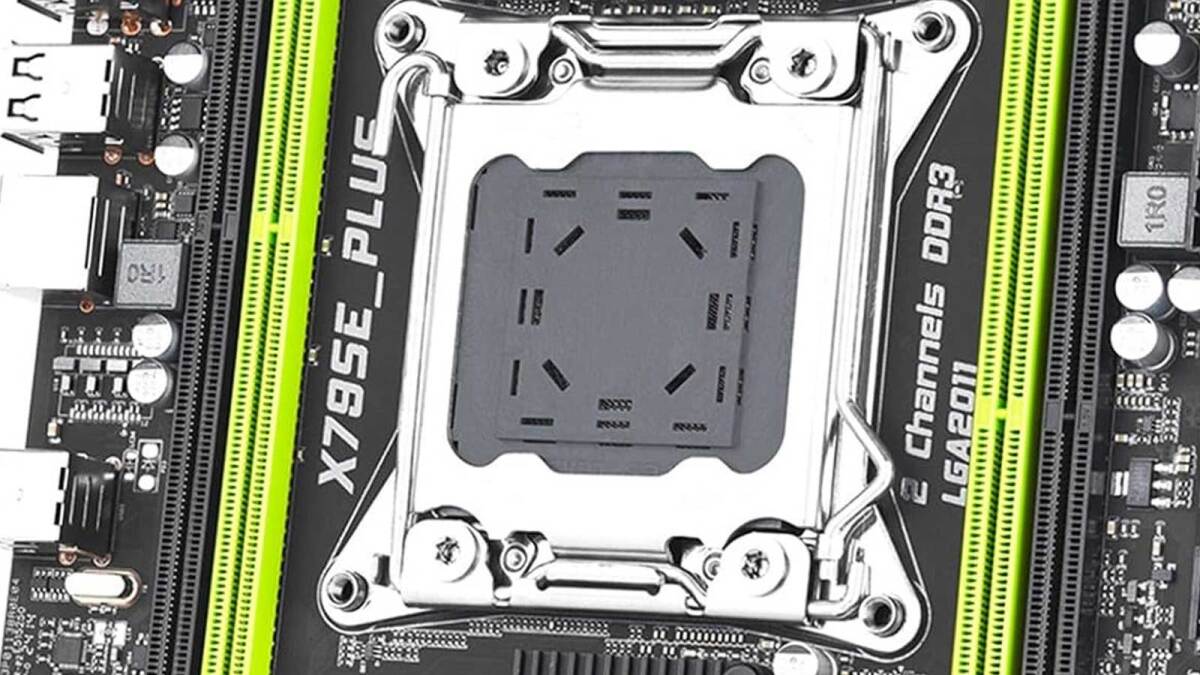
Intel’s next-generation LGA 1954 socket has shown up in an unnamed motherboard at Computex. Snapped by an eagle-eyed attendee and spotted by Wccftech, the socket is clearly labeled for the next generation and has dual-retention arms, which we first heard rumors of a few months ago.
The LGA 1954 socket will support the Intel Nova Lake-S processors and increase the number of pins from the existing LGA 1700 socket design used for Arrow Lake chips. Nova Lake is expected to offer up to 52 core chip designs, a big cache chip akin to AMD’s 3D V-Cache, and new Xe3 and Xe3P graphics cores, potentially delivering very strong entry-level gaming performance. There will also be Thunderbolt 5 support and more PCIe 5 lanes on the CPU and chipset.
These chips aren’t launching until the last few months of the year, though, which means this socket example is likely an early engineering release of whatever motherboard it’s attached to. We can’t tell much about the socket or board from the image, but its protective shell includes detailed instructions for keeping it safe: namely, don’t insert anything into the socket other than a CPU.
What we can see, though, is that LGA 1954 has two retaining arms, not just one. This was rumored a few months back and has been trialed previously, but this would be the first time it’s been used on a mainstream socket across a range of motherboards. The reasoning behind the second arm is to better balance the load on the CPU. That is, the arms holding it in place will spread that pressure more evenly than a single arm on one side.
The result should be a slightly flatter CPU, potentially leading to better contact with the CPU cooler and, therefore, accelerated thermal transfer from the CPU to the cooler. It won’t be dramatic, but if Intel can shave off even a couple of degrees, that’s more thermal headroom for next-generation CPUs to work with, helping them run cooler and quieter, or faster with greater overclocking performance.


