

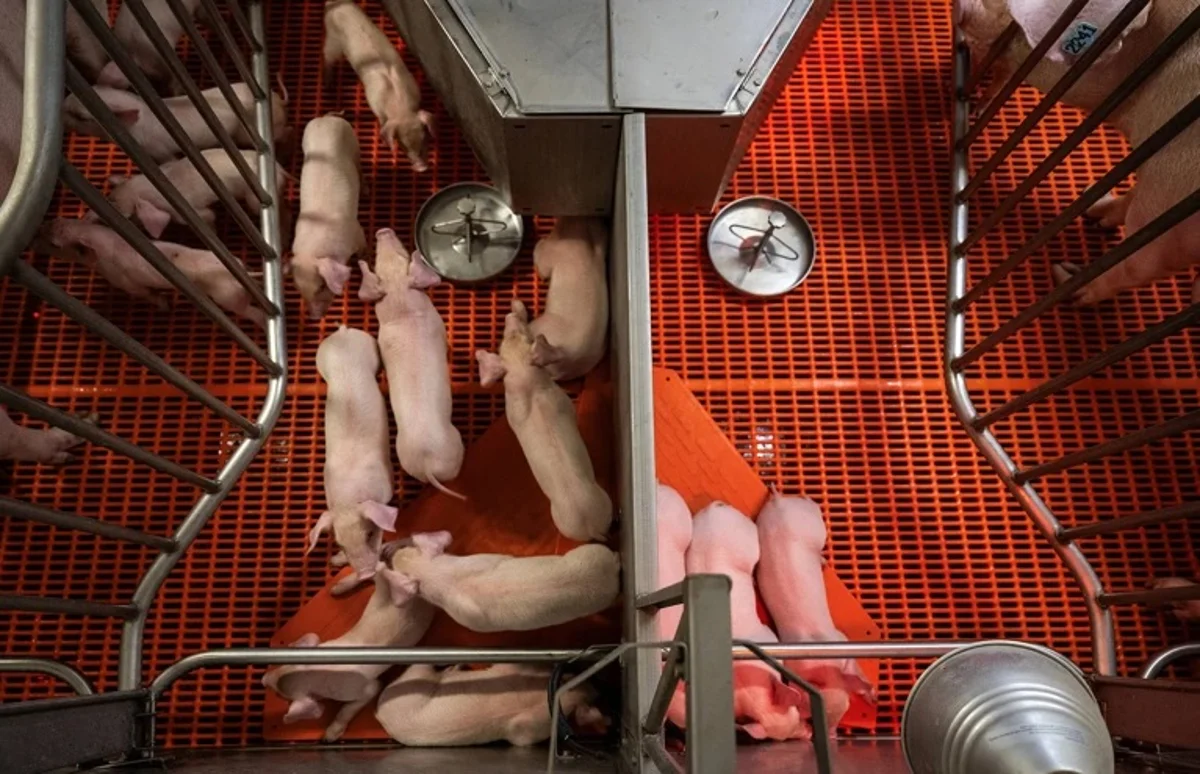
A 53-year-old clinically dead man has become the first person to receive two kidneys and a whole liver from a genetically modified pig. The man’s organ function was sustained for almost five days with consent from his family, and there were no signs that the organs were being rejected in the first 24 hours, according to a study published in Med today.
Most procedures in which a pig organ is transplanted into a person — known as xenotransplantation — involve only a single organ. A small number of people have received pig organs, including hearts, kidneys, partial livers and lungs, and clinical trials in living people are under way in the United States and China. Until now, only parts of a pig liver have been transplanted into a person, says clinician-scientist Xuyong Sun, who led the latest procedure, at the Second Affiliated Hospital of Guangxi Medical University in Nanning, China.
Transplanting pig kidneys and a liver in the same procedure is also unique, says Leonardo Riella, a physician-scientist at Massachusetts General Hospital in Boston, who in 2024 led the team that first transplanted a pig kidney into a living person. Transferring multiple organs is more complex than moving one; procedures take longer, increasing the risk of complications, and people who need multiple transplants are often more seriously ill, he adds.
On supporting science journalism
If you’re enjoying this article, consider supporting our award-winning journalism by subscribing. By purchasing a subscription you are helping to ensure the future of impactful stories about the discoveries and ideas shaping our world today.
The study shows that multi-organ xenotransplants are possible, says Wayne Hawthorne, a surgeon and transplant researcher at the University of Sydney in Australia.
Multi-organ transplants are already performed with human organs, but there is a shortage of donor organs, which is why research teams are investigating the use of pig kidneys.
Complicated operation
The man who received the pig organs had severe chronic kidney disease and bleeding in his brain before doctors confirmed that his brain had died. His liver was healthy, so it was transplanted into a living person, says Sun.
The man received organs from a pig that had had six edits to its genome. Three human genes were added to reduce the risk of problems with blood clotting, and three pig genes were removed to prevent the organs being rejected.
Within 19 hours of the transplant, the pig liver began secreting bile and showed signs that it was functioning normally, the team reports. The man’s levels of the waste products creatinine and urea — which had been elevated because of his kidney disease — returned to normal after he received the pig kidneys, which suggests they, too, were functioning.
But 36 hours after the operation, the team noticed early signs that the pig organs were being rejected. For instance, the pig cells in the liver and kidneys were gradually being replaced by human cells, suggesting that the man’s immune system had detected that the organs were foreign. There were also small areas of tissue death and blood clotting in the pig liver.
The authors observed that the transplanted organs had raised levels of a type of immune cell called S100A12+, which is involved in inflammation. They suggest that these cells could be targeted with drugs to reduce the risk of long-term organ rejection.
Future treatment?
Riella says that multi-organ xenotransplants are unlikely to become common in the immediate future, because transplants of multiple human organs are already complicated and high-risk.
But the procedure might benefit people who are in liver failure, which can also cause the kidneys to stop working, he says.
Sun says that he and his team will perform more procedures in clinically dead people and living monkeys before they can operate on living people. They also need to confirm that there is no risk of people being infected with viruses or bacteria from the pig organs, he adds.
This article is reproduced with permission and was first published on May 29, 2026.
It’s Time to Stand Up for Science
If you enjoyed this article, I’d like to ask for your support. Scientific American has served as an advocate for science and industry for 180 years, and right now may be the most critical moment in that two-century history.
I’ve been a Scientific American subscriber since I was 12 years old, and it helped shape the way I look at the world. SciAm always educates and delights me, and inspires a sense of awe for our vast, beautiful universe. I hope it does that for you, too.
If you subscribe to Scientific American, you help ensure that our coverage is centered on meaningful research and discovery; that we have the resources to report on the decisions that threaten labs across the U.S.; and that we support both budding and working scientists at a time when the value of science itself too often goes unrecognized.
In return, you get essential news, captivating podcasts, brilliant infographics, can’t-miss newsletters, must-watch videos, challenging games, and the science world’s best writing and reporting. You can even gift someone a subscription.
There has never been a more important time for us to stand up and show why science matters. I hope you’ll support us in that mission.
