

Kerry Wan/ZDNET
Follow ZDNET: Add us as a preferred source on Google.
ZDNET’s key takeaways
- Smart glasses are bulky, compromising comfort and internal cooling systems.
- xMEMS’ Sycamore micro loudspeaker significantly shrinks the size of smart glasses.
- The µCooling fan-on-chip actively manages heat, preventing performance throttling.
I’ve been wearing prescriptions since elementary school, so the advent of viable smart glasses over the past few years has somewhat shifted my perception of what I can do hands-free and how wearables feel on my face.
The Meta Ray-Bans can be credited with the ongoing efforts to computerize our vision, with the latest Display model even featuring full-on waveguide technology that projects visual cues like navigation, translations, and voice prompts. But there’s one glaring issue with smart glasses today: bulkiness.
Also: I tested Meta Ray-Ban Display alternatives, and these are better in several ways for less money
Various components in smart glasses, from camera sensors to batteries to speakers, demand real estate that goes beyond traditional eyewear sizes. In turn, the added bulk can make the worn experience a burden and inadvertently compromise the room needed for cooling systems, preventing them from running at an optimal level.
That’s where xMEMS Labs comes in. Earlier this month, I had the opportunity to test the brand’s solid-state audio and thermal solutions in headphones, earbuds, and its latest venture, smart glasses, and I was left cautiously optimistic. Here’s why.
Solving the space problem
Mike Housholder, VP of Marketing at xMEMS Labs, tells me there’s a sweet spot when it comes to the weight of smart glasses: 30 grams. For reference, the Meta Ray-Bans weigh around 50 grams. So how do you slim things down without sacrificing performance?
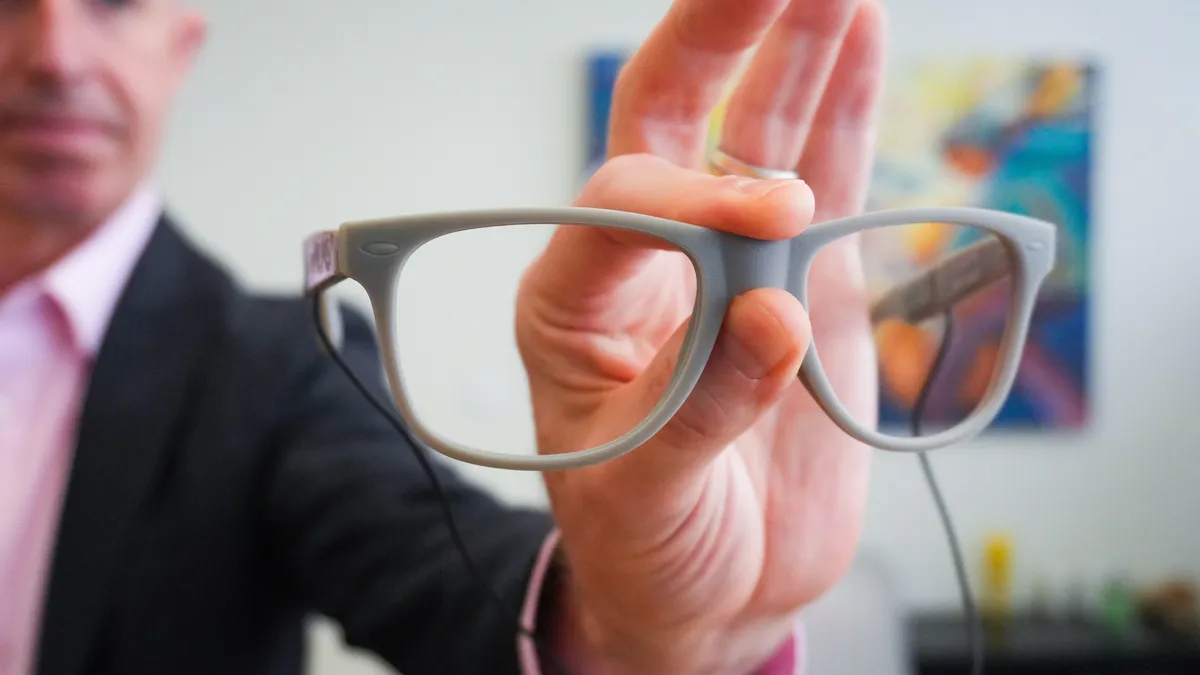
xMEMS is pitching a micro loudspeaker, codenamed Sycamore. According to Housholder, it’s 70% smaller and 90% lighter than traditional coil speakers, and the reduction in real estate was evident the moment I picked up a pair of prototype smart glasses with the component integrated. (Albeit, the frames were missing other expected parts like camera sensors and lenses.)
An example of an xMEMS speaker (left) compared to a traditional one found in headphones (right).
Kerry Wan/ZDNET
With the glasses on, I cycled through audio tracks ranging from pop music to podcasts to gauge the smaller speaker’s versatility and, more importantly, limitations. While Sycamore didn’t deliver as much oomph and intensity as the ones from my Meta Ray-Bans, and definitely not enough to fully replace a traditional pair of earbuds, it was good enough to understand conversations and unconsciously bob my head to.
Also: Which Meta Ray-Bans model should you buy? I tested both pairs, and here’s how to decide
The xMEMS team believes that smart glasses users mainly listen to podcasts, phone calls, and their voice assistants, so currently, it’s more about prioritizing audio delivery in a compact size than matching the full, immersive listening experience of headphones.
The second issue with modern smart glasses
The second issue with existing smart glasses is heat management — and the suboptimal solution currently in place. Today, smart glasses rely on performance throttling — or, in other words, the reduction of processing bandwidth to complete tasks at a slower, more feasible rate — when the internal temperature rises too much.
A more effective solution has existed on larger PCs and desktops for decades: cooling fans. The folks at xMEMS have developed a 1mm-thin actuator that functions like computer cooling fans — pulling cool air through small vents and dispersing hot air through the opposite side — without the loud hissing sounds.
Kerry Wan/ZDNET
xMEMS calls the fan-on-chip “µCooling,” and Housholder tells me the use cases for it are fairly flexible. For example, I tried the proprietary tech on a pair of gaming headphones — where I think the fans truly shine — and felt the lack of moisture and sweat buildup almost immediately.
Also: I biked with the Meta Oakley Vanguard, and they’re easily the best smart glasses for athletes
But building for smart glasses makes a lot of sense; there’s a growing demand for more capable, faster computing wearables, and with video recording being a top use case, heat management is essential. The biggest indicator is Apple’s recent push for vapor chamber cooling on the iPhone 17 Pro series. xMEMS’ fan-on-chip idea is even more aggressive and tailored.
Bottom line (for now)
Both Sycamore and µCooling are effective solutions to shrinking the smart glasses form factor, but the big question mark is which brands will work with xMEMS to bring the technology to market. I’m personally interested in knowing how much the components will contribute to the final price of future glasses, and how soon until larger brands like Meta, Samsung, and even Apple develop competing tech.
Considering we jumped from audio-only smart glasses to ones with floating interfaces and neural bands over the course of two years, I hope you’re ready for the next frontier of wearables, because it’s probably much closer than we think.
