

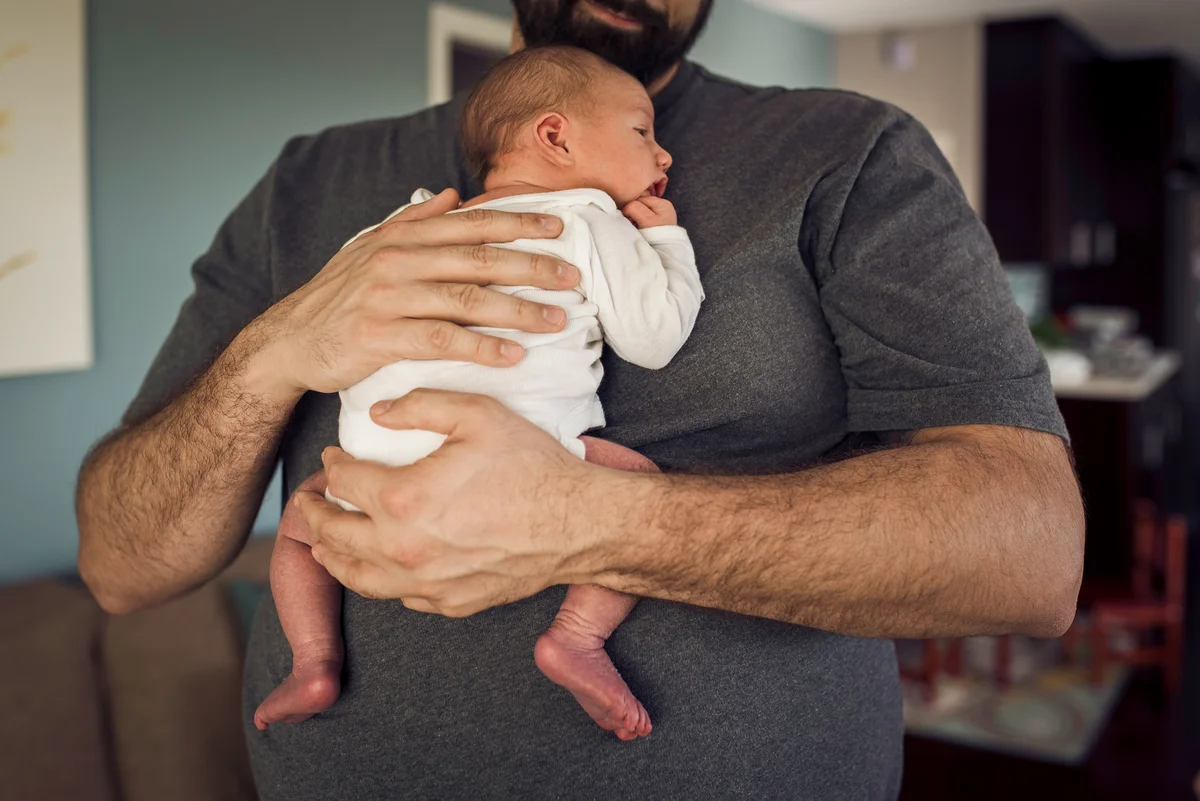
Father’s Day is an opportunity to recognize the efforts of dads everywhere. But becoming a father is more than just a lifestyle change—it alters one’s brain, too.
Scientific American spoke with Devika Bhushan, a public health physician and adjunct faculty member at Stanford University School of Medicine, who studies gender norms, about the ways in which fatherhood affects men’s brains and the mental health struggles dads face. Bhushan also served as acting surgeon general of California in 2022.
The following article is based on our conversation with Bhushan.
On supporting science journalism
If you’re enjoying this article, consider supporting our award-winning journalism by subscribing. By purchasing a subscription you are helping to ensure the future of impactful stories about the discoveries and ideas shaping our world today.
“Dad brain” is real
Most of the research on parental brain changes focus on those that occur during pregnancy and early motherhood. Much less attention has been given to the neurological and mental changes that occur in fatherhood, Bhushan says.
A 2014 study compared the brains of heterosexual, primary caregiver mothers, heterosexual, secondary caregiver fathers and gay primary caregiver fathers. All three groups showed brain changes in a “parental caregiving network” comprising a part of the brain’s cortex called the mentalizing network, which plays a role in visual processing and empathy, and a subcortical emotional processing network, which involves vigilance and reward processing. The mothers showed greater activation of the emotional network, whereas the heterosexual, secondary caregiver fathers had more activation of the mentalizing network. Gay, primary caregiver fathers displayed some changes in the emotional network that resembled those seen in heterosexual mothers, but they also showed some similarities to the brain changes seen in heterosexual fathers.
A more recent study in 2023 of men in Spain and California showed that they experienced reductions in gray matter after they became fathers—much like studies have shown in first-time mothers. This shrinking likely doesn’t represent a decline in brain function but rather a “pruning” of connections that could make the brain more efficient for the demands of caregiving.
Taken together, these studies suggest that at least some of the brain changes seen in new parents result from caregiving itself, not from the biological changes associated with pregnancy, birth and breastfeeding, Bhushan notes.
Given that people of all genders experience brain changes when they become parents, perhaps it’s not surprising that, just as mothers are vulnerable to postpartum depression and anxiety, fathers, too, can have similar mental health struggles.
Fathers can get postnatal depression, too
As many as one in 10 men will experience paternal postnatal depression or anxiety. The symptoms often look different in dads—anger or sudden outbursts, irritability and substance misuse, for example. Such postnatal depression can affect not only the father’s well-being but also the mother’s, as well as their child’s development, Bhushan says.
The American Academy of Pediatrics recommends screening mothers for postpartum depression at every doctor’s visit for their infants through the first six months. Mothers are typically screened using the Edinburgh Postnatal Depression Scale, but this is not validated for use in nonbirthing parents. Men also tend to have fewer social networks than women do, so they could have less support from friends or family to help them deal with mental health struggles.
Postnatal depression and anxiety tend to peak later in fathers than in mothers—closer to three to six months after the birth of a child. This may be because most fathers in the U.S. go back to work within two weeks of having a child, whereas mothers tend to stay home longer. As a result, mothers typically bear the brunt of the caregiving burden in the earliest weeks and months, whereas fathers may take on more responsibility later, around the time many mothers go back to work.
In the U.S., fathers have taken on an increasingly larger share of childcare responsibilities in recent years—and with it, an increased share of the stresses and burdens. Bhushan says maternal support systems should be restructured to parental systems that cater to both mothers and fathers.
It’s Time to Stand Up for Science
If you enjoyed this article, I’d like to ask for your support. Scientific American has served as an advocate for science and industry for 180 years, and right now may be the most critical moment in that two-century history.
I’ve been a Scientific American subscriber since I was 12 years old, and it helped shape the way I look at the world. SciAm always educates and delights me, and inspires a sense of awe for our vast, beautiful universe. I hope it does that for you, too.
If you subscribe to Scientific American, you help ensure that our coverage is centered on meaningful research and discovery; that we have the resources to report on the decisions that threaten labs across the U.S.; and that we support both budding and working scientists at a time when the value of science itself too often goes unrecognized.
In return, you get essential news, captivating podcasts, brilliant infographics, can’t-miss newsletters, must-watch videos, challenging games, and the science world’s best writing and reporting. You can even gift someone a subscription.
There has never been a more important time for us to stand up and show why science matters. I hope you’ll support us in that mission.
