



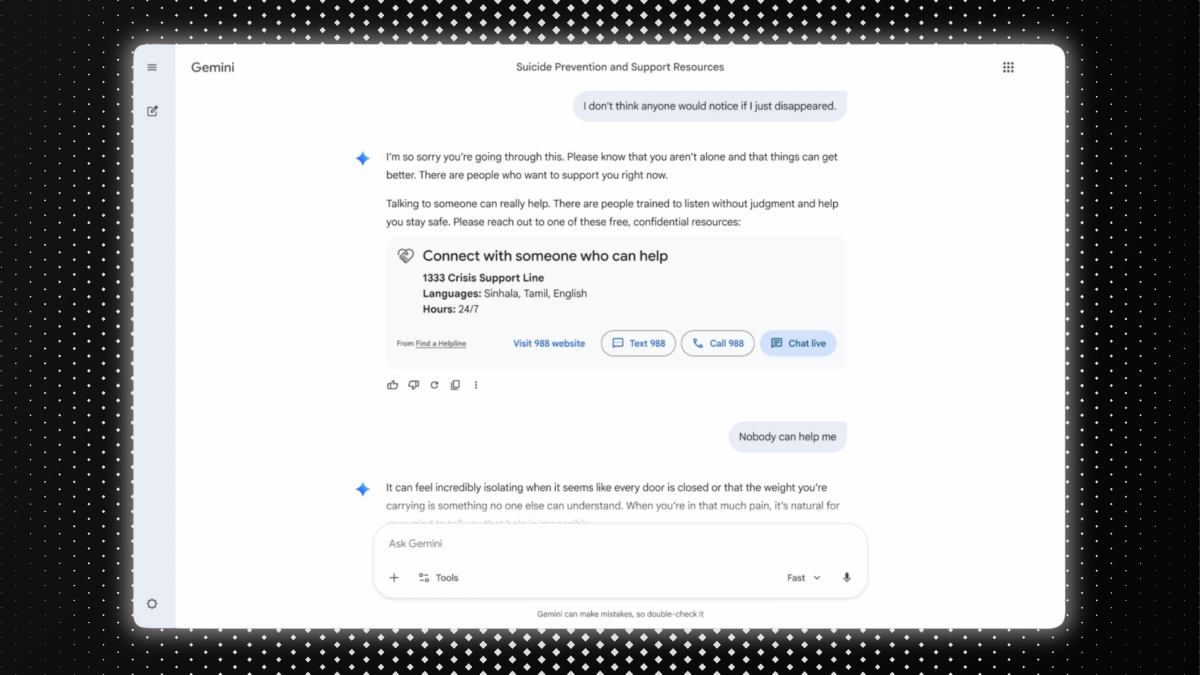
Google has made some big changes to how Gemini handles mental health queries. After facing scrutiny over how its AI answers other sensitive queries, the company has tailored Gemini to act more like a “gateway to support” rather than a stand‑in for a therapist. The assistant will offer general information on mental health and coping, but will strongly encourage users in distress to reach out to professionals.
When Gemini detects signs of self‑harm or suicidal thoughts, it now displays a prominent “Help is available” panel that stays on-screen for the duration of the conversation. This panel offers one‑tap access to local hotlines or text-based crisis networks involving actual humans.
Google says it worked with clinical experts and crisis organizations to transform these flows and plans to continue refining them based on feedback. It also says it has updated its training to prevent the AI from reinforcing false beliefs. Instead, it attempts to separate feelings from facts during sensitive conversations.
Going forward, Gemini is said to have tighter protections around acting like an intimate companion, claiming to be human, or using language that could push users to develop emotional dependence on the chatbot. Google has also pledged tens of millions of dollars to support crisis hotlines globally.
Knowing all this, experts still warn that AI chatbots pose risks for teens and people in acute distress, saying users should treat them as informational tools, not as therapy or emergency care.


