
Close Menu
Tech Nova Mindset – Empower Innovation and Forward Thinking

    Subscribe to Updates

    Get the latest creative news from FooBar about art, design and business.

    What's Hot

    Scientists Can Now Ask AI to Design Proteins Using Plain Language

    November 3, 2026

    The Download: the agentic web arrives and the drive for safer roads

    November 2, 2026

    Raising the quality of insights in agentic analytics

    November 2, 2026
    Facebook X (Twitter) Instagram
    Trending
    • Scientists Can Now Ask AI to Design Proteins Using Plain Language
    • The Download: the agentic web arrives and the drive for safer roads
    • Raising the quality of insights in agentic analytics
    • When You Should—and Shouldn’t—Use AI to Search the Web
    • Stop counting tokens, start counting what ships
    • Hundreds of Mundane AI Apps Are Hiding Sexually Abusive Deepfake Features
    • The agentic web is here
    • AI Slop Threatens Trust in Science
    Tech Nova Mindset – Empower Innovation and Forward Thinking
    • Home
    • Gadgets
    • Reviews
    • Tech News
    • Future Tech
    • AI & Robotics
    • How-To Guides
    • More
      • Cybersecurity
      • Startups & Innovation
    Tech Nova Mindset – Empower Innovation and Forward Thinking
    Home»Future Tech»Dark Matter May Be Made of Black Holes From Another Universe
    Future Tech

    Dark Matter May Be Made of Black Holes From Another Universe

    kirklandc008@gmail.comBy kirklandc008@gmail.comApril 17, 2026No Comments3 Mins Read
    Facebook Twitter Pinterest LinkedIn Tumblr Email
    Dark Matter May Be Made of Black Holes From Another Universe
    Share
    Facebook Twitter LinkedIn Pinterest Email

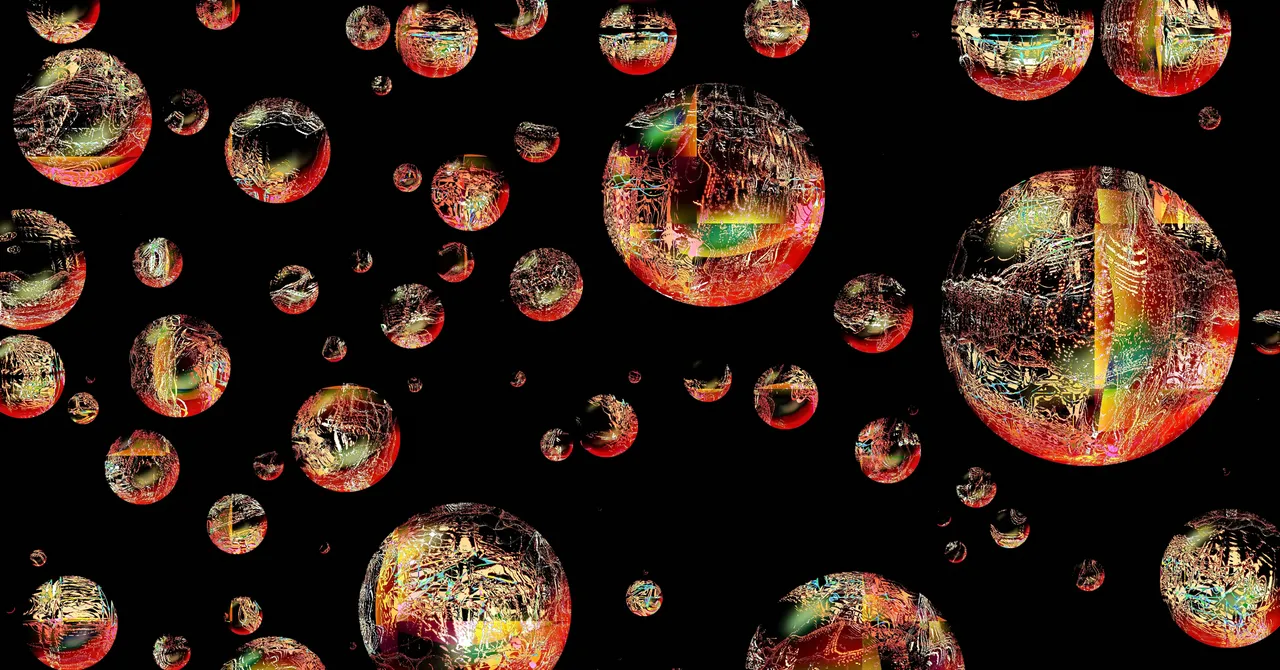
    A recent cosmological model combines two of the most eccentric ideas in contemporary physics to explain the nature of dark matter, the invisible substance that makes up about 85 percent of all matter in the universe. To understand it, it’s necessary to look beyond the Big Bang we all know and consider two concepts that rarely intersect: cyclic universes and primordial black holes.

    A Different Kind of Multiverse

    There are different versions of the “multiverse.” The most popular model—that of the Marvel Cinematic Universe—proposes that there are as many universes as there are possibilities and that these versions of reality are parallel. Physics proposes something more sober and mathematically consistent: the cosmic bounce.

    In this model, the universe is not born from a singularity, but expands, contracts, and expands again in an endless cycle. Each “universe” is not parallel, but sequential—that is, one arises from the ashes of the previous one.

    Is it possible for something to survive the end of its universe and endure into the next? According to a paper published in Physical Review D, yes. Author Enrique Gaztanaga, a research professor at the Institute of Space Sciences in Barcelona, shows that any structure larger than about 90 meters could pass through the final collapse of a universe and survive the rebound. These “relics” would not only persist, but could also seed the formation of giant, unexplained structures observed in the early stages of the present-day universe. Moreover, they could be the key to understanding dark matter.

    For decades, the dominant explanation for dark matter has been that it is an unknown particle or particles. But after years of experiments without direct detections, physicists have begun to explore alternatives. One of them proposes that dark matter is not an exotic particle, but an abundant population of small black holes that we overlook.

    The idea is appealing, but it has a serious problem. For these black holes to explain dark matter, they would have to exist from the earliest moments of the universe, long before the first stars could collapse. There are indications that these objects could exist, but a convincing physical mechanism to explain their origin is lacking.

    A Universe Born With Black Holes

    This is where Gaztanaga’s newly proposed model shines. If cosmic bouncing allows compact structures to survive the collapse of the previous universe, then the current universe would have already been born with pre-existing black holes. They would not have to have been generated by extreme fluctuations or finely tuned inflationary processes, but would simply have been there from the first instant.

    The assumption has the potential to solve two riddles at once: the origin of black holes and the nature of dark matter. If this model is correct, dark matter would not be a mystery of the early universe but rather a legacy of a cosmos that predates our own.

    “Much work remains to be done,” Gaztanaga, also a researcher at the Institute of Cosmology and Gravitation at the University of Portsmouth, said in an article for The Conversation. “These ideas must be tested against data—from gravitational-wave backgrounds to galaxy surveys and precision measurements of the cosmic microwave background.”

    “But the possibility is profound,” he added. “The universe may not have begun once, but may have rebounded. And the dark structures shaping galaxies today could be relics from a time before the Big Bang.”

    This story originally appeared in WIRED en Español and has been translated from Spanish.

    Black Dark Holes Matter Universe
    Share. Facebook Twitter Pinterest LinkedIn Tumblr Email
    kirklandc008@gmail.com
    • Website

    Related Posts

    Is AI Really a Black Box? Neural Networks May Be Easier to Understand Than We Thought

    October 27, 2026

    ‘Artificial’ Roasts AI’s Creators—and Sends a Dark Warning About Its Dangers

    October 6, 2026

    AI ‘Actor’ Tilly Norwood Told Me That ‘All Lives Matter’

    September 15, 2026
    Leave A Reply Cancel Reply

    Top Posts

    Nothing CEO says phone prices are going to keep going up

    June 12, 20267 Views

    The best VPN routers of 2026: Expert tested and reviewed

    June 14, 20263 Views

    Google DeepMind Plans to Track AGI Progress With These 10 Traits of General Intelligence

    March 21, 20263 Views
    Stay In Touch
    • Facebook
    • YouTube
    • TikTok
    • WhatsApp
    • Twitter
    • Instagram
    Latest Reviews

    Subscribe to Updates

    Get the latest tech news from FooBar about tech, design and biz.

    Recent Posts
    • Scientists Can Now Ask AI to Design Proteins Using Plain Language
    • The Download: the agentic web arrives and the drive for safer roads
    • Raising the quality of insights in agentic analytics
    • When You Should—and Shouldn’t—Use AI to Search the Web
    • Stop counting tokens, start counting what ships

    Scientists Can Now Ask AI to Design Proteins Using Plain Language

    November 3, 2026

    The Download: the agentic web arrives and the drive for safer roads

    November 2, 2026

    Raising the quality of insights in agentic analytics

    November 2, 2026

    When You Should—and Shouldn’t—Use AI to Search the Web

    November 2, 2026
    Facebook X (Twitter) Instagram Pinterest
    • About Us
    • Contact Us
    • Privacy Policy
    • Terms and Conditions
    • Disclaimer
    © 2026 TechNovaMindset. Designed by By Pro.

    Type above and press Enter to search. Press Esc to cancel.