

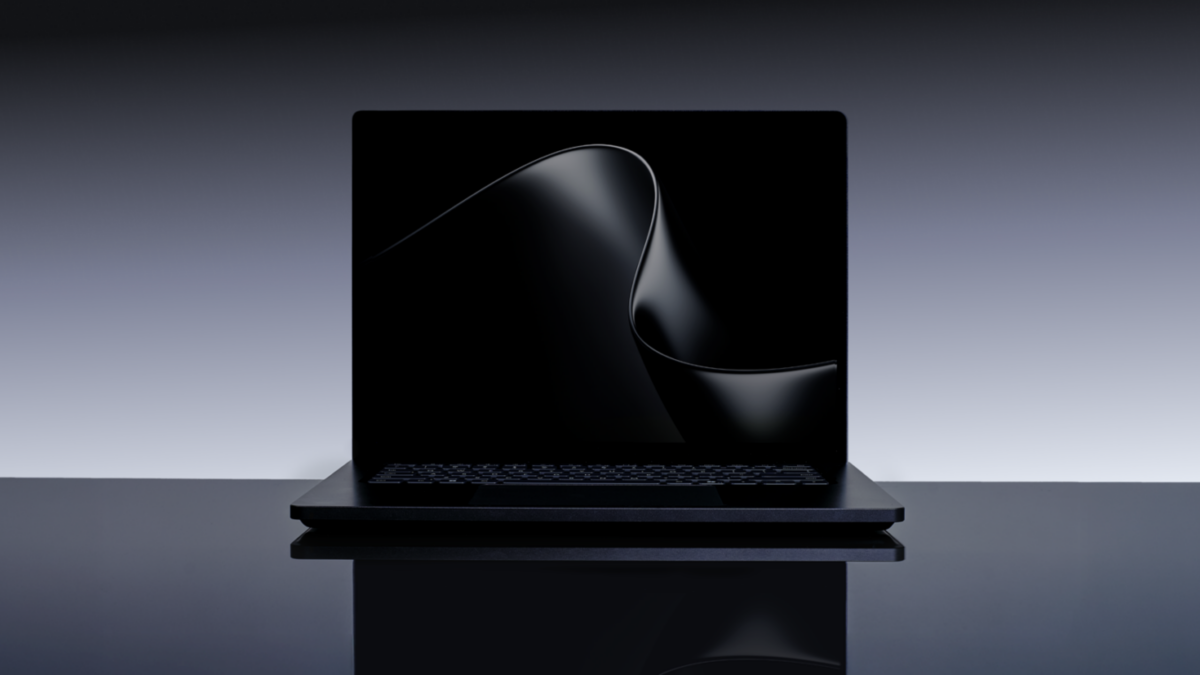
Over the weekend, Microsoft announced the Surface Laptop Ultra, a 15‑inch Windows-on-Arm notebook that could be the brand’s first true rival to Apple’s MacBook Pro in performance and design.
The new model targets creators, engineers, and AI developers seeking powerful local performance. It runs on an Nvidia RTX Spark SoC with Arm CPU cores and a Blackwell‑based RTX GPU, with support for up to 128GB of unified LPDDR5X memory with around 300GB/s bandwidth. Microsoft also mentions a redesigned thermal system with up to 2.5x higher thermal capacity than the previous 15‑inch Surface Laptop, and a compact high‑wattage charger.
Externally, the Surface Laptop Ultra features a 15‑inch 3:2 PixelSense Ultra mini‑LED touchscreen with a pixel density of 262ppi and HDR brightness up to 2,000 nits. In contrast, all modern MacBook Pro models feature a 16:10 screen aspect ratio. Here’s how these aspect ratios differ, in practice:
Microsoft positions the Surface Laptop Ultra’s display as its brightest Surface display so far, highlighting touch support and the ways in which a taller aspect ratio might benefit productivity and content creation. The laptop also offers a larger haptic touchpad, which Microsoft describes as its biggest so far on a Surface device.
The Surface Laptop Ultra is set to have USB‑C with USB4 support, USB‑A, HDMI, a full‑size SD card reader, and a 3.5 mm headphone jack.
Though Microsoft is angling the Surface Laptop Ultra as a machine capable of running large AI models locally and managing GPU-heavy workloads, it hasn’t publicized any information regarding battery life, benchmark data, or (most importantly) pricing. As a result, a true comparison against current MacBook Pro models can’t quite be made—but we’ll keep an eye out for real-world tests.
