


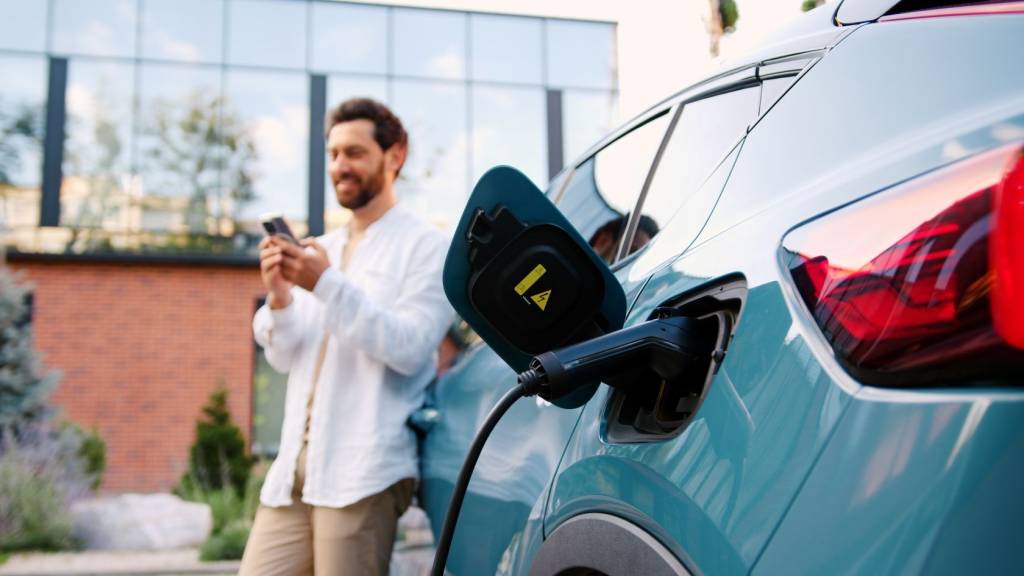
The war on Iran has made crystal clear how shaky our reliance on fossil fuels is. It’s no surprise electric vehicles and transport have become more appealing.
In Australia, sales of electric vehicles surged 40–50% in March.
That sudden surge came after 10 months of relatively slow growth, during which battery electric and plug-in hybrid vehicles made up roughly 14% of new car sales. Industry groups saw the sluggishness as a sign of the difficulties in moving beyond early adopters to the much larger mainstream market.
This market includes people who live in apartments or inner city areas with no off street parking. In Sydney’s eastern suburbs, for example, 60% of residents live in apartments or townhouses, and 50% rent.
If the millions of Australians in this position are to go electric, they have to be confident in their ability to charge cheaply and conveniently. Relying on public fast chargers won’t be enough, as queues at chargers over Easter show.
These drivers will need a high quality public kerbside charging network, where drivers can park on a street, plug in a slower but much cheaper charger and head to the shops. In our new research, we lay out what a good kerbside network should look like.
Get the best of Startup Daily straight to your inbox
Want to know the latest in startup news? Subscribe to our daily news and analysis coverage on what’s happening to ANZ startups, investors and the broader ecosystem. And best of all, it’s FREE!
By continuing, you agree to our Terms & Conditions and Privacy Policy.
Why kerbside chargers matter
Drivers usually charge their EVs using private chargers at home, public chargers at work or at dedicated fast or ultra-fast charging stations on roads.
Kerbside chargers represent another promising option. These small box-like chargers can be attached to power poles, streetlights or mounted on the footpath. Kerbside chargers usually run at power levels similar to home charging at around 7-22kW, though some run at 30-50kW.
There’s a trade-off between speed and cost. Ultra-fast chargers (150-400kW) can charge an average EV battery from 10 to 80% in around 30 minutes, but cost significantly more than slower chargers. Kerbside chargers cost significantly less, in part because they place far less stress on the power grid.
As well as letting drivers charge without off-street parking, kerbside chargers also build confidence for all EV drivers by expanding the charger network. If one charger is occupied, another will be free.
The federal government last year announced A$40 million in grant funding to accelerate the kerbside charging rollout, which is about to be delivered. Electricity distributors are lobbying to be able to provide this infrastructure.
How do we get the rollout right?
To find out how to optimise the kerbside charger rollout, we partnered with Waverley, Woollahra and Randwick Councils in Sydney, whose kerbside network amounts to 94 spaces. It’s well used, with 27,000 charging sessions over the six months to the end of February 2026.
The data from these chargers revealed key insights. Chargers were used much more when they were located near apartments and shops, and when signs restricted use to EVs actively using the chargers.
One surprise was the fact charger usage clustered around daytime and evenings, with little overnight.
Daytime use is good news for the power grid, as it makes sense to charge EVs when floods of cheap solar are being generated. This should lead to lower charging prices during these times.
But it’s less than ideal that a third of total charger use took place during evenings, when the power grid is experiencing peak demand.
As more and more EVs appear on the roads, evening demand from chargers may rise too. Meeting this demand could require expensive grid upgrades.
This graph shows the pattern of charging demand from the kerbside charging network in three Sydney council areas. Daytime charging is ideal, but evening charging adds to peak demand. Author provided, CC BY-NC-ND
Optimising the kerbside network
There’s usually a lot of flexibility in when drivers charge their EVs for daily or weekly use. Many EVs can even be set to charge when power is cheapest.
The challenge is how to get people (and vehicles) to respond to this flexibility and how to coordinate their actions at scale. One method could be to set higher prices for kerbside charging during times of peak demand.
Higher prices during evening peaks for EV charging at home could also encourage drivers to avoid peak demand, though this should ideally apply only to EV charging, not cooking dinner.
People want faster kerbside chargers
Most existing or planned kerbside chargers rely on slower, low power AC chargers (7-11 kW) able to charge an average EV from 10 to 80% in around six hours.
These are the default for kerbside charging because they are cheap and provide the same charging experience as in homes and workplaces. They work well for those who live nearby and can charge over longer periods such as across a day or overnight.
But the Sydney council data showed a clear preference for higher power DC chargers (30-50 kW) able to charge an average EV battery from 10 to 80% in two hours.
These chargers are best located near services which take 1-2 hours to complete, or near apartment blocks where many local drivers can take short turns charging.
On average, the faster DC charger sites were used four times a day, compared to once a day for slower AC chargers. Because DC chargers deliver energy much faster, each one delivered five times more energy (100 kWh per day) on average.
This means these more expensive DC chargers can be the most economic option for kerbside charging. Their higher throughput also makes them space efficient, requiring fewer contentious dedicated EV parking spaces.
Our analysis shows DC sites are most effective when coupled with two hour parking restrictions rather than allowing a four hour stay, as this reduces EVs overstaying once fully charged.
DC chargers deliver much more power than slower AC chargers. Author provided, CC BY-NC-ND
In response, the three Sydney councils have deployed more DC chargers at new sites and upgraded some existing sites.
At present, many plans for new public kerbside chargers still focus on slower AC chargers, many without dedicated EV parking spaces.
Our analysis suggests dedicated EV parking spaces are essential, and faster DC chargers should play a more prominent role. These are popular with drivers, have better economics, and require fewer dedicated EV parking spaces.
This article is republished from The Conversation under a Creative Commons license. Read the original article.
