


Presented by Veriff
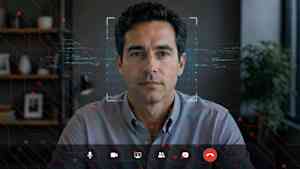
Americans can’t reliably distinguish real from AI-generated content, and that’s not just a media literacy problem; it’s a direct threat to how businesses verify identity online.
New research finds that while many people are aware of deepfakes, their ability to distinguish them from reality is barely better than a coin flip. A 2026 survey conducted by Veriff and Kantar among 3,000 respondents in the United States, the United Kingdom, and Brazil shows Americans scoring just 0.07 on a scale where 0 represents random guessing.
If people can’t distinguish authentic visual content, they can’t reliably distinguish authentic identities. In practice, that means the same users interacting with digital services are often unable to tell whether the person on the other side of a screen is real.
That ineffectiveness has direct consequences for every digital business that relies on image- and video-based identity verification to confirm who is on the other side of a screen. That includes everything from customer bank onboarding and account recovery to marketplace seller verification, high-value ecommerce transactions, social platform authentication, and enterprise access control.
In the U.S., those consequences are already material — synthetic identity fraud now accounts for billions in annual losses, and the tools to generate convincing fakes are now widely accessible.
The report also identifies a small but high-risk cohort: the roughly 7% of users who perform poorly at detecting deepfakes, yet remain confident in their ability and rarely verify what they see. While this is small as a percentage, at scale it represents millions of accounts that are highly exploitable targets for fraud.
If users can’t reliably distinguish real from synthetic identities, then any system that depends on visual verification is fundamentally exposed. Identity verification can no longer be treated as a compliance function; instead, it has to be built as core digital infrastructure.
“Now that AI-generated content is becoming indistinguishable from reality, the human eye alone is no longer a reliable line of defense,” says Ira Bondar-Mucci, fraud platform lead at Veriff. “Businesses and policymakers in the U.S. need to close this awareness gap urgently, while simultaneously investing in automated verification technologies that can catch what humans simply can’t.”
The U.S. deepfake awareness gap is wider than expected
The United States might be the global epicenter of generative AI development, but American consumers demonstrate the lowest familiarity with deepfakes among the three surveyed markets. Only 63% of U.S. adults are familiar with the term, compared to 74% in the UK and 67% in Brazil.
“There’s a paradox at play,” Bondar-Mucci says. “The U.S. is the global epicenter of AI development, yet American consumers are the least familiar with one of its most dangerous byproducts. Historically, consumers have had higher baseline trust in digital content, with the conversation about fraud centered more on data privacy than on content authenticity. The problem is that low awareness doesn’t reduce risk, it amplifies it. If you don’t know what a deepfake is, you’re far less likely to pause and verify whether you’ve encountered one.”
Human deepfake detection is barely better than a coin flip
In practice, the randomness that characterizes consumer’s ability to distinguish real from fake is evident across the ways people assess different types of content. Video content proved to be especially difficult to assess, with fake videos frequently identified as authentic and real videos often flagged as fake. Even in side-by-side comparisons, respondents split their judgments close to evenly, another indication that visual inspection alone is no longer a reliable method for verifying authenticity.
Overconfidence in deepfake detection creates a dangerous vulnerability
Roughly half of U.S. respondents say they are confident in their ability to identify deepfakes, but that confidence far exceeds actual performance, demonstrating that self-assessment is effectively meaningless.
Within that population, there’s that small but high-risk cohort: the approximately 7% of users who are inaccurate, yet overconfident in their ability and rarely verify suspicious content.
“This confidence-competence gap creates a false sense of security that fraudsters are primed to use,” says Bondar-Mucci. “When people believe they can’t be fooled, they stop looking for the signs. That’s precisely when they’re most vulnerable, whether to a synthetic identity used in financial fraud or a fabricated video designed to manipulate trust.”
For businesses, the implication is clear: any organization that still relies on manual review processes or customer self-attestation is inheriting this vulnerability directly. Human judgment is an increasingly unreliable safeguard, and verification needs to be built into systems by default. This means automated, technology-led, and not dependent on the end user’s self-assessment of their ability to tell real from fake.
Americans are worried about deepfakes but trust platforms to handle them
Concern about deepfakes is high across the U.S., with 79% of respondents reporting they are rather or extremely concerned about personal fraud and impersonation.
The U.S. diverges from other markets in where that concern gets directed. Americans are more likely than UK or Brazilian respondents to trust social media platforms and digital services to identify and manage AI-generated content. That delegation of responsibility may be reducing individual vigilance at exactly the moment the threat is accelerating.
“We’re seeing synthetic identities used to open fraudulent accounts and authorize transactions, and deepfake videos deployed to bypass basic verification checks,” he explains. “What makes this particularly urgent is the combination of great concern with relatively high platform trust. That gap between perceived and actual protection is exactly where fraud thrives.”
The business case for automated identity verification has never been stronger
The gap between what Americans believe they can detect and what they actually can is not a knowledge problem that awareness campaigns will resolve, but a design flaw in any system that places the burden of identity verification on unassisted human judgment.
The effective response is not to remove humans from the verification loop, but to stop assigning them tasks that human perception can no longer perform reliably. Organizations that persist in relying on manual review processes or customer self-attestation are absorbing this vulnerability into their operations.
The alternative is automated, AI-powered identity verification that operates at the point of interaction, detects synthetic media before a human decision is required, and does not depend on the end user’s ability to distinguish real from fake.
“Seeing is no longer believing,” says Bondar-Mucci. “The companies that build verification infrastructure around that reality, rather than around the assumption that it will be otherwise, are the ones best positioned to sustain customer trust as the synthetic media landscape continues to evolve.”
Sponsored articles are content produced by a company that is either paying for the post or has a business relationship with VentureBeat, and they’re always clearly marked. For more information, contact sales@venturebeat.com.
