



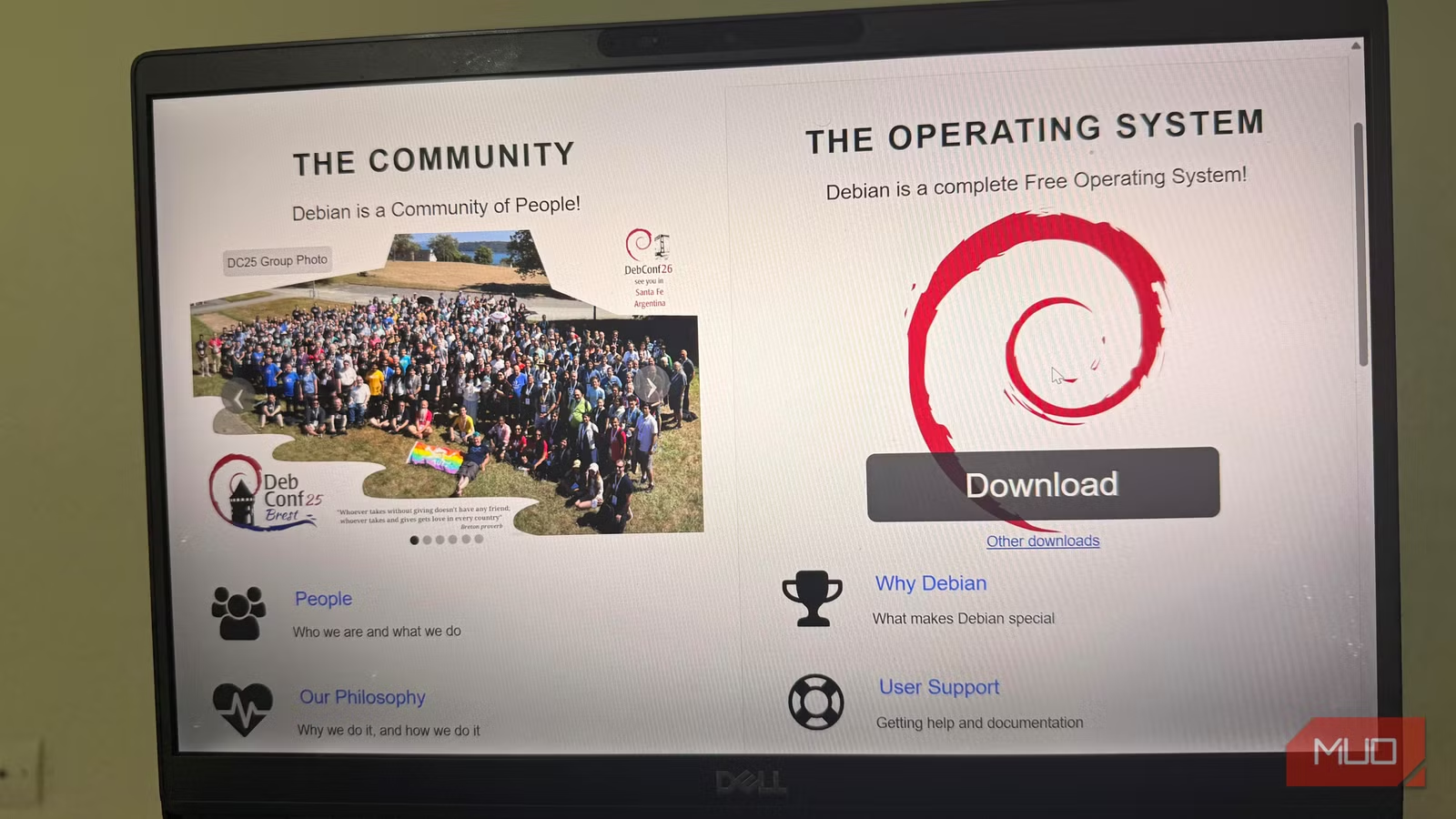

At one time Linux felt more like a hobby than an OS, which made me burn through eight distros in two years. However, I wouldn’t take all the blame. Several distros I tried were so entertaining that I couldn’t help but focus on what could be next. Landing on Debian was so uneventful that the urge to keep chasing what’s flashy and exciting died.
Debian remains functional and identical from month to month, with no temptations to install new software or tweaks. It turned my focus from the OS back to the actual work I had to do. I never knew that embracing an intentionally boring distro could be such a productivity cheat code.
Related
Linux Mint was throttling my modern hardware by default — 3 changes fixed it completely
Free RAM sitting idle while apps stutter is a configuration problem.
Debian rarely gives you FOMO
New releases stopped feeling important
Afam Onyimadu / MUO
Distro-hopping is fueled by FOMO (fear of missing out). There is always a shiny new desktop environment or feature, a newly released kernel, or just a new distro with new promises that seem better than what you currently have. This cycle doesn’t require anything to be wrong, something newer just has to exist.
Debian stable’s clock is completely different. It takes about two years for new stable releases to arrive, and the packages usually go through a freeze period before reaching you, only allowing bug fixes and security patches. Debian 13 “Trixie” is the current stable release and follows this process. When it shipped, it didn’t give users anything exciting; it was simply that distro where nothing strange happened.
You can quickly spot the difference. Updates feel like events in other distros; I find myself reading changelogs, watching videos explaining new features, and finally, I spend a lot of time exploring features I eventually have no use for. On Debian, you simply get a security patch whenever you see an update notification. It’s that simple: I didn’t need to supervise the process. Eventually, I stopped thinking about it.
This is how tempted I have been to hop over to some major distros that I’ve used:
Distro
Release model
Degree of change
Temptation to hop
Arch Linux
Rolling
Constant
High
Fedora
Every 6 months
Frequent
Moderate
Ubuntu LTS
Every 2 years
Moderate
Moderate
Debian Stable
Every 2 years + backports
Rare
Low
What I realized is that the less your OS changes, the less the urge to try something new.
Debian gave me nothing to fix
The tweaking cycle finally ended
Afam Onyimadu / MUO
Almost every time I distro-hop, it’s because I convince myself something could be better. I followed the same pattern consistently: installing a distro, changing themes, swapping icons, adding extensions, then spending some time on forums to find optimization tips. In the end, I stumbled across a different thread praising another distro, and I repeat the cycle. I simply never gave any operating system the time to feel finished.
With Debian, I couldn’t follow that loop because there really wasn’t much to do on the distro. The default Debian GNOME installation is intentionally plain. It lacks distro-specific panels, layout switchers, or built-in theme galleries. Compare that to Zorin OS, where you get customization options during setup, or Linux Mint, where the Themes panel sits very visibly in settings. Both are excellent distros, but they give you reasons to make adjustments before you even start useful work.
The software choices you get on Debian reinforce the philosophy. Firefox ships as the Extended Support Release (ESR) build, ensuring you don’t get Mozilla’s rapid feature updates on your device as soon as they get released. The schedule for new UI changes, interface decisions, and things you may need to react to come slowly. Even though it feels like falling behind initially, it ends up being one less thing competing for your attention.
It’s the same pattern with Debian’s package manager, APT. You routinely run sudo apt update && sudo apt upgrade. You rarely encounter dependency conflicts. I have never had to search for a fix or reconsider my setup because of the update process. Even after six months of setting up Debian, my desktop still looks the same. In my hopping days, this would have been an unimaginable feat.
My apps became more interesting
The operating system faded away
The difference between Debian and other distros I spent time on is how little I thought about computing compared with actually doing it.
The hours previously spent watching comparison videos were gone. I wasn’t reading or looking out for release announcements. Real work started being the main focus of my day. I could write and complete development projects rather than spend time working on the operating system.
The tools I needed, like Firefox, VS Code, Docker, Git, and LibreOffice, were available and stable. Debian’s stability makes the distro a reliable deployment target that major software vendors love to prioritize.
Debian practically steps into the background, and because I stopped evaluating my OS, I stopped looking for something else.
Boring turned out to be useful
In retrospect, I can say I wasn’t searching for a better distro during my time distro-hopping. I was just chasing down whatever felt new, and these are two separate things even if they can feel identical.
Debian has existed longer than Ubuntu, Fedora, and Arch. It’s thrived mainly because it has maintained a steady approach. In production, its reliability is what makes it valuable, and this also makes it valuable for personal use.
Its stable package version lags behind upstream releases, which guarantees serious friction if you need Python 3.14, the latest Node.js LTS, or a bleeding-edge toolchain.
However, if your Linux hobby affects your Linux productivity like it affected mine, Debian may just be the distro to end your years of distro-hopping.


