

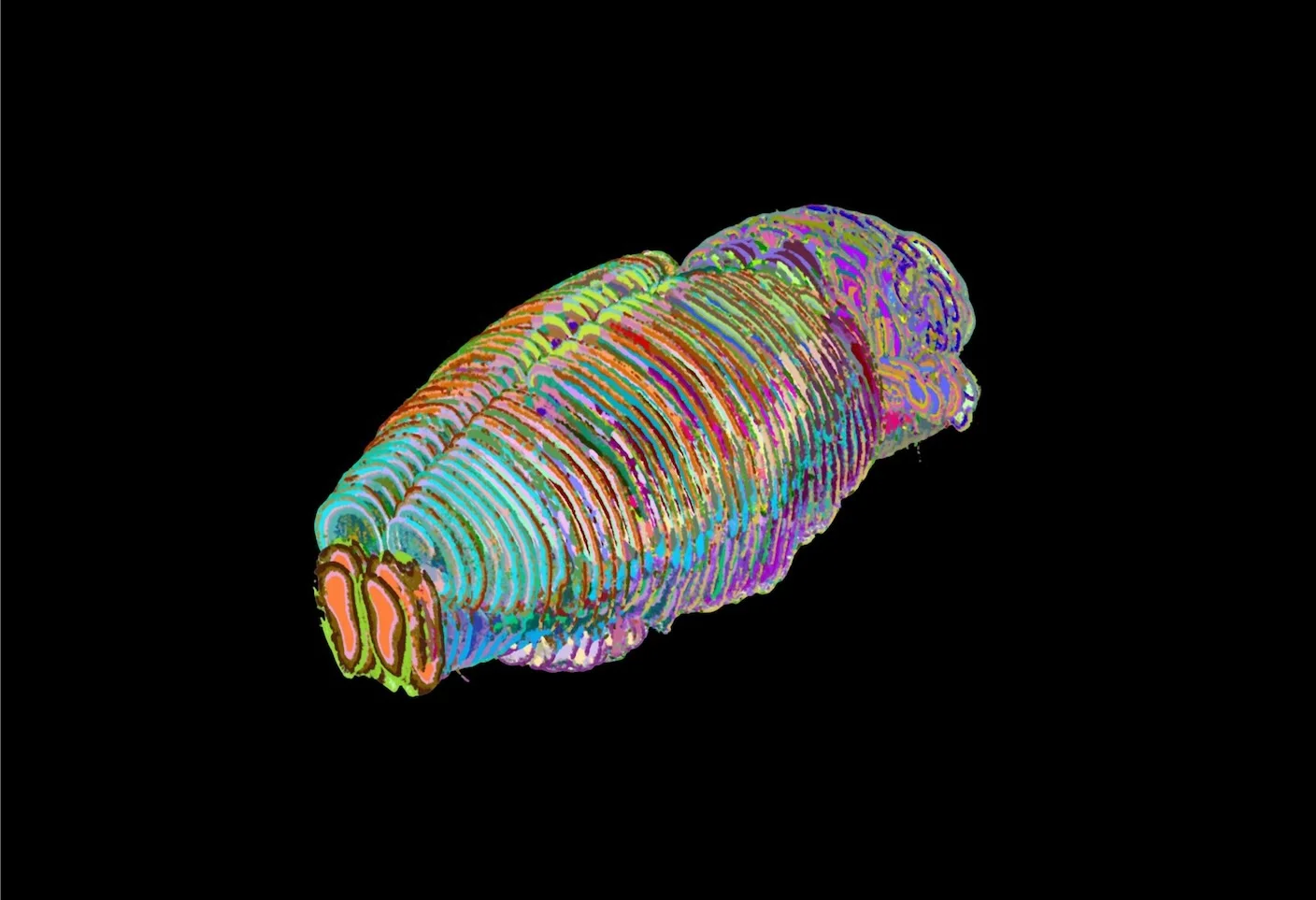
At the turn of the 20th century, Korbinian Brodmann released one of the most consequential brain maps ever. By studying the humps, grooves, layers, and cells of the cortex—the outermost layer of the brain—he divided the wrinkly tissue into 52 distinct areas.
Brodmann’s map was based solely on microscopic images of the brain. Since then, neuroscientists have added a variety of other data types, including high-resolution brain scans, neuron connectivity, and gene expression. In 2016, the human cortex map received a seminal update including multiple datasets. It defined 180 “universal” areas in the human cerebral cortex—far more than Brodmann’s map—many of which were linked to specific brain functions.
Subdividing the brain can drive neuroscience discoveries. By linking specific brain functions in health and disease to smaller, more precise anatomical regions, scientists can better study how the brain changes with age and disease or fine-tune treatments.
Previous maps heavily relied on the keen eyes of human experts to draw out regions. But with increasingly detailed datasets on multiple scales—genes, cells, neural networks—across the entire brain, scientists are increasingly relying on machine minds for help.
Now, thanks to a ChatGPT-like AI, machines may take over brain districting entirely. A recent collaboration between the University of California, San Francisco and the Allen Institute married AI and neuroanatomy to build one of the most detailed mouse brain maps ever. Dubbed CellTransformer, the AI learned how cells relate to each other using massive datasets detailing which genes are turned on or off throughout the brain.
The AI churned through over 200 mouse brain slices and nine million cells to outline 1,300 brain regions and subregions across multiple mice. It easily discerned well-defined areas such as the hippocampus, the brain’s memory hub. But the algorithm also identified an elusive layer in the motor cortex and mysterious domains with yet unknown functions.
“It’s like going from a map showing only continents and countries to one showing states and cities,” said study author Bosiljka Tasic in a press release. “And based on decades of neuroscience, new regions correspond to specialized brain functions to be discovered.”
An Atlas of Brain Maps
Thanks to increasingly sophisticated microscopy and affordable genetic tools, large-scale brain maps now cover a range of complexities in brain organization.
You can think of the brain’s architecture as a tower. Genes are the foundation. All brain cell types have the same set of genes, but mutations can lead to a multitude of brain diseases. This layer inspires gene therapies, some of which are gaining steam.
The next level up is transcriptomics—that is, which genes are turned on or off. Different brain cells have unique gene expression signatures that hint at their health and function. A powerful tool called spatial transcriptomics captures these signals at the level of single cells in a map across brain slices. This map pinpoints genetic profiles in time and space.
Further up the tower is connectomics—how neurons functionally wire together at both the local and global scales—and behavior. The Machine Intelligence From Cortical Networks (MICrONS) consortium operates at this scale. The group has painstakingly imaged and mapped a cubic millimeter of mouse brain and linked the neural connections to behavior. Finally, brain scans, such as functional MRI, offer a more birds-eye view of the brain in action.
Each level gives us a unique perspective on brain regions and how they work. But too much data can be an embarrassment of riches. “Transforming this abundance of data into a useful representation can be difficult, even for fields with a wealth of prior knowledge, such as neuroanatomy,” wrote the authors.
Hello, Neighbor
The new study zeroed in on one level: Spatial transcriptomics.
At the heart of CellTransformer is the same type of AI that powers ChatGPT and other popular chatbots. Called a transformer, the algorithm uses artificial neural networks to process data. First introduced in 2017, transformers are a foundation for other AI models, such as large language models, to build upon. Think of them as scaffolding for building a house. The final architectural designs may look vastly different, but they all rely on the same initial framework.
Transformers are especially adept at “understanding” context. For example, they can model how words in sentences relate to each other, allowing chatbots to deliver human-like responses. Rather than training the AI with data scraped from the internet, the authors fed it multiple existing datasets collected from mouse brains. These included the Allen Brain Cell Whole Mouse Brain Atlas for structural information, a spatial transcriptomic atlas called MERFISH, and a single-cell RNA sequencing dataset—which also charts active genes—from millions of cells.
They then asked the AI to find “local neighborhoods” based on any given cell without additional guidance. Similar to finding patterns in words, CellTransformer learned patterns of spatial transcriptomics surrounding cells. Each neighborhood was then marked with a set of “tokens”— building blocks for the AI to analyze—that could accurately predict gene expression and link the results to cell type and tissue information.
“While transformers are often applied to analyze the relationship between words in a sentence, we use CellTransformer to analyze the relationship between cells that are nearby in space,” said study author Reza Abbasi-Asl. “It learns to predict a cell’s molecular features based on its local neighborhood, allowing it to build up a detailed map of the overall tissue organization.”
The team first used the AI to analyze complex but well-known brain areas, including the hippocampus, using Allen Institute’s Common Coordinates Framework, a gold standard for neuroanatomy.
The hippocampus is a seahorse-shaped structure buried deep inside the brain critical for learning and memory. It consists of multiple regions, each with distinct but intertwined jobs and unique gene expression profiles. CellTransformer performed admirably, marking subdivisions similar to previous results. It also excelled at delineating areas in the cortex—for example, those related to sensing and movement—which Brodmann roughly sketched out over a century ago.
Perhaps more excitingly, the AI charted a slew of previously unknown areas. Some centered around a hub in the midbrain, which is known for initiating movement, emotion, and other behaviors. Often destroyed in Parkinson’s disease, the area could be a target for treatment. CellTransformer also found several cellular neighborhoods that intermingled in a grid-like pattern, suggesting they could form a previously undiscovered local neural network.
The AI identified 1,300 brain regions overall. Though to be clear, the results haven’t been experimentally confirmed. The authors also stress the findings shouldn’t be interpreted to mean “the brain is composed of discrete brain regions” but perhaps as a gradient of gene expression differences. Still, the map may help scientists uncover yet unknown functions in small but distinctive brain regions or link specific brain areas to diseases.
The AI isn’t tailored to analyzing just the brain. It could also digitally dissect other tissues—including cancerous ones—and organs into subsections. Similar to the brain, the AI could perhaps find nuanced structures and functions that inspire new targets and treatments.
