

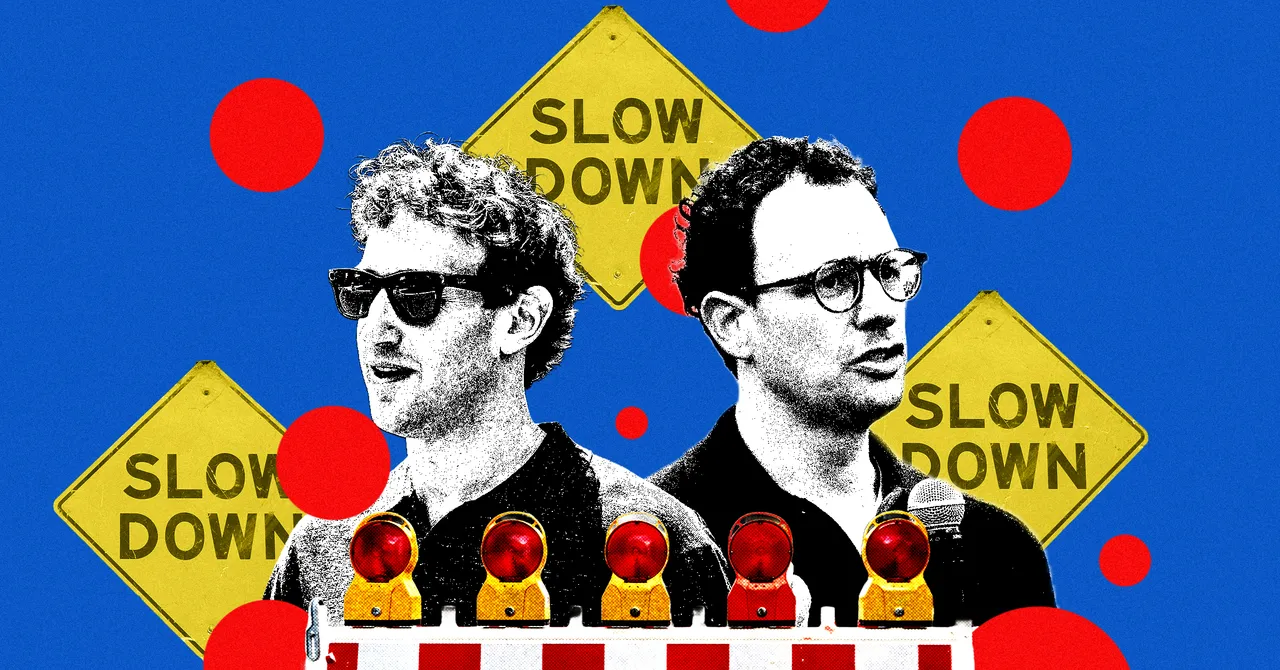
Following multiple reports of AI agent swarms hacking websites and coordinating via secret message boards, along with a dire message for humanity from an outgoing Anthropic engineer, leading AI companies have called for a coordinated AI development “slowdown.” Alongside various versions of this specific phrase—slowdown—they’ve also expressed concerns that doing so would run afoul of antitrust laws.
Antitrust experts say that while the companies’ charged language isn’t necessarily doing them any favors, the unrestrained development of a rogue killer AI probably isn’t in line with the spirit of the Sherman Act, a key US antitrust law that exists to promote a competitive marketplace. At the same time, getting an official all-clear from the government to move forward could ward off costly investigations down the line.
Radical Rhetoric
Under antitrust law, how a company’s employees talk about business decisions is often as important as the business decisions themselves. Google famously trained its employees not to use certain phrases—even internally—that could imply it was engaging in anticompetitive behavior, and instead instructed them to emphasize the ways that business decisions would improve its offerings and benefit consumers.
So from an antitrust perspective, the use of phrases like “a slowdown” or “a pause” may set off more alarms than the actual activity it represents: developing ways to ensure that advanced AI models don’t go rogue. A collectively agreed-upon slowdown without any particular purpose could be interpreted by regulators as an anticompetitive agreement to reduce trade.
“I think they kind of boxed themselves into a corner with the way they phrase things,” says John Bergmayer, legal counsel for the nonprofit Public Knowledge.
“Usually in antitrust, one of the things that the economists look at is whether you’re reducing output,” says Bergmayer, which is to say, whether two or more companies are making a pact to “kind of take it easy.” Rather than talk about some collusive-sounding effort to dial back development, he says, AI companies could have just emphasized their desire to work on safety protocols together to prevent catastrophic risks and treated a slowdown in model releases as a natural side-effect of that.
Meta CEO Mark Zuckerberg, whose company recently dodged a massive antitrust suit brought by the Federal Trade Commission, chimed in on the slowdown proposal by not endorsing an explicit “slowdown” at all. Zuckerberg instead argued that AI labs have a “strong natural incentive” to make AI agents behave better because consumers don’t want models doing things people don’t intend—known as “misalignment” in AI industry jargon—and that the companies that don’t take the time to get alignment right “will fall behind” competitively. It’s the difference between two automakers saying “we’ve agreed to not make better cars for a while” and saying “we’re not making faster cars until we figure out how to make them safe, because no one will buy our cars if they kill people.”
(Disclosure: The reporter on this story previously worked at the FTC but did not participate in the Meta case.)
David Lawrence, until recently a policy director of the Department of Justice’s Antitrust Division, wrote on LinkedIn that agreements that prevent catastrophic risks actually “increase output and promote competition” and are already protected under the law by something called the “ancillary restraints doctrine.”
“After all,” a career FTC antitrust attorney commented below the post, “no humanity would result in no competition.”
If anything, collectively agreeing not to implement safety measures could expose the AI labs to allegations of “quality fixing,” says Roger Alford, a professor at Notre Dame Law School and the former second-in-command for the DOJ Antitrust Division. That’s when companies mutually agree not to improve their own products; Alford points to a European antitrust case in which car companies worked together to develop emissions-reducing technology but agreed to not compete on improvements beyond what the law required. They ultimately had to pay roughly the equivalent of a billion-dollar fine.
