
Close Menu
Tech Nova Mindset – Empower Innovation and Forward Thinking

    Subscribe to Updates

    Get the latest creative news from FooBar about art, design and business.

    What's Hot

    AI Agents Are Thirsty for Power

    September 13, 2026

    This Week’s Awesome Tech Stories From Around the Web (Through September 12)

    September 12, 2026

    From Hacks to Bioweapons, Claude Misuse Is Now Everywhere

    September 12, 2026
    Facebook X (Twitter) Instagram
    Trending
    • AI Agents Are Thirsty for Power
    • This Week’s Awesome Tech Stories From Around the Web (Through September 12)
    • From Hacks to Bioweapons, Claude Misuse Is Now Everywhere
    • OpenAI Claims Another Huge Mathematical Result Amid Fights Over Credit, Ethics, and Privacy
    • Roundtables: AI’s apocalypse crisis | MIT Technology Review
    • IEEE Rewards Sections for High Voter Turnout
    • A human set a new mathematical record. Then AI came for it
    • Meta Sued Over Training Data for Its AI and Face-Recognition Systems
    Tech Nova Mindset – Empower Innovation and Forward Thinking
    • Home
    • Gadgets
    • Reviews
    • Tech News
    • Future Tech
    • AI & Robotics
    • How-To Guides
    • More
      • Cybersecurity
      • Startups & Innovation
    Tech Nova Mindset – Empower Innovation and Forward Thinking
    Home»AI & Robotics»A Stealth Startup Thinks It Just Hacked the Memory Shortage
    AI & Robotics

    A Stealth Startup Thinks It Just Hacked the Memory Shortage

    kirklandc008@gmail.comBy kirklandc008@gmail.comSeptember 9, 2026No Comments2 Mins Read
    Facebook Twitter Pinterest LinkedIn Tumblr Email
    A Stealth Startup Thinks It Just Hacked the Memory Shortage
    Share
    Facebook Twitter LinkedIn Pinterest Email

    Kepler also says it has improved the density of SRAM using ferroelectrics, which can read and write data at lower voltages than the mechanisms typically used to process and store data in semiconductors. The startup did this by developing a new, low-voltage, composite material that works with this ferroelectric approach.

    Sasi Manipatruni, a Kepler cofounder and its chief technology officer, says the Kepler team went through 35 iterations of composites before they landed on a material class that they thought would make memory chips easier and cheaper to make.

    “Once we found a way to solve the physics problem—as in the physical limitations for HBM—we came up with a material innovation that helps with the amount of memory you can have between chips,” he says.

    In its early build-outs with GlobalFoundries, Kepler says it was able to convert a fab into a “next-generation” fab in just eight months, compared to a typical 24-month timeframe.

    “Out goal is to take the fabs and architectures already built, and push them to the limits of physics,” Olaosebikan says.

    Basically Kepler is betting that any additional costs that come from new materials or retooling existing fabs would far outweigh the $20 billion to $40 billion it costs to build new ones and outfit them with equipment worth hundreds of millions of dollars.

    Waiting to Scale

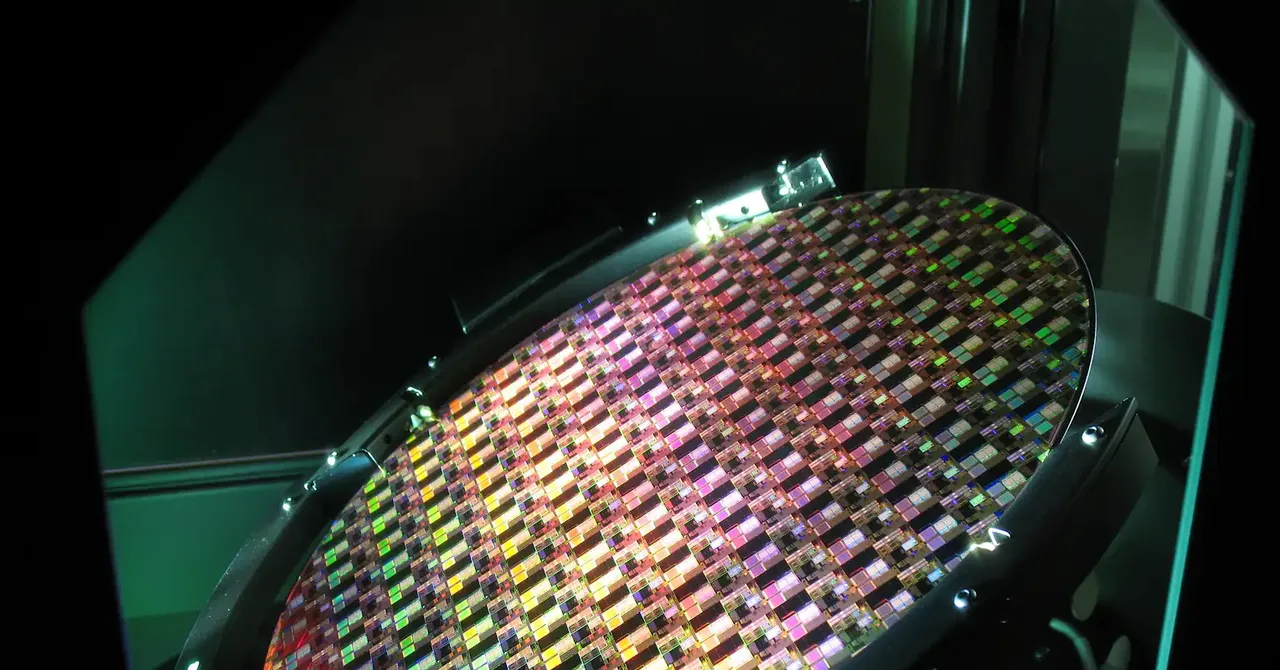
    Kepler Computing still has a long road ahead before it reaches full-scale production—assuming it gets there. To date, the company has run its technology on around 2,000 wafers. The startup says it’s planning to ship its first samples of HBM chips later this year, ramp up production out of Singapore next year, and start chip production in the US in 2028.

    Kaste, the GlobalFoundries executive, says he’s confident that the “fundamental breakthroughs have happened. What remains is getting good results on thousands of wafers and millions of devices.”

    He points out that one of the challenges with a material system like the one Kepler is using is that it includes iron in its composite. “Iron is a tough contaminant to introduce into a production facility. So Kepler’s solution has to run on dedicated equipment, or be fully encapsulated so that it can’t escape,” he says.

    “The art is in keeping that material really well isolated through our production flow,” Kaste says.

    Automated wafer-handling equipment used by Kepler in its dedicated test fab.

    Photograph: Courtesy of Kepler Computing

    Hacked Memory Shortage startup stealth thinks
    Share. Facebook Twitter Pinterest LinkedIn Tumblr Email
    kirklandc008@gmail.com
    • Website

    Related Posts

    AI Agents Are Thirsty for Power

    September 13, 2026

    This Week’s Awesome Tech Stories From Around the Web (Through September 12)

    September 12, 2026

    From Hacks to Bioweapons, Claude Misuse Is Now Everywhere

    September 12, 2026
    Leave A Reply Cancel Reply

    Top Posts

    Nothing CEO says phone prices are going to keep going up

    June 12, 20267 Views

    Google DeepMind Plans to Track AGI Progress With These 10 Traits of General Intelligence

    March 21, 20263 Views

    The AirPods 4 and Lego’s brick-ified Grogu are our favorite deals this week

    October 12, 20253 Views
    Stay In Touch
    • Facebook
    • YouTube
    • TikTok
    • WhatsApp
    • Twitter
    • Instagram
    Latest Reviews

    Subscribe to Updates

    Get the latest tech news from FooBar about tech, design and biz.

    Recent Posts
    • AI Agents Are Thirsty for Power
    • This Week’s Awesome Tech Stories From Around the Web (Through September 12)
    • From Hacks to Bioweapons, Claude Misuse Is Now Everywhere
    • OpenAI Claims Another Huge Mathematical Result Amid Fights Over Credit, Ethics, and Privacy
    • Roundtables: AI’s apocalypse crisis | MIT Technology Review

    AI Agents Are Thirsty for Power

    September 13, 2026

    This Week’s Awesome Tech Stories From Around the Web (Through September 12)

    September 12, 2026

    From Hacks to Bioweapons, Claude Misuse Is Now Everywhere

    September 12, 2026

    OpenAI Claims Another Huge Mathematical Result Amid Fights Over Credit, Ethics, and Privacy

    September 12, 2026
    Facebook X (Twitter) Instagram Pinterest
    • About Us
    • Contact Us
    • Privacy Policy
    • Terms and Conditions
    • Disclaimer
    © 2026 TechNovaMindset. Designed by By Pro.

    Type above and press Enter to search. Press Esc to cancel.