

NASA’s Planetary Defense Coordination Office, and its partners across the world, are chiefly worried about asteroids 460 feet long and larger. Around 25,000 of those are estimated to have near-Earth orbits, and just over half have yet to be found. Should one hit a city, much of it would be destroyed or irreversibly damaged in a heartbeat. Astronomers estimate that there are also 230,000 or so 165-foot-long asteroids orbiting close to Earth, and less than 10 percent have been located. One of those striking a city may not annihilate it, but it would unleash a force comparable to a large atomic bomb, albeit without the radiation.
These sorts of asteroids could theoretically be deflected (by ramming a spacecraft into it) or vaporized (perhaps using a nuclear weapon). But planetary defenders need to know where they are first, which is why NASA funds a network of ground-based telescopes designed to seek them out. They work well, but there’s only so much of the night sky they can see, and Earth’s atmosphere peskily gets in their way.
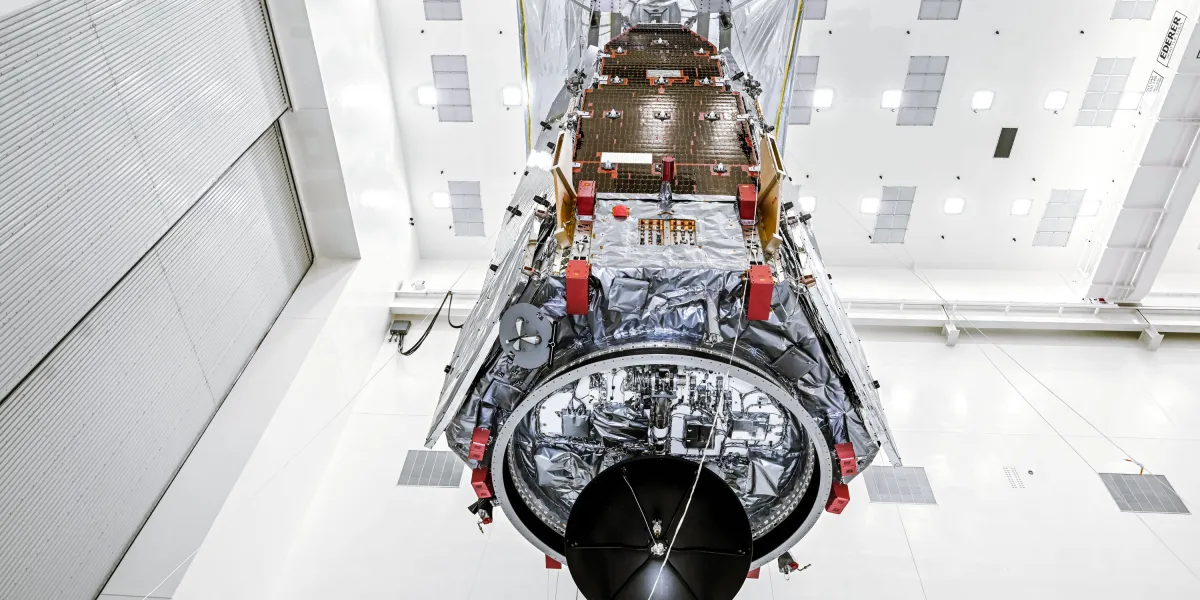
That’s why NASA’s launching the Near-Earth Object (NEO) Surveyor space telescope in 2027. By positioning itself between Earth and the Sun, it’ll find many elusive asteroids that ground based telescopes cannot see. And unlike many of its asteroid-seeking cousins, it’ll see in infrared, not visible light. Asteroids not only show up more clearly in infrared, but seeing them through this lens gives scientists a considerably better measure of their size. In a matter of years, it could find 90 percent of the city killer-size asteroids in near-Earth orbits.
Telescope teamwork
NEO Surveyor is explicitly a planetary defense observatory. But it’ll work with other telescopes with more science-minded missions, including Roman, JWST—both of which conveniently have infrared scopes too—and the Vera Rubin Observatory, which just began its 10-year survey of the entire night sky from atop a mountain in Chile. As part of its inventorying of the cosmos, it’s expected to discover 89,000 near-Earth asteroids.
Here’s how they might all work together. Say NEO Surveyor spies an asteroid that, based on a few observations, has a chance of impacting Earth. Then it finds five more just like it. There is a lot of uncertainty about their orbits based on those initial observations. Roman, with its huge field-of-view, could be commanded to look at the corner of the night sky that includes all those asteroids, and in a matter of days it could improve the precision of those orbits by several orders of magnitude.
Roman also occupies a different part of space to both NEO Surveyor and the Rubin observatory. “Those slightly different viewing angles will also help narrow orbits down more quickly than if all objects were looking from the same place,” says Holler.
Perhaps five of those potentially hazardous asteroids are found to stand no chance of colliding with Earth for the foreseeable future. One, however, might not be able to be ruled out—and that’s when other telescopes, including JWST, could be asked to track it down and study it further.
“Telescope resources, whether in space or on the ground, are typically oversubscribed and will not be available to follow up on all [near-Earth asteroids] with a non-zero impact probability when they are first discovered,” says Holler. Roman, then, will help scientists “make sure we follow-up on the correct targets.”
Roman’s infrared scope also allows it to offer a decent estimate of an asteroid’s size, and can even tell whether it’s a stony rock, a puffy and watery carbon-rich rock, or a metallic one. “This in turn provides strong clues to the composition and thereby the density and mass of the asteroid, which are important when estimating the impact damage or, less ghoulishly, the effort required to nudge it out of its current orbit,” says Holler.
Roman won’t play the lead role in protecting Earth in the way NEO Surveyor will. But while it’s seeking out supernovas and planets scooting around other stars, it will also be doing its part to protect all eight billion of us from a cosmic catastrophe.
