
Close Menu
Tech Nova Mindset – Empower Innovation and Forward Thinking

    Subscribe to Updates

    Get the latest creative news from FooBar about art, design and business.

    What's Hot

    This Week’s Awesome Tech Stories From Around the Web (Through August 1)

    August 1, 2026

    Nobody Knows if OpenAI’s and Anthropic’s AI Hacking Sprees Are Illegal

    August 1, 2026

    The Man Who Understood Risk: Robert N. Charette retires.

    August 1, 2026
    Facebook X (Twitter) Instagram
    Trending
    • This Week’s Awesome Tech Stories From Around the Web (Through August 1)
    • Nobody Knows if OpenAI’s and Anthropic’s AI Hacking Sprees Are Illegal
    • The Man Who Understood Risk: Robert N. Charette retires.
    • 7 States’ Water Systems Hit by Cyberattacks Likely Tied to Iran
    • Gemini Robotics 2 Brings Google’s AI Into the Physical World
    • This AI Assistant Wants to Make Up for Your Boyfriend’s Incompetence
    • Europe Approves Bionic Eye to Restore Vision Lost to Blindness
    • Chinese AI Researchers Are Finding Their Voice on X
    Tech Nova Mindset – Empower Innovation and Forward Thinking
    • Home
    • Gadgets
    • Reviews
    • Tech News
    • Future Tech
    • AI & Robotics
    • How-To Guides
    • More
      • Cybersecurity
      • Startups & Innovation
    Tech Nova Mindset – Empower Innovation and Forward Thinking
    Home»AI & Robotics»Universal Gravitational Constant Gets a 10-Year Recheck
    AI & Robotics

    Universal Gravitational Constant Gets a 10-Year Recheck

    kirklandc008@gmail.comBy kirklandc008@gmail.comJuly 28, 2026No Comments3 Mins Read
    Facebook Twitter Pinterest LinkedIn Tumblr Email
    Universal Gravitational Constant Gets a 10-Year Recheck
    Share
    Facebook Twitter LinkedIn Pinterest Email

    Physicists have been trying to measure the fundamental gravitational constant for well over two centuries. The current accepted value of big G, as it’s known, is 6.67430 × 10⁻¹¹ cubic meters per kilogram per square second. It also has an uncertainty of ±0.00015 × 10⁻¹¹ m3/(kg s2). As far as constants of the universe go, that’s very uncertain.

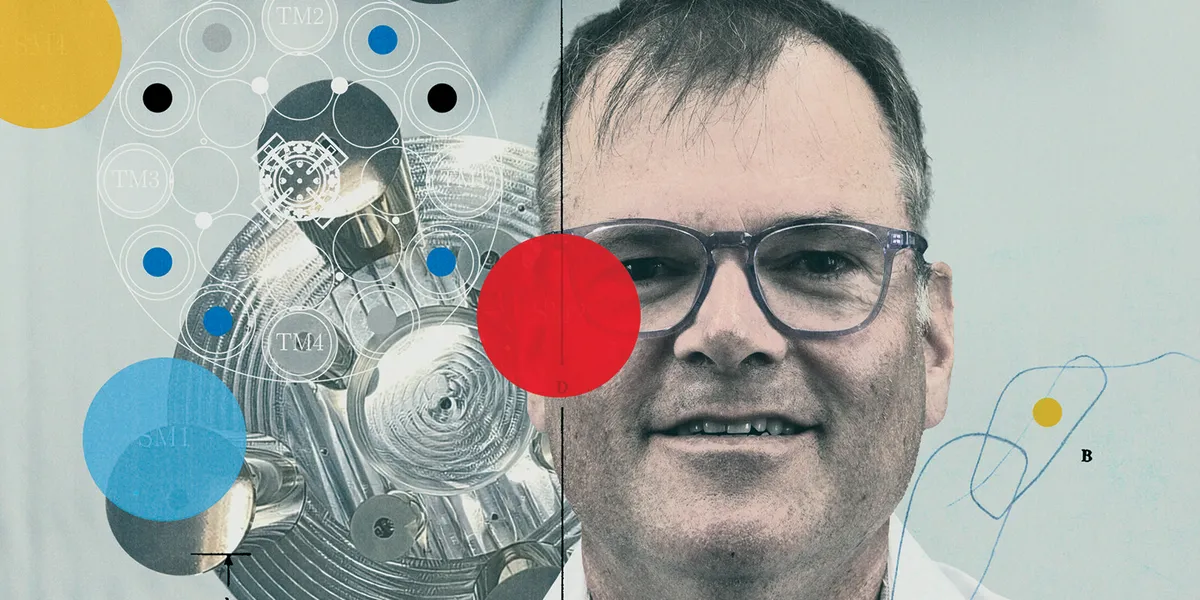
    Stephan Schlamminger

    Schlamminger is a physicist at the U.S. National Institute of Standards and Technology.

    Stephan Schlamminger recently completed a 10-year effort at the U.S. National Institute of Standards and Technology to replicate an earlier measurement of big G from the International Bureau of Weights and Measures, or BIPM (located near Paris) that’s notably higher than most measurements. He spoke with IEEE Spectrum about why it took so long to get a number—6.67387 x 10⁻¹¹ m3/(kg s2)—and why it’s notably lower than the BIPM result, to the tune of 0.0235 percent.

    Why is it so difficult to measure big G?

    Stephan Schlamminger: Gravity is very weak. When you were a kid, you probably played with fridge magnets, and it was a force you could feel. But if you have two coffee cups, you can try all you want—you can’t feel the force between them. It is there, but it’s so, so weak.

    How did you attempt to measure big G?

    NIST used a torsion balance with a fourfold geometry. This animation shows an exaggerated version of how the outer green masses gravitationally attract the inner blue masses.S. Kelley/NIST

    Schlamminger: We used what’s called a torsion balance. The key idea in the torsion balance is that it decouples vertical gravity that you have from Earth from horizontal gravity, and that makes it sensitive to masses that are around the torsion balance but not the Earth below.

    Ours had a fourfold geometry. It has a very thin torsion strip, then four cylinders in a “plus sign” arrangement. All of this is inside a vacuum. Outside, we have four larger cylinders that gravitationally attract the four smaller masses to them. If I move the outer masses just a tiny little bit, the plus sign will rotate, and we measure that angle that it moves. That angle is proportional to the gravitational torque.

    Why try to replicate the BIPM value?

    Schlamminger: We could move the field forward. The measurements have been plagued with inconsistencies, so by redoing an experiment, we hoped to shed light on the inconsistencies.

    We did not find a smoking gun, so there’s no single reason why it’s different—our value versus their value. It’s still a big question mark.

    What was it like spending 10 years on this?

    Schlamminger: It’s a bit like herding cats. I’ve measured other fundamental constants, like Planck’s constant, and for most experiments, they have some sort of self-calibration built in. But with the gravitational constant, you have to keep track of every single mass that moves—where they are, how big they are, and weigh them.

    How does your result compare to the rest?

    Schlamminger: Our result is a little bit below the standard accepted literature value. I was disappointed because it doesn’t agree with the BIPM value, nor with the literature value. If there’s something wrong with the BIPM experiment, then the literature value—which includes that result—probably ought to come down a bit. But that is not for me to say. I think somebody else, independent, should figure out what the new mean value ought to be.

    From Your Site Articles

    Related Articles Around the Web

    10year constant gravitational recheck universal
    Share. Facebook Twitter Pinterest LinkedIn Tumblr Email
    kirklandc008@gmail.com
    • Website

    Related Posts

    This Week’s Awesome Tech Stories From Around the Web (Through August 1)

    August 1, 2026

    Nobody Knows if OpenAI’s and Anthropic’s AI Hacking Sprees Are Illegal

    August 1, 2026

    The Man Who Understood Risk: Robert N. Charette retires.

    August 1, 2026
    Leave A Reply Cancel Reply

    Top Posts

    Nothing CEO says phone prices are going to keep going up

    June 12, 20267 Views

    Google DeepMind Plans to Track AGI Progress With These 10 Traits of General Intelligence

    March 21, 20263 Views

    The AirPods 4 and Lego’s brick-ified Grogu are our favorite deals this week

    October 12, 20253 Views
    Stay In Touch
    • Facebook
    • YouTube
    • TikTok
    • WhatsApp
    • Twitter
    • Instagram
    Latest Reviews

    Subscribe to Updates

    Get the latest tech news from FooBar about tech, design and biz.

    Recent Posts
    • This Week’s Awesome Tech Stories From Around the Web (Through August 1)
    • Nobody Knows if OpenAI’s and Anthropic’s AI Hacking Sprees Are Illegal
    • The Man Who Understood Risk: Robert N. Charette retires.
    • 7 States’ Water Systems Hit by Cyberattacks Likely Tied to Iran
    • Gemini Robotics 2 Brings Google’s AI Into the Physical World

    This Week’s Awesome Tech Stories From Around the Web (Through August 1)

    August 1, 2026

    Nobody Knows if OpenAI’s and Anthropic’s AI Hacking Sprees Are Illegal

    August 1, 2026

    The Man Who Understood Risk: Robert N. Charette retires.

    August 1, 2026

    7 States’ Water Systems Hit by Cyberattacks Likely Tied to Iran

    August 1, 2026
    Facebook X (Twitter) Instagram Pinterest
    • About Us
    • Contact Us
    • Privacy Policy
    • Terms and Conditions
    • Disclaimer
    © 2026 TechNovaMindset. Designed by By Pro.

    Type above and press Enter to search. Press Esc to cancel.