

The Washington Post via Getty Images
Follow ZDNET: Add us as a preferred source on Google.
ZDNET’s key takeaways
- AI or real? Images now have a credibility problem.
- Standards to help identify AI images proposed by EIC and ISO.
- JPEG Trust represents the first steps toward image authentication.
International standards bodies are stepping up efforts to help provide the tools that end users and companies need to distinguish real images, videos, and other content from deepfakes and AI-generated slop. New standards were recently announced at the AI for Good conference hosted in Geneva under the auspices of the UN.
Also: Google Search will let you instantly generate AI images for free – here’s how
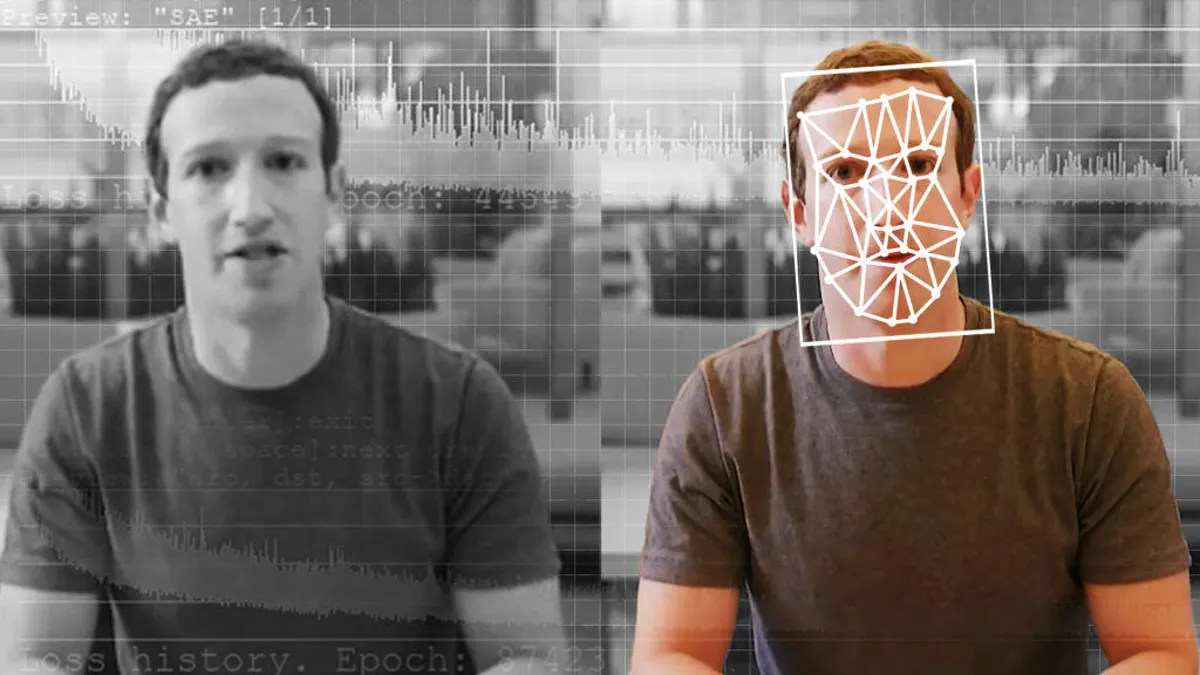
A credibility crisis has arisen, and it’s only getting worse when it comes to imagery, reaching the point where one can no longer distinguish between actual photos and AI-generated fakes. This has implications across society and businesses, raising doubts about the authenticity of images used in news reports, social media postings, and even photographic evidence in crime scenes. There’s a huge financial cost as well: Generative AI could enable fraud losses to reach $40 billion in the US by 2027, up from $12.3 billion in 2023, according to estimates from Deloitte’s Center for Financial Services.
What new standards can and can’t do
With the flood of imagery now appearing on our mobile phones and personal computers, it’s difficult, if not impossible, to determine whether photos, videos, or other content are real or AI-generated.
“You now don’t know what if something is really fake or not,” said Touradj Ebrahimi, professor at the Swiss Federal Institute of Technology. Ebrahimi is leading efforts to address AI fraud and deepfakes, working with leading international standards bodies — the International Electrotechnical Commission (IEC), the International Organization for Standardization (ISO), and the International Telecommunication Union (ITU) — to develop and evangelize common standards to help users and companies distinguish erroneous AI-generated material from real content. “You need to see metadata and information to find it, to put it in the right context.”
Also: The best AI image generators: There’s only one clear winner now
To that end, the IEC and ISO introduced two additions to their JPEG Trust standards to help verify the authenticity of imagery and data. The first JPEG Trust standard, announced last year, is designed to provide a framework for embedding metadata directly into JPEG files in the form of trust indicators.
The two additions to JPEG Trust, now in progress:
- JPEG Trust Part 2 introduces a catalog of trust profile snippets and reporting templates. According to the standards bodies, these snippets “can be used either as is or as starting points to establish profiles for use in specific workflows, use cases, and applications such as broadcasting, digital cameras, AI-powered content generation services, etc.”
- JPEG Trust Part 3 introduces media asset watermarking.
According to Ebrahimi, the goal of the JPEG Trust standard is to put verification tools in the hands of end users and is not intended to validate or label imagery or data at the front end when it is created. “Fraudsters will not label their content as AI,” he said. “If somebody wants to break the law, they’re not going to break the law and follow the other law that says that content needs to be labeled.”
Also: Moonshot’s open-source Kimi K3 model beats Anthropic’s Fable 5 on this benchmark
Accordingly, JPEG Trust “is not a standard that tells you whether to trust or not trust a video and image,” he explained. “It gives you means so that you can decide based on your content and your profile, and if you want to trust it.”
Context is another factor to weigh, and it is also contingent on the user. “Trust is very context-dependent,” he said. “Some people might trust something because of their profile, because of their context. And even in the same context, they might trust later in another context.”
Scattered efforts
Until now, efforts to identify and combat deepfakes and AI scams have been scattered, with companies promoting their own approaches within their ecosystems and others joining forces to set de facto industry standards, said Ebrahimi. “So a big question is which standard is going to become dominant?” The IEC and ISO recognize that commonly accepted industry standards are needed.
Also: OpenAI’s attack agent did exactly what it was told – just more relentlessly than expected
Efforts to guard against fraud in multimedia began in earnest in 2018, when the JPEG committee of IEC and ISO first addressed a growing concern about inauthentic content. “They recognized there is a flaw in that JPEG files were being used to spread fake imagery,” said Ebrahimi. Now, with AI-generated imagery rampant, the challenge is to extend standards to help users and companies verify the authenticity of images they receive.
In addition to JPEG Trust, additional multimedia standards under development at this time include the following, conducted as part of the EIC and ISO’s AI and Multimedia Authenticity and Standards initiative:
Originator profile: “Provides a framework for documenting the origin of digital content. It includes guidelines for creating and maintaining profiles that capture detailed information about the content’s creator and its creation process. This helps in establishing a clear and verifiable record of the content’s provenance.”
Also: I let ChatGPT Work and Claude Cowork loose on my files – only one made me nervous
Vocabulary for expressing content preferences for AI: “Proposes a standardized vocabulary of use cases that can be targeted when expressing machine-readable opt-outs related to text and data mining and AI training. The vocabulary is agnostic to specific opt-out mechanisms and enables declaring parties to communicate restrictions or permissions regarding the use of their digital assets in a structured and interoperable manner.”
H.MMAUTH: Framework for authentication of multimedia content: “Specifies a technical solution for the verification of multimedia content integrity, enabling users to confirm the authenticity of the content by its creators, such as governments, companies, or news organizations. The solution is based on the digital signing of data streams. The content creator (encoder) uses a private key to sign the content, while the recipient (decoder) uses a corresponding public key to verify the authenticity. The public key, necessary for verification, is not derived directly from the data stream but is obtained through a trusted, independent method, such as a third-party trust center.”
