

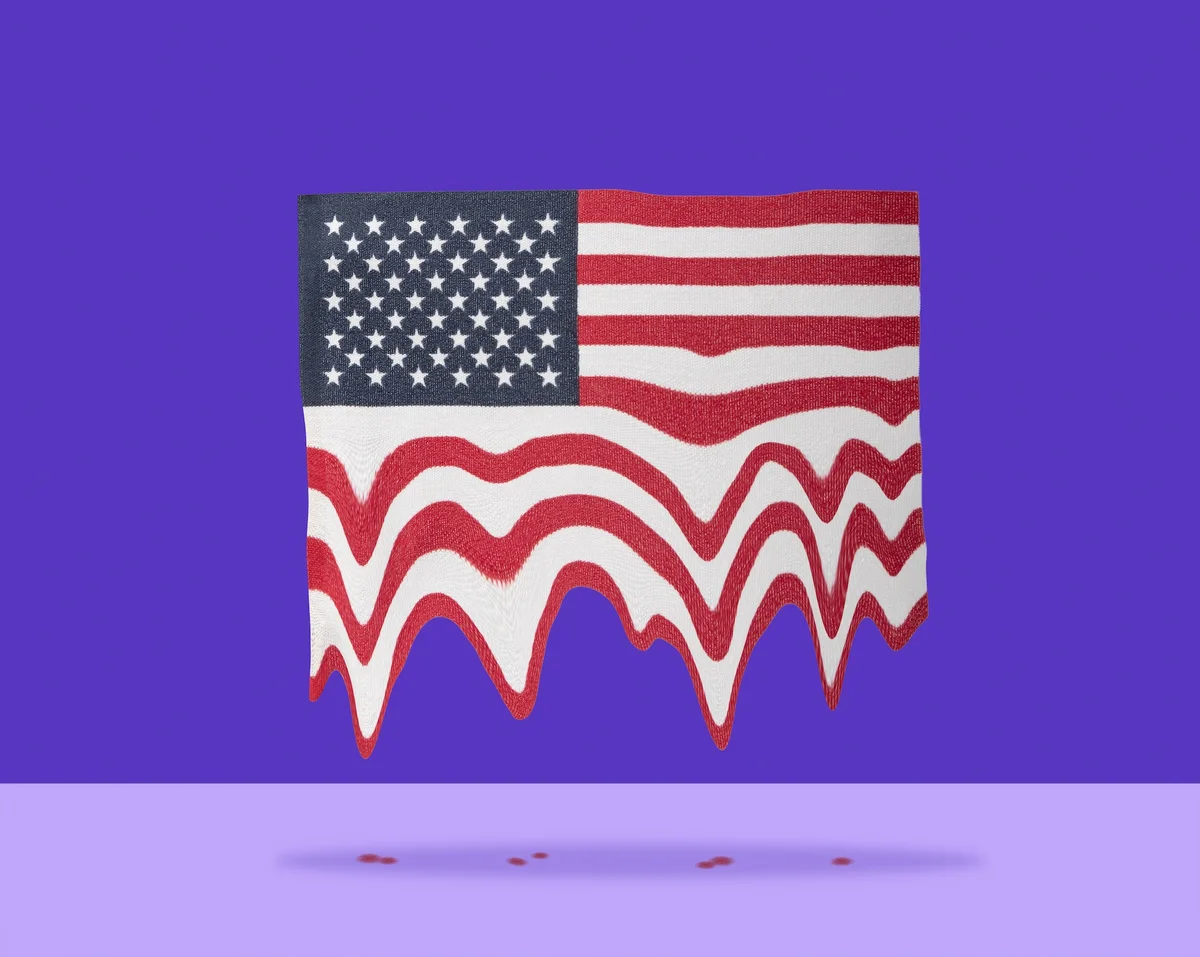
July is always the hottest month for the U.S., but Julys today are significantly hotter than they were when Benjamin Franklin, Thomas Jefferson and the other Founding Fathers declared the U.S. an independent nation. The brutal heat wave smothering the eastern half of the country as it celebrates its 250th birthday is stark reminder of just how profoundly the climate has changed since the American Revolution.
In that time the U.S. has warmed by about 3 degrees Fahrenheit—faster than the overall global average rise of 2.5 degrees F. That warming is driven by the greenhouse gases accumulating in the Earth’s atmosphere from the burning of fossil fuels that began on a massive scale with another revolution, the Industrial one. In the mid-18th century, carbon dioxide concentrations in the atmosphere were around 280 parts per million. This year they surpassed 430 ppm. And historically the U.S. has been the world’s largest greenhouse gas emitter.
The warming of the planet creates noticeable changes in the weather we experience every day, though it varies from place to place: some areas of the U.S. are warming faster than others; some are getting wetter; others are becoming drier. Winter snows have declined while downpours have increased, and the hurricanes that batter our shores are becoming stronger and causing larger floods.
On supporting science journalism
If you’re enjoying this article, consider supporting our award-winning journalism by subscribing. By purchasing a subscription you are helping to ensure the future of impactful stories about the discoveries and ideas shaping our world today.
Ed Hawkins, National Centre for Atmospheric Science, UoR. CC by 4.0.
But as it’s summer, let’s look at how heat—with one of the clearest links to global warming —has changed. Summer has of course always been the warm season, and heat waves have always happened. But according to the temperature record going back to the late 1800s, one thing is clear: summer temperatures are higher across the country overall and heat waves last longer, are more intense and happen more frequently than in the past. The 50 largest U.S. cities experience twice as many heat waves they did in the 1980s. Take Philadelphia, where the Declaration of Independence was signed and the Constitution was ratified: the average July temperature there has risen by 4.4 degrees F just since 1970. And kids growing up there today experience four more heat waves every summer than their grandparents did.
Back in the 1770s, there would have been roughly equal odds of setting records for heat or cold, but now heat records are twice as likely. The heat wave sending temperatures into the triple digits for this July Fourth weekend is a prime example of an event for which climate change has loaded the dice. Such heat and high humidity would have been “virtually impossible” when the U.S. was founded, according to scientists with the World Weather Attribution research group.
“On America’s 250th birthday, our study gives a clear reality check,” WWA team member Theodore Keeping, extreme weather and wildfire researcher at Imperial College London said in statement about their analysis of the heat wave.
Because heat is the deadliest weather phenomenon, authorities have warned those celebrating to take precautions—avoid being outside at the hottest times of day, stay in air conditioning as much as possible, and stay hydrated and aware of signs of heat illness.
Climate scientists and environmental advocates say that the event underscores the urgent need to rein in emissions.
“Climate change is here,” WWA researcher Friederike Otto, also of ICL, said in the press statement. “It’s already impacting the things we enjoy in our everyday lives, and it will continue to get worse the longer we drag out the inevitable transition to net zero emissions.”
It’s Time to Stand Up for Science
If you enjoyed this article, I’d like to ask for your support. Scientific American has served as an advocate for science and industry for 180 years, and right now may be the most critical moment in that two-century history.
I’ve been a Scientific American subscriber since I was 12 years old, and it helped shape the way I look at the world. SciAm always educates and delights me, and inspires a sense of awe for our vast, beautiful universe. I hope it does that for you, too.
If you subscribe to Scientific American, you help ensure that our coverage is centered on meaningful research and discovery; that we have the resources to report on the decisions that threaten labs across the U.S.; and that we support both budding and working scientists at a time when the value of science itself too often goes unrecognized.
In return, you get essential news, captivating podcasts, brilliant infographics, can’t-miss newsletters, must-watch videos, challenging games, and the science world’s best writing and reporting. You can even gift someone a subscription.
There has never been a more important time for us to stand up and show why science matters. I hope you’ll support us in that mission.
