

Imagine if one company could become the railroad, electric utility, and cloud-computing provider of the emerging space economy. That potential fueled excitement around the long-anticipated initial public offering of SpaceX. Investors are not simply betting on rockets anymore. They are betting on an entire orbital ecosystem.
Among the most ambitious and challenging ideas riding this wave of enthusiasm is something that sounds almost like science fiction: orbital data centers. SpaceX may be one of the most well-known companies seeking to build them, but it is not the only one.
The logic is seductive: Launch the data centers into orbit, where solar energy is abundant and land, water, and local power grids are no longer constraints. As artificial intelligence drives an explosion in computing demand, companies are pitching orbital data centers as a way to escape the growing environmental and infrastructure pressures of Earth-based computing. Data centers often also face backlash from the public at having these centers located in their communities.
But there is a vast difference between launching satellites and operating an industrial-scale computing infrastructure in orbit. Space is unforgiving. Radiation damages electronics. The electronics generate enormous amounts of heat, and getting rid of that heat is surprisingly difficult in space. Repairs are extraordinarily expensive, and every pound launched into orbit still carries a significant cost.
We are engineering professors who study data-center design and space systems engineering. Building a space-based data center will involve considerations from both sides.
What Goes Into a Data Center on Earth
First off, consider what goes into an Earth-based data center, like those that you’ve probably begun to see pop up everywhere. These facilities power cloud computing, video streaming, online banking, scientific computing, and increasingly, artificial intelligence. But a data center is much more than a room full of servers.
A data center needs several things to operate reliably. The first is electric power. Servers, networking equipment, and storage devices consume large amounts of electricity, and that power demand is growing rapidly with AI.
The second is cooling. Almost all the electricity consumed by servers eventually becomes heat. If that heat is not removed quickly and reliably, equipment performance drops, failures increase, and the data center can shut down. Cooling systems often include air handling units, chillers, cooling towers, pumps, and increasingly, liquid-cooling equipment. In many facilities, cooling is the largest energy consumer after the computing equipment itself.
The third is physical infrastructure, including the necessary land, buildings, structural support, backup power, water systems, communication networks, and maintenance access. Data centers also need to be close enough to users and network backbones to provide fast digital services.
In short, Earth-based data centers are large electrical and thermal infrastructure systems built around computing hardware.
Placing Them in Space
So what would it take to build these data centers in space, and why are companies finding this possibility such an interesting business proposition?
As on Earth, these data centers would require massive amounts of power. In space, this power would come from solar panels. The sun always shines in space and can’t be blocked by clouds. However, depending on the orbit the solar panels are put in, the Earth may shadow them for some portion of the orbit.
And even the best solar cells available today can convert only about half the sunlight that hits them to electricity.
Another potential advantage found in space is cooling. The cold background of space (roughly -455 degrees Fahrenheit, or -270 degrees Celsius) creates an opportunity: Waste heat from the data center could escape into space through radiators, keeping the electronics cool.
In principle, that design could eliminate some of the bulky and water-intensive cooling infrastructure used on Earth. However, those thermal radiators would require a large amount of surface area, and that would be in addition to the area required by the solar panels.
In space, there is no air to blow across hot equipment and help heat escape. The heat has to leave as infrared radiation, which is a relatively slow process. As a result, removing 10 megawatts of waste heat can require radiator surfaces comparable to the size of two football fields.
Space-based data centers could also avoid some of the local conflicts that come with building large data centers on the ground. Many communities resist new data center developments because of their land use, energy and water demand, and noise and environmental impact.
A space-based system would avoid competing for local land and water resources, and it would not generate neighborhood noise or require local zoning approval in the same way.
However, space is already getting crowded, and launching thousands of large orbital data centers would accelerate this issue. Orbital debris and micrometeorites are hazards because they can puncture the space data center, and a worst-case collision could destroy it and create even more space debris.
The frequency of space launches necessary to send all the equipment to orbit may also become a concern for some communities. SpaceX has had protests at its launch complex in Boca Chica, Texas from local activists who argue its rocket testing and launches damage the surrounding environment.
All that data would need to be sent between Earth and these data centers—and between the data centers themselves—using radio waves or laser communications systems. Although satellite constellations such as Starlink and Amazon Leo have demonstrated that doing this is possible, the amount of data sent to and from space would balloon.
Additional Challenges
These data centers, along with their solar panels and radiators, cannot be launched in one piece and would need to be assembled in space. This process would require new equipment for in-space servicing, assembly, and manufacturing.
Another key challenge is the refresh cycle of computing hardware. Data-center servers are not built to last forever. Operators on Earth usually replace or upgrade hardware every three to five years as chips improve, workloads change, and equipment ages.
And equipment failures can require replacing components. The refresh and repair processes are relatively straightforward on Earth, where workers can physically remove and replace servers.
In space, refresh and repair becomes much harder. Hardware sent to orbit may be difficult or too expensive to upgrade. If the computing platform cannot be updated, or too many components fail, it may become obsolete long before the surrounding infrastructure reaches the end of its useful life.
In a field where performance improves so rapidly and demand from computing continues to increase, this hurdle could prove a major economic and operational challenge.
Then there is the harshness of space. These data centers would be in a near vacuum, with constant radiation hitting them. And depending on their orbit, they would go from hot when in the sunlight to cold in Earth’s shadow many times a day. All of these challenges, and more, are issues that will need to be addressed.
So, Do They Still Make Sense?
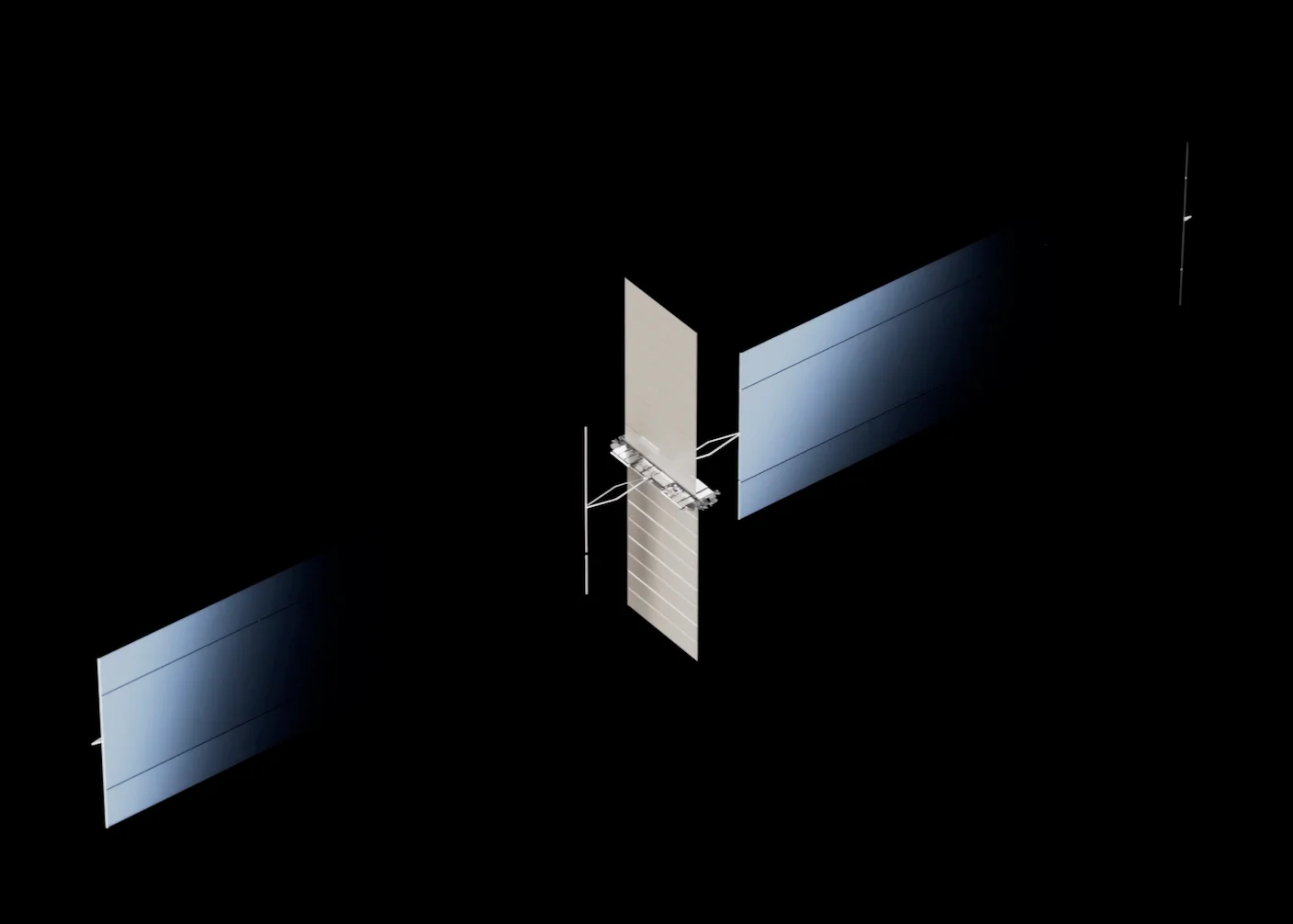
Despite these challenges, companies are moving forward with designing space-based data centers. SpaceX just announced the design for its AI1 Compute Satellite, which it hopes to use as an orbital data center spacecraft. However, this satellite is 100 to 1,000 times less capable than current Earth-based data centers.
Not every computing task makes sense to do in space. Many data center applications depend on fast response times and close connections to users on Earth. Financial transactions, interactive AI services, and most cloud applications are extremely sensitive to delay.
More feasible early applications may be those that are less latency-sensitive and more tightly connected to space operations. Examples could include processing Earth observation data from satellites, military or intelligence data processing, scientific computing related to space missions, or specialized computing for satellites and other space assets.
In other words, the first viable space data centers may serve space-based customers before they compete with mainstream cloud data centers on Earth.
This article is republished from The Conversation under a Creative Commons license. Read the original article.
