

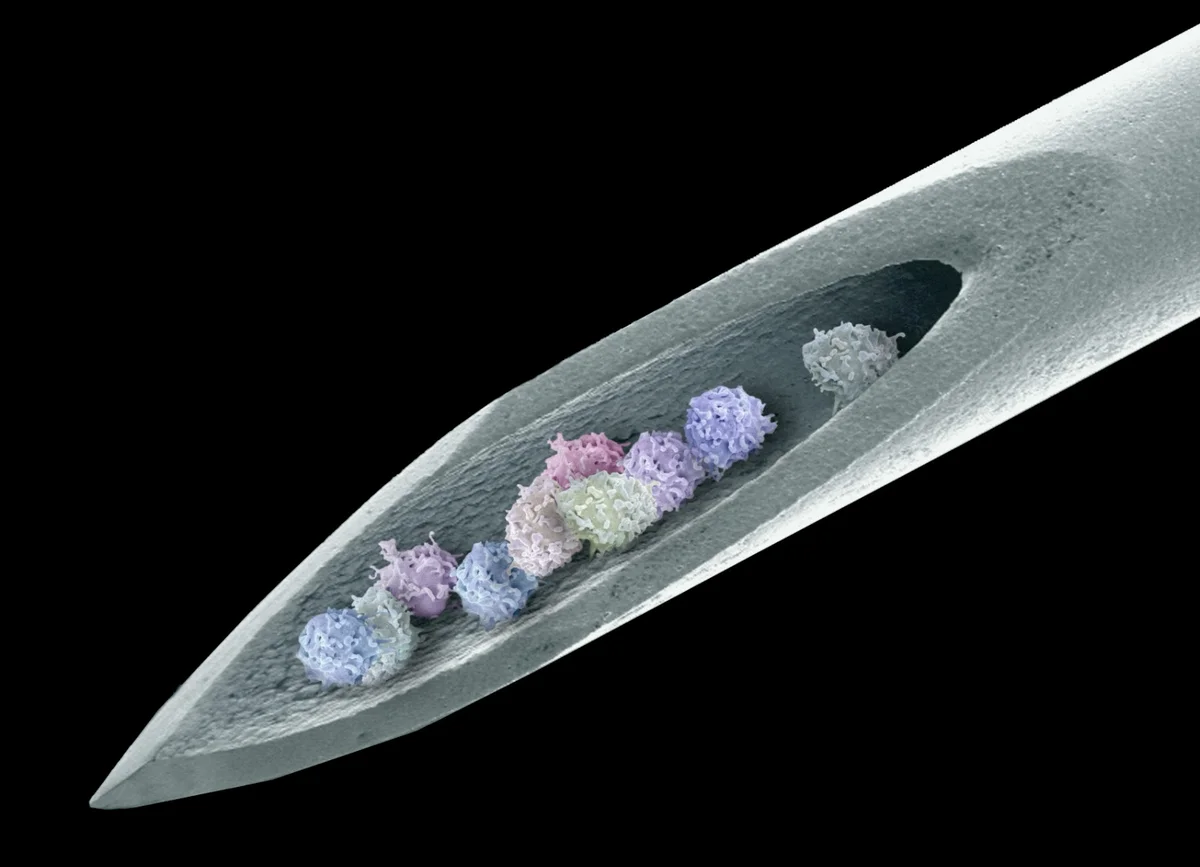
A man and a woman with a rare and devastating autoimmune disease have been in remission for more than 15 years after receiving a stem-cell transplant. The positive results, which were reported in Med, suggest that the experimental treatment warrants a larger clinical trial, say scientists.
The two people had a severe and potentially fatal disease in which immune cells produce antibodies that trigger an attack on the spinal cord and nerve connecting the eye and the brain, leading to a condition called neuromyelitis optica spectrum disorder (NMOSD). Symptoms tend to appear in episodes that last for days or months and include eye pain, vision loss, vomiting and weakness or paralysis affecting the arms and legs. Current treatments can prevent these episodes with ongoing medication, but they did not work in these two individuals.
After the stem-cell transplant, the man’s neurological function improved and he resumed a normal life and went on to have two children. The woman was able to use her arms more effectively than before her treatment and no longer requires medication to reduce symptoms.
On supporting science journalism
If you’re enjoying this article, consider supporting our award-winning journalism by subscribing. By purchasing a subscription you are helping to ensure the future of impactful stories about the discoveries and ideas shaping our world today.
“I don’t think we can say it’s a cure, but then again, it has addressed the problem the disease has caused over this very long period of time,” says Jiao Jiao Li, a biomedical engineer at the University of Technology Sydney in Australia.
As part of the treatment, called allogeneic haematopoietic stem-cell transplant, donor stem cells are collected from the blood of another person. The procedure has been used to treat some cancers, sickle-cell disease and other blood conditions. Massimo Filippi, a co-author of the study and a neurologist at the IRCCS San Raffaele Hospital in Milan, Italy, and his colleagues say this is the first use of this therapy to treat NMOSD.
The man was the first to undergo the allogeneic transplant, receiving stem cells in 2009 from his sister. The following year, the woman received cells from an unrelated donor. The two particpants received a single infusion of their donor’s stem cells.
Being able to keep these people symptom-free for a long period of time is exciting, says Bruce Milthorpe, a scientist at the University of Technology Sydney.
Immune system reset
Before the transplant, the participants received chemotherapy drugs called fludarabine and treosulfan and a monoclonal antibody drug to remove the immune system’s B cells that produce the antibodies that attack the spinal cord and optic nerve.
Before receiving their stem-cell transplants, the two individuals also received a short course of antibodies and immunosuppressant drugs to prevent the donor cells from attacking the recipient’s healthy cells, also known as graft-versus-host disease — a common complication after stem-cell transplants. The complication can be life-threatening, says Li. Neither person developed antibodies associated with NMOSD, and they developed healthy immune systems, the authors of the study report.
Li says the procedure completely replaces the person’s immune system. Whereas other versions of the treatment that use a person’s own stem cells reset the immune system. However, these versions might not work as well for people with autoimmune conditions if the B cells that produce the attacking antibodies are not totally eradicated, she adds.
Milthorpe says it is not clear whether a stem-cell transplant would benefit every person with NMOSD, because of the study’s small sample size. It can also be challenging to find suitable donors. But the study could be used as evidence to start a clinical trial, he adds.
The method the team used to obtain the stem cells directly from the donor’s blood is also a positive development, says Milthorpe, because it is less invasive than collecting stem cells from a person’s bone marrow.
The authors say the two participants also developed some negative outcomes, including swollen lymph nodes, an antibody deficiency that required treatment and bladder cancer. Developing secondary cancers is not uncommon after a stem-cell transplant, and the authors say the risks should be weighed against improvements in symptoms and quality of life.
The stem-cell transplants themselves are also risky. Infections that develop after treatment are the second most common cause of death associated with this therapy. The team say the procedure should be reserved for young people who do not see improved symptoms from standard treatment or have co-occurring autoimmune disorders.
This article is reproduced with permission and was first published on June 19, 2026.
It’s Time to Stand Up for Science
If you enjoyed this article, I’d like to ask for your support. Scientific American has served as an advocate for science and industry for 180 years, and right now may be the most critical moment in that two-century history.
I’ve been a Scientific American subscriber since I was 12 years old, and it helped shape the way I look at the world. SciAm always educates and delights me, and inspires a sense of awe for our vast, beautiful universe. I hope it does that for you, too.
If you subscribe to Scientific American, you help ensure that our coverage is centered on meaningful research and discovery; that we have the resources to report on the decisions that threaten labs across the U.S.; and that we support both budding and working scientists at a time when the value of science itself too often goes unrecognized.
In return, you get essential news, captivating podcasts, brilliant infographics, can’t-miss newsletters, must-watch videos, challenging games, and the science world’s best writing and reporting. You can even gift someone a subscription.
There has never been a more important time for us to stand up and show why science matters. I hope you’ll support us in that mission.
