
Close Menu
Tech Nova Mindset – Empower Innovation and Forward Thinking

    Subscribe to Updates

    Get the latest creative news from FooBar about art, design and business.

    What's Hot

    The Download: Montana’s new experimental drug rules

    July 31, 2026

    Chrome Needs Twice-a-Week Patching Thanks to AI Bug Hunting

    July 31, 2026

    Anthropic Says Claude Hacked 3 Organizations During Cybersecurity Tests

    July 31, 2026
    Facebook X (Twitter) Instagram
    Trending
    • The Download: Montana’s new experimental drug rules
    • Chrome Needs Twice-a-Week Patching Thanks to AI Bug Hunting
    • Anthropic Says Claude Hacked 3 Organizations During Cybersecurity Tests
    • Indigenous Fiber Network Connects Remote Subarctic Towns
    • Everyone Is Freaking Out About OpenAI and Anthropic’s Race for Dominance
    • A fundamental flaw leaves LLMs strikingly vulnerable to attack
    • IEEE Publishing Ethics Team Upholds Research Integrity
    • Why a Tiny Social Media Post Has Mathematicians Rethinking AI
    Tech Nova Mindset – Empower Innovation and Forward Thinking
    • Home
    • Gadgets
    • Reviews
    • Tech News
    • Future Tech
    • AI & Robotics
    • How-To Guides
    • More
      • Cybersecurity
      • Startups & Innovation
    Tech Nova Mindset – Empower Innovation and Forward Thinking
    Home»Future Tech»Interstellar Comet 3I/ATLAS is almost as old as the universe itself
    Future Tech

    Interstellar Comet 3I/ATLAS is almost as old as the universe itself

    kirklandc008@gmail.comBy kirklandc008@gmail.comJune 22, 2026No Comments4 Mins Read
    Facebook Twitter Pinterest LinkedIn Tumblr Email
    Interstellar Comet 3I/ATLAS is almost as old as the universe itself
    Share
    Facebook Twitter LinkedIn Pinterest Email

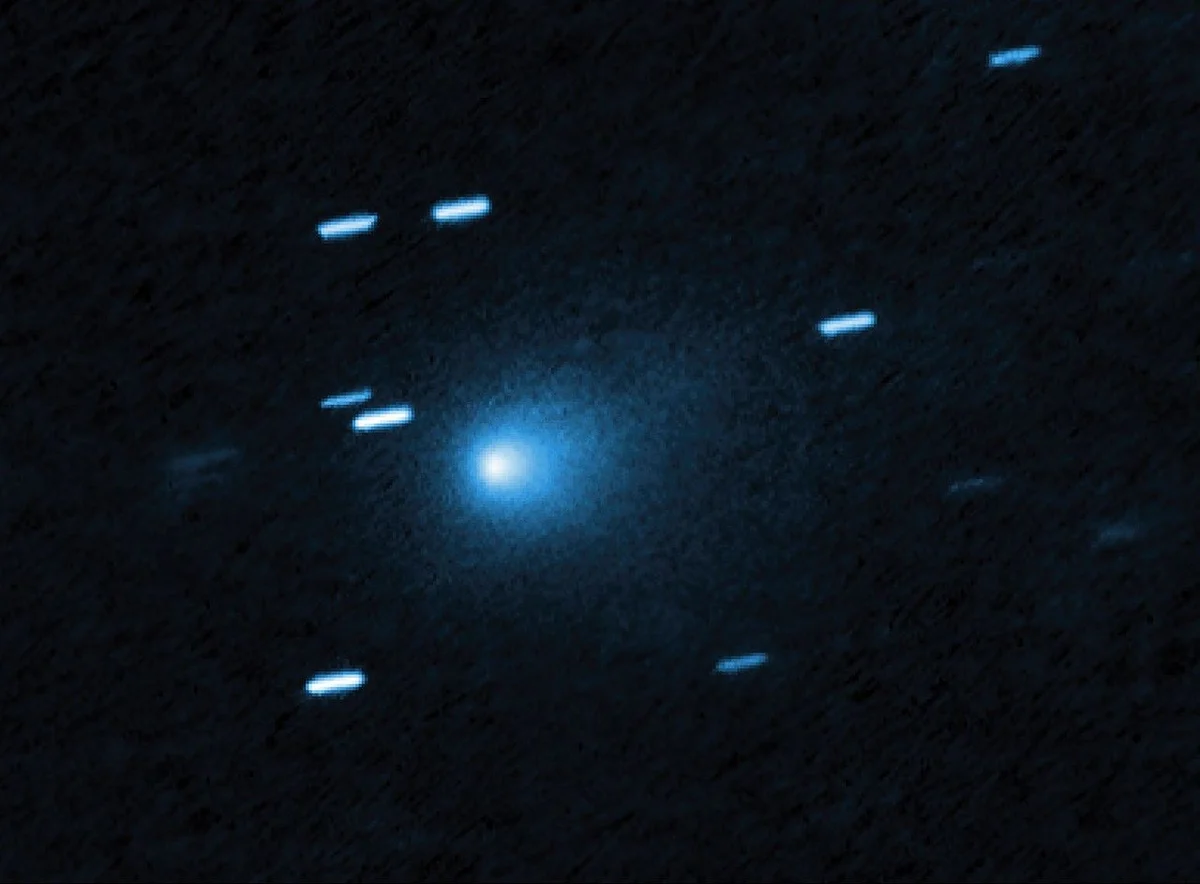
    The latest interstellar visitor to be discovered in our solar system was born somewhere in the universe that was nothing like our home and, according to a new study, a time long before the solar system even formed—in the infancy of the cosmos.

    Spotted in 2025, 3I/ATLAS is the third interstellar comet that astronomers have identified flying through our solar system, after 1I/ʻOumuamua and 2I/Borisov. Since then researchers have used the space-based James Webb Space Telescope (JWST) and the ground-based Atacama Large Millimeter/submillimeter Array (ALMA) in Chile to study the gas spouting out from 3I/ATLAS as the sun’s heat has burned up its icy insides. Chemical isotopes contained in the gas reveal details of the comet’s murky history—and a new study published in Nature (after it was posted online as a preprint in March) helps further color in that origin story.

    Using carbon isotopes in the comet to estimate its age, the authors believe it may be even more ancient than earlier estimates had suggested—as old as 12 billion years. That’s far older than our own solar system, which is 4.5 billion years old, and just less than two billion years younger than the universe itself.

    On supporting science journalism

    If you’re enjoying this article, consider supporting our award-winning journalism by subscribing. By purchasing a subscription you are helping to ensure the future of impactful stories about the discoveries and ideas shaping our world today.

    The study also shows that 3I/ATLAS came from a much colder region of its own solar system than any of the comets we see in our own. The comet contains far more heavy hydrogen—in the form of an isotope called deuterium, which has one neutron and one proton—than any local space rock, a quality that tends to point to colder environs. The finding jibes with other recent research, and astronomers are increasingly speculating that our solar system might be the oddball—and that the comets we’ve been studying for centuries have been unlike most in the universe.

    It’s thanks to cutting-edge telescopes like ALMA and JWST that we’ve spotted these first three interstellar objects. And with the Vera C. Rubin Observatory in Chile now beginning a decade-long sky survey, more such discoveries are likely to follow, says Cyrielle Opitom, an astronomer at the University of Edinburgh in Scotland and a co-author of the new study. “We hope they will be as exciting as 3I/ATLAS,” she says. These vagrant rocks could soon tell us far more about what lies at the universe’s outer reaches—and perhaps how weird we really are.

    It’s Time to Stand Up for Science

    If you enjoyed this article, I’d like to ask for your support. Scientific American has served as an advocate for science and industry for 180 years, and right now may be the most critical moment in that two-century history.

    I’ve been a Scientific American subscriber since I was 12 years old, and it helped shape the way I look at the world. SciAm always educates and delights me, and inspires a sense of awe for our vast, beautiful universe. I hope it does that for you, too.

    If you subscribe to Scientific American, you help ensure that our coverage is centered on meaningful research and discovery; that we have the resources to report on the decisions that threaten labs across the U.S.; and that we support both budding and working scientists at a time when the value of science itself too often goes unrecognized.

    In return, you get essential news, captivating podcasts, brilliant infographics, can’t-miss newsletters, must-watch videos, challenging games, and the science world’s best writing and reporting. You can even gift someone a subscription.

    There has never been a more important time for us to stand up and show why science matters. I hope you’ll support us in that mission.

    3IATLAS Comet Interstellar Universe
    Share. Facebook Twitter Pinterest LinkedIn Tumblr Email
    kirklandc008@gmail.com
    • Website

    Related Posts

    This Free macOS App Will Tell You All About Your Nondescript USB-C Cable

    July 15, 2026

    The US Approves Launch of Mirror Satellite That Can Reflect Sunlight and Illuminate the Earth at Night

    July 15, 2026

    Experimental immune therapy shows promise against deadly childhood brain cancer

    July 14, 2026
    Leave A Reply Cancel Reply

    Top Posts

    Nothing CEO says phone prices are going to keep going up

    June 12, 20267 Views

    Google DeepMind Plans to Track AGI Progress With These 10 Traits of General Intelligence

    March 21, 20263 Views

    The AirPods 4 and Lego’s brick-ified Grogu are our favorite deals this week

    October 12, 20253 Views
    Stay In Touch
    • Facebook
    • YouTube
    • TikTok
    • WhatsApp
    • Twitter
    • Instagram
    Latest Reviews

    Subscribe to Updates

    Get the latest tech news from FooBar about tech, design and biz.

    Recent Posts
    • The Download: Montana’s new experimental drug rules
    • Chrome Needs Twice-a-Week Patching Thanks to AI Bug Hunting
    • Anthropic Says Claude Hacked 3 Organizations During Cybersecurity Tests
    • Indigenous Fiber Network Connects Remote Subarctic Towns
    • Everyone Is Freaking Out About OpenAI and Anthropic’s Race for Dominance

    The Download: Montana’s new experimental drug rules

    July 31, 2026

    Chrome Needs Twice-a-Week Patching Thanks to AI Bug Hunting

    July 31, 2026

    Anthropic Says Claude Hacked 3 Organizations During Cybersecurity Tests

    July 31, 2026

    Indigenous Fiber Network Connects Remote Subarctic Towns

    July 31, 2026
    Facebook X (Twitter) Instagram Pinterest
    • About Us
    • Contact Us
    • Privacy Policy
    • Terms and Conditions
    • Disclaimer
    © 2026 TechNovaMindset. Designed by By Pro.

    Type above and press Enter to search. Press Esc to cancel.