

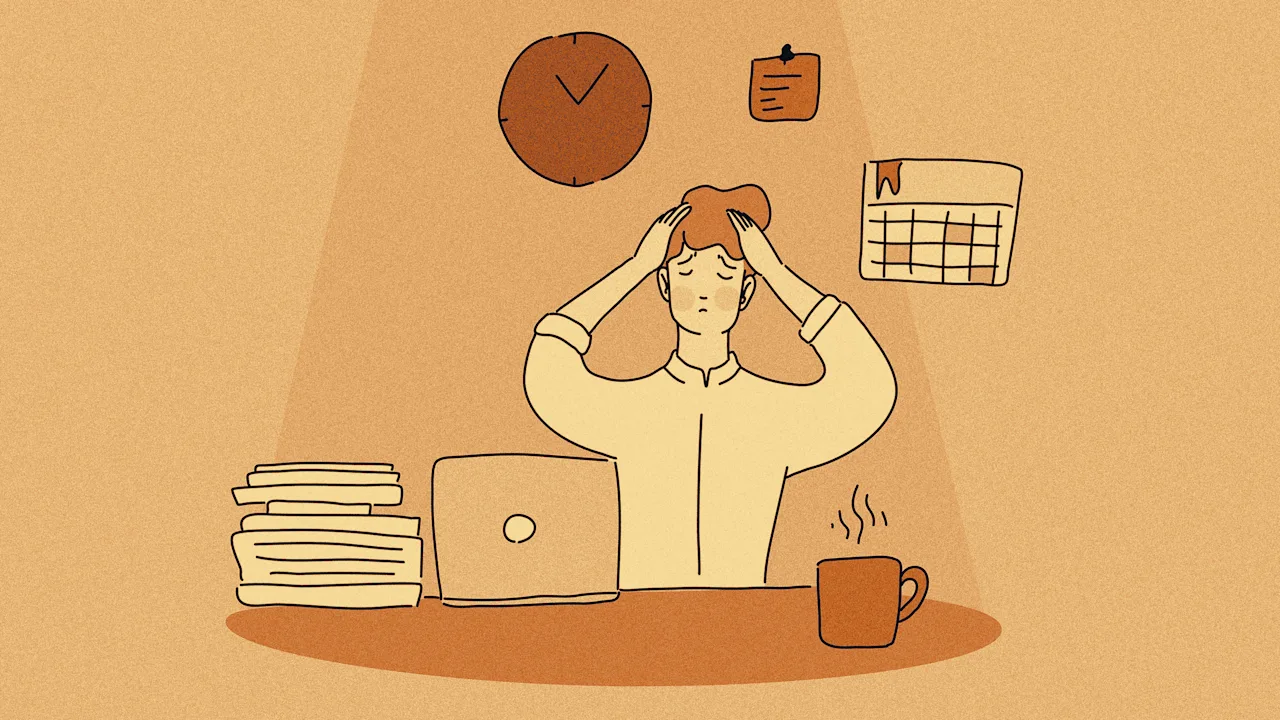

Many people finish the workday not just tired but wired. Their mind keeps racing, their body feels tense, and even in moments that should be restful they feel a lingering sense of urgency. Conversations replay in their mind, unfinished tasks resurface, and their nervous system seems unwilling to power down.
You may recognize this experience. It has become so common that it is often accepted as the norm in modern professional life. Yet this persistent state of activation carries consequences for physical health, especially for people prone to headaches.
As a board-certified neurologist who specializes in headache medicine, I see a lot of patients whose pain increases from the high-pressure work culture prevalent today. While it might seem beyond your control, there are some steps you can take.
Stress and the nervous system
Stress is not inherently harmful. In fact, when experienced in short bursts, stress can be beneficial by increasing focus, improving performance and preparing the body to handle challenges. However, problems arise when stress becomes chronic and relentless.
The nervous system perceives and processes both stress and pain. Built to be highly adaptable, it continually responds to internal signals and external factors, constantly recalibrating to maintain balance. When the brain continuously perceives ongoing demands without adequate recovery, it keeps the body in a prolonged state of alertness.
During these periods of ongoing stress, hormones such as cortisol and adrenaline remain persistently elevated. In this sensitized state, signals that would typically be ignored or interpreted as minor can start to feel much more intense.
This state leads to an increase in heart rate and sustained muscle tension, with the nervous system transitioning into continuous fight or flight mode. In the context of headaches, this sensitization can lower the threshold for pain, making it easier for a headache to start and harder for it to stop.
https://www.youtube.com/embed/-ZetOiI2s3c?wmode=transparent&start=0 Stress can both trigger and exacerbate migraines.
Over time, this constant activation can disrupt the body’s natural balance and create an environment for headache disorders to develop or worsen.
Chronic stress acts as both a trigger and an exacerbating factor for migraines. The neurological system of people who experience migraines is comparatively more responsive to environmental changes, including variations in sleep patterns, the environment, hormonal fluctuations and stress intensity.
This means that persistent exposure to stress may drive up frequency and severity of migraine episodes. In addition, muscle tension in the neck, shoulders and scalp — a frequent effect of stress — can cause tension headaches, too.
Extended periods of sitting, sustained concentration and physical tension during the workday can contribute to the development of tension headaches in the later hours of the day.
The role of sleep
Chronic stress can also have a profound impact on sleep quality. Many people who feel persistently wired at the end of the workday struggle to fall asleep or stay asleep. That fitful sleep may lack the restorative qualities necessary for recovery.
Poor sleep can, in turn, perpetuate the stress cycle, leaving the brain further sensitized and increasing the likelihood of headaches the following day. This loop can be difficult to break, as fatigue reduces resilience and amplifies the sense of being overwhelmed that comes with stress.
In addition to affecting sleep, chronic stress impairs concentration and cognitive function. When the brain remains in a state of constant vigilance, scanning for demands and threats, it becomes harder to focus, be creative and solve problems. As a result, productivity declines, errors become more frequent and frustration mounts, adding to the overall stress burden.
Headaches that occur alongside these cognitive challenges can further disrupt daily life, making even routine tasks feel difficult.
Managing work stress
Understanding the connection between stress and the nervous system points to some steps you can take to shift the nervous system out of its constantly activated state. You’ll never eliminate stress entirely – that’s neither realistic nor necessary. But it is possible to create intentional space for the body to reset:
- Build small transitions into your day. Instead of immediately jumping from work to other obligations, take five to 10 minutes between activities to pause, breathe deeply, stretch or sit quietly. Even brief pauses can reduce muscle tension and lower stress hormone levels.
- Add physical activity into your routine. Regular movement, such as walking, yoga or gentle stretching, helps regulate the nervous system by processing stress hormones more efficiently. It also improves blood flow and promotes the release of endorphins, which are natural pain modulators.
- Pay attention to posture and ergonomics. Change the chair or screen height, take breaks to move, and relax your shoulders and jaw to prevent tension headaches.
- Explore mindfulness-based practices. Techniques such as meditation, body scanning and focused breathing may retrain the brain to respond to stress with greater flexibility.
- Try to set boundaries around work. When possible, limit after-hours email, define a clear end to your day and designate certain areas within your home as work-free zones.
- Seek support if headaches persist. A medical evaluation can look for underlying causes and guide appropriate treatment options. Physical therapy, behavioral therapy and pain reprocessing therapy can address physical and emotional contributors to headaches.
Small, consistent strategies that address both biological and lifestyle causes of headaches can minimize the effects of chronic stress and encourage nervous system regulation. Over time, these strategies can gradually reduce headache frequency and severity, improving overall quality of life.
Danielle Wilhour is an assistant professor of neurology at the University of Colorado Anschutz Medical Campus.
This article is republished from The Conversation under a Creative Commons license. Read the original article.
