
Close Menu
Tech Nova Mindset – Empower Innovation and Forward Thinking

    Subscribe to Updates

    Get the latest creative news from FooBar about art, design and business.

    What's Hot

    The Real AI Disruption Isn’t the Technology. It’s the Company.

    September 14, 2026

    New York Seizes a Dozen Celebrity Deepfake Websites

    September 14, 2026

    The AI industry has taken a doomer turn. What now?

    September 14, 2026
    Facebook X (Twitter) Instagram
    Trending
    • The Real AI Disruption Isn’t the Technology. It’s the Company.
    • New York Seizes a Dozen Celebrity Deepfake Websites
    • The AI industry has taken a doomer turn. What now?
    • Countries Seek to Curb Social Media Addiction for Kids.
    • Google’s Genome Atlas Predicts the Effect of Every Possible DNA Mutation
    • AI Leaders Are Calling for a Slowdown. Trump’s Team Says It’s on Them
    • The Download: AI’s real extinction threat and age-reversal tech for eyes
    • Sexually Explicit Deepfake Sites Target 100-Plus Politicians in Europe
    Tech Nova Mindset – Empower Innovation and Forward Thinking
    • Home
    • Gadgets
    • Reviews
    • Tech News
    • Future Tech
    • AI & Robotics
    • How-To Guides
    • More
      • Cybersecurity
      • Startups & Innovation
    Tech Nova Mindset – Empower Innovation and Forward Thinking
    Home»AI & Robotics»Digging for clues about the North Pole’s past
    AI & Robotics

    Digging for clues about the North Pole’s past

    kirklandc008@gmail.comBy kirklandc008@gmail.comApril 21, 2026No Comments3 Mins Read
    Facebook Twitter Pinterest LinkedIn Tumblr Email
    Digging for clues about the North Pole's past
    Share
    Facebook Twitter LinkedIn Pinterest Email

    The ship’s crew and researchers recover the sediment corer, a 25-meter-long steel pipe that is driven into the seafloor using a top weight of more than three metric tons.

    TIM KALVELAGE

    Together, the scientists pull out long plastic pipes filled with precious deep-sea mud.

    TIM KALVELAGE

    The pipes are cut into shorter pieces and split in half before being processed in the ship’s laboratories. Each of these one-meter sections covers several tens of thousands of years of Earth’s history.

    TIM KALVELAGE

    While sediment cores several meters long had been recovered on earlier expeditions in the central Arctic, there is no scientific consensus on how old the deposits actually are or whether sea ice ever completely disappeared in summer. 

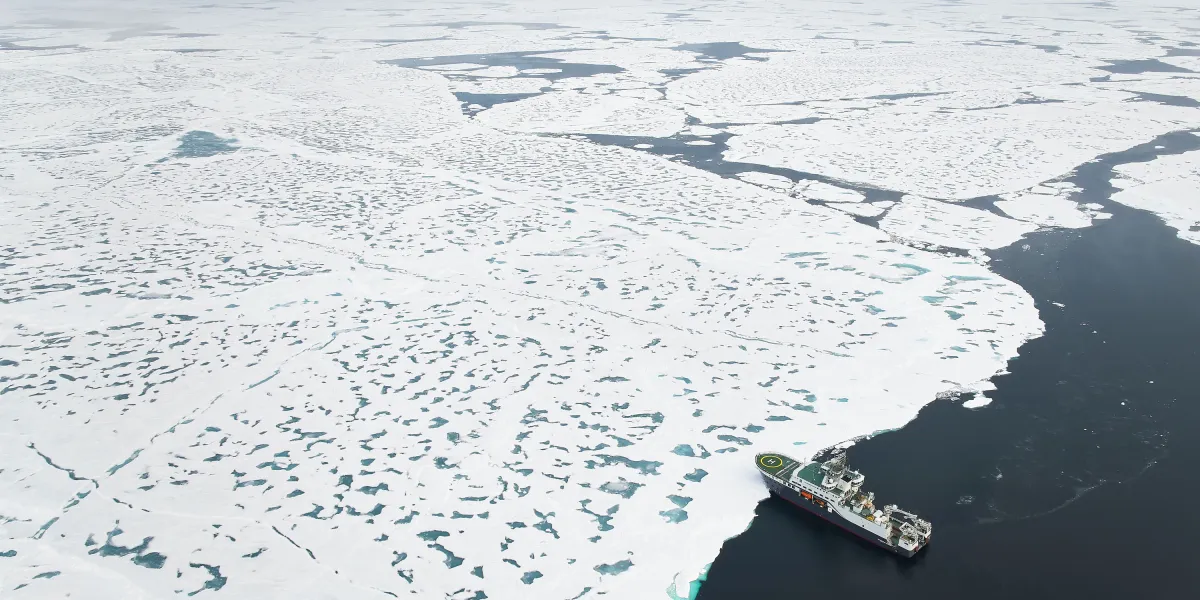
    To decode the Arctic’s climate archive, Knies brought a team of experts from various disciplines onboard the Kronprins Haakon to dig deeper and obtain fresh samples they could subject to the latest analytical techniques.   

    Samples await paleomagnetic dating. Like tiny compass needles, iron-rich particles align with Earth’s shifting magnetic field as they settle on the seabed. By measuring their orientation, researchers can estimate the age of the different sediment layers.

    TIM KALVELAGE

    Under the microscope, PhD student Paulina Romel picks shells of unicellular foraminifera from a sample. The chemical composition of these microfossils can give clues about the age of the sediment and the surface water temperature when the organisms were still alive. “These are really cool creatures!” says Romel.

    TIM KALVELAGE

    Agathe Ollive, a geochemist from the Alfred Wegener Institute in Germany, takes water samples from a CTD rosette, an instrument package that measures conductivity (salinity) and temperature at various depths. She uses certain elements to trace the inflow of fresh water and seawater from rivers and adjacent ocean basins into the Arctic. “I didn’t expect there to be so little ice up here,” Ollive says. She is worried about how the Arctic will look 20 years from now.

    TIM KALVELAGE

    Some of this work was done while the researchers were still at sea. Now, at their home laboratories, they are finalizing their analysis of the seafloor samples. One important task is dating the sediments, which may be up to 2 million years old. The team uses a combination of methods to do this, including measuring magnetization, the decay of radioactive elements, and the exposure of mineral grains to sunlight before sinking to the depths. Once they can place them on a timeline, the materials in the cores will help researchers paint a picture of what the Arctic Ocean looked like in times that were warmer than today. For example, the presence or absence of the molecule IP25, which is produced exclusively by ice algae, could tell them how far the sea ice receded at a given time. 

    Toward the end of the expedition, the Kronprins Haakon passes this iceberg near the northeast coast of Greenland.

    TIM KALVELAGE

    At the end of the study, the team hopes to have data that could improve climate projections for a future ice-free “blue Arctic,” helping us understand how it could affect marine life and carbon storage, Atlantic Ocean circulation, or extreme weather events in Europe and North America. 

    Tim Kalvelage is a freelance science reporter based in Bremen, Germany, who focuses on climate, ocean, and polar research. He has been to the North Pole twice.

    Clues digging North Poles
    Share. Facebook Twitter Pinterest LinkedIn Tumblr Email
    kirklandc008@gmail.com
    • Website

    Related Posts

    The Real AI Disruption Isn’t the Technology. It’s the Company.

    September 14, 2026

    New York Seizes a Dozen Celebrity Deepfake Websites

    September 14, 2026

    The AI industry has taken a doomer turn. What now?

    September 14, 2026
    Leave A Reply Cancel Reply

    Top Posts

    Nothing CEO says phone prices are going to keep going up

    June 12, 20267 Views

    Google DeepMind Plans to Track AGI Progress With These 10 Traits of General Intelligence

    March 21, 20263 Views

    The AirPods 4 and Lego’s brick-ified Grogu are our favorite deals this week

    October 12, 20253 Views
    Stay In Touch
    • Facebook
    • YouTube
    • TikTok
    • WhatsApp
    • Twitter
    • Instagram
    Latest Reviews

    Subscribe to Updates

    Get the latest tech news from FooBar about tech, design and biz.

    Recent Posts
    • The Real AI Disruption Isn’t the Technology. It’s the Company.
    • New York Seizes a Dozen Celebrity Deepfake Websites
    • The AI industry has taken a doomer turn. What now?
    • Countries Seek to Curb Social Media Addiction for Kids.
    • Google’s Genome Atlas Predicts the Effect of Every Possible DNA Mutation

    The Real AI Disruption Isn’t the Technology. It’s the Company.

    September 14, 2026

    New York Seizes a Dozen Celebrity Deepfake Websites

    September 14, 2026

    The AI industry has taken a doomer turn. What now?

    September 14, 2026

    Countries Seek to Curb Social Media Addiction for Kids.

    September 14, 2026
    Facebook X (Twitter) Instagram Pinterest
    • About Us
    • Contact Us
    • Privacy Policy
    • Terms and Conditions
    • Disclaimer
    © 2026 TechNovaMindset. Designed by By Pro.

    Type above and press Enter to search. Press Esc to cancel.