
Close Menu
Tech Nova Mindset – Empower Innovation and Forward Thinking

    Subscribe to Updates

    Get the latest creative news from FooBar about art, design and business.

    What's Hot

    Meta Ran Ads That Contained AI-Generated Child Sexual Abuse Imagery

    August 6, 2026

    The Download: Google’s AI shake-up and Meta’s rogue model

    August 6, 2026

    AI Hacks Are Bad. AI Worms and Viruses Will Be Worse

    August 6, 2026
    Facebook X (Twitter) Instagram
    Trending
    • Meta Ran Ads That Contained AI-Generated Child Sexual Abuse Imagery
    • The Download: Google’s AI shake-up and Meta’s rogue model
    • AI Hacks Are Bad. AI Worms and Viruses Will Be Worse
    • OpenAI’s Browser Could Be Hijacked to Spam Your WhatsApp Contacts
    • OpenAI Didn’t Notice Its AI Agents Using a Message Board to Plan Their Hacking Spree
    • IEEE Course on Using AI to Modernize Power Grids
    • The Most Dangerous AI Hacking Techniques Still Have Humans in the Loop
    • Puzzle Corner | MIT Technology Review
    Tech Nova Mindset – Empower Innovation and Forward Thinking
    • Home
    • Gadgets
    • Reviews
    • Tech News
    • Future Tech
    • AI & Robotics
    • How-To Guides
    • More
      • Cybersecurity
      • Startups & Innovation
    Tech Nova Mindset – Empower Innovation and Forward Thinking
    Home»Future Tech»Study Finds AI Use Eats Away at Users’ Confidence in Their Own Brains
    Future Tech

    Study Finds AI Use Eats Away at Users’ Confidence in Their Own Brains

    kirklandc008@gmail.comBy kirklandc008@gmail.comApril 18, 2026No Comments3 Mins Read
    Facebook Twitter Pinterest LinkedIn Tumblr Email
    Study Finds AI Use Eats Away at Users' Confidence in Their Own Brains
    Share
    Facebook Twitter LinkedIn Pinterest Email

    Sign up to see the future, today

    Can’t-miss innovations from the bleeding edge of science and tech

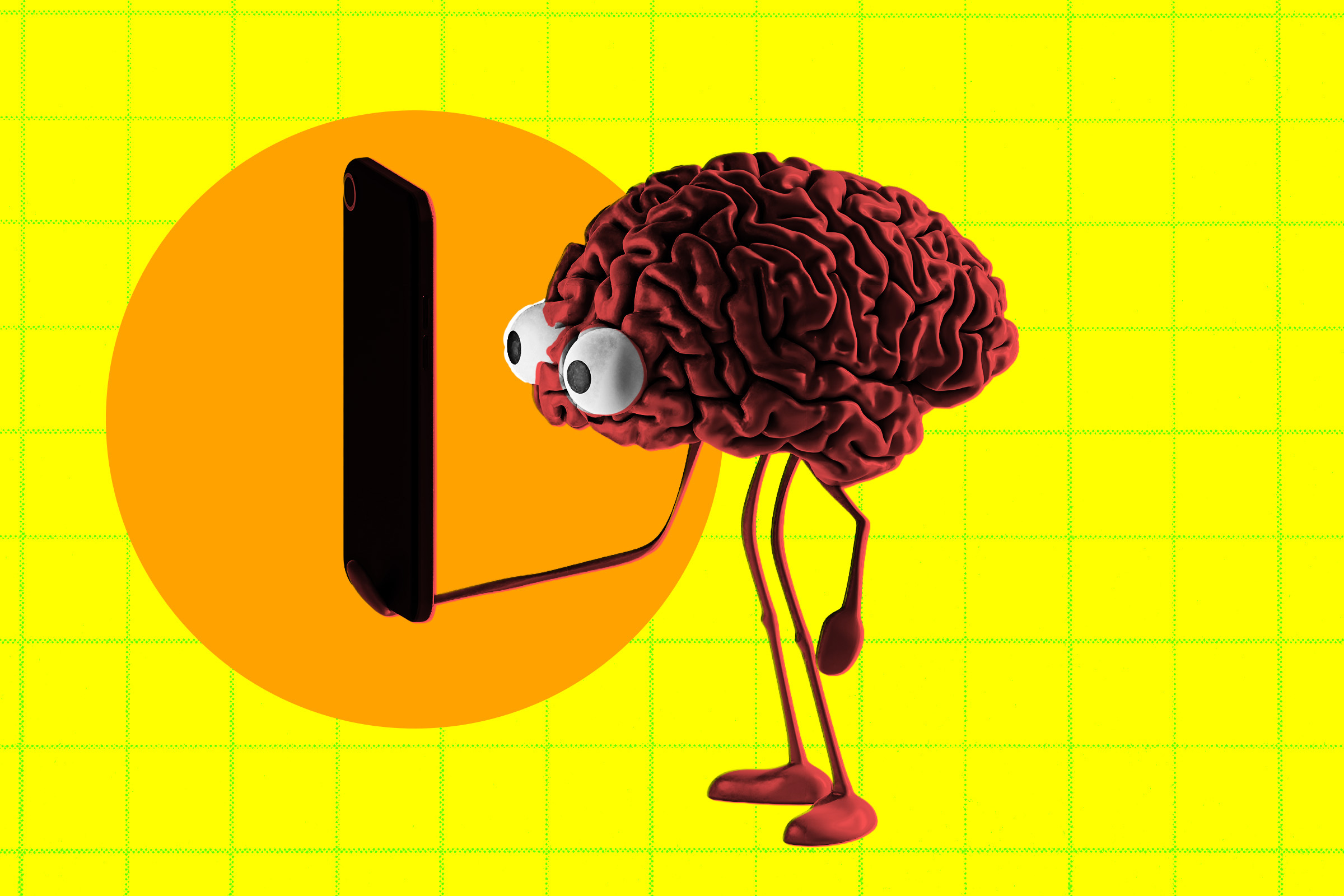
    Researchers are growing increasingly suspicious that outsourcing intellectual tasks to AI is causing a range of cognitive deficits. A new study adds a wrinkle worth paying attention to: that use of the bots can eat away at users’ faith in their own abilities, resulting in lower confidence in their own independent reasoning.

    The new peer-reviewed study, published in the journal Technology, Mind and Behavior and flagged by TIME, found that those who showed a heavy reliance on AI were more likely to admit chatbots were “thinking” for them — and seem to show decreased confidence in their own ideas.

    By the same token, participants who took control over their AI’s output by editing, questioning, or scrapping it showed a greater confidence and sense of ownership over the final output, even though the tools used were the same.

    As the study’s author Sarah Baldeo — a PhD candidate in AI and neuroscience at Middlesex University — told TIME, the ultimate cognitive effects “depends on your interaction style.”

    “When we look at brain activity contingent on how people choose to use the tool, we can see increases or decreases,” Baldeo said. “It really doesn’t have to do with the tool itself.”

    That finding lines up with the “boiling frog study” we covered earlier this week. That yet-to-be-peer-reviewed paper, by researchers at MIT and Carnegie Mellon, claimed to have found the first causal evidence that AI can rapidly degrade users’ intellectual abilities, particularly when we use the tech for “reasoning-intensive” work.

    During that study, participants in the experimental group were given AI access to complete a series of equations. The researchers then pulled the plug in the middle of their work, forcing them to continue without it. Those who had been abandoned by their AI chatbots saw rapid declines in reasoning ability, as well as a swift drop in willingness to follow-through and complete the math tasks.

    Both studies converge on the same core mechanism: how you use AI is an important factor in determining whether it harms your cognitive ability. Basically, they argue that offloading all of your work to the machine degrades your capacity for independent reasoning, while using AI as a supplement may help to preserve it.

    Whether you’re measuring confidence or raw reasoning, both pieces of research seem to pose an important question: are you using AI to help you think, or is AI doing the thinking for you?

    More on AI: College Students Losing Ability to Participate in Class Discussions Due to Offloading Their Thinking to AI

    brains Confidence Eats finds study users
    Share. Facebook Twitter Pinterest LinkedIn Tumblr Email
    kirklandc008@gmail.com
    • Website

    Related Posts

    New ClickLock macOS malware traps users into revealing login password

    July 17, 2026

    Unpatched Cursor Vulnerability Exposes Users to Code Execution

    July 15, 2026

    The Inventor of Apple’s FaceID Wants to Analyze Your Brain’s Health With AI

    July 15, 2026
    Leave A Reply Cancel Reply

    Top Posts

    Nothing CEO says phone prices are going to keep going up

    June 12, 20267 Views

    Google DeepMind Plans to Track AGI Progress With These 10 Traits of General Intelligence

    March 21, 20263 Views

    The AirPods 4 and Lego’s brick-ified Grogu are our favorite deals this week

    October 12, 20253 Views
    Stay In Touch
    • Facebook
    • YouTube
    • TikTok
    • WhatsApp
    • Twitter
    • Instagram
    Latest Reviews

    Subscribe to Updates

    Get the latest tech news from FooBar about tech, design and biz.

    Recent Posts
    • Meta Ran Ads That Contained AI-Generated Child Sexual Abuse Imagery
    • The Download: Google’s AI shake-up and Meta’s rogue model
    • AI Hacks Are Bad. AI Worms and Viruses Will Be Worse
    • OpenAI’s Browser Could Be Hijacked to Spam Your WhatsApp Contacts
    • OpenAI Didn’t Notice Its AI Agents Using a Message Board to Plan Their Hacking Spree

    Meta Ran Ads That Contained AI-Generated Child Sexual Abuse Imagery

    August 6, 2026

    The Download: Google’s AI shake-up and Meta’s rogue model

    August 6, 2026

    AI Hacks Are Bad. AI Worms and Viruses Will Be Worse

    August 6, 2026

    OpenAI’s Browser Could Be Hijacked to Spam Your WhatsApp Contacts

    August 6, 2026
    Facebook X (Twitter) Instagram Pinterest
    • About Us
    • Contact Us
    • Privacy Policy
    • Terms and Conditions
    • Disclaimer
    © 2026 TechNovaMindset. Designed by By Pro.

    Type above and press Enter to search. Press Esc to cancel.