
Close Menu
Tech Nova Mindset – Empower Innovation and Forward Thinking

    Subscribe to Updates

    Get the latest creative news from FooBar about art, design and business.

    What's Hot

    The Download: open model trade-offs and geothermal power’s promise

    October 13, 2026

    Wikipedians Believed AI Would Come and Go. They Were Wrong

    October 13, 2026

    Open models have real benefits. Do they outweigh the risks?

    October 13, 2026
    Facebook X (Twitter) Instagram
    Trending
    • The Download: open model trade-offs and geothermal power’s promise
    • Wikipedians Believed AI Would Come and Go. They Were Wrong
    • Open models have real benefits. Do they outweigh the risks?
    • Muse Wonder Puts Meta Back at the AI Frontier
    • This Anthropic Engineer Keeps Its AI Agent Trustworthy
    • This AI Reconstructs What You’re Looking at From a Brain Scan
    • Elon Musk Bragged About His Grok Lego Star Wars Haul. Then X Users Punked Him
    • The ecologist revealing the invisible networks that revive rainforests
    Tech Nova Mindset – Empower Innovation and Forward Thinking
    • Home
    • Gadgets
    • Reviews
    • Tech News
    • Future Tech
    • AI & Robotics
    • How-To Guides
    • More
      • Cybersecurity
      • Startups & Innovation
    Tech Nova Mindset – Empower Innovation and Forward Thinking
    Home»Future Tech»Something May Be Scrambling Alien Messages, NASA-Funded Research Finds
    Future Tech

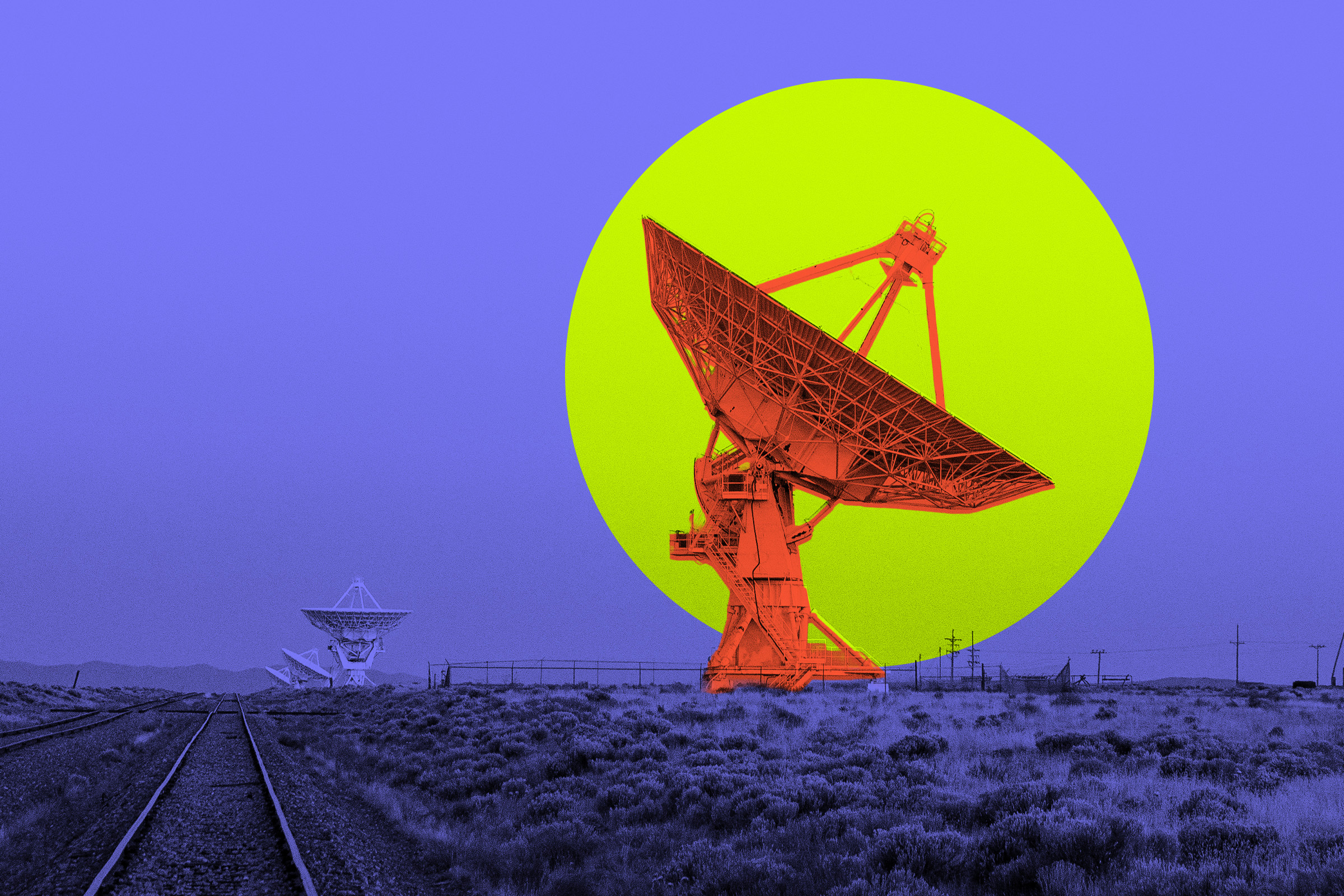
    Something May Be Scrambling Alien Messages, NASA-Funded Research Finds

    kirklandc008@gmail.comBy kirklandc008@gmail.comMarch 14, 2026No Comments3 Mins Read
    Facebook Twitter Pinterest LinkedIn Tumblr Email
    Something May Be Scrambling Alien Messages, NASA-Funded Research Finds
    Share
    Facebook Twitter LinkedIn Pinterest Email

    Sign up to see the future, today

    Can’t-miss innovations from the bleeding edge of science and tech

    If intelligent aliens are out there, why aren’t we hearing from them? Are they silently observing us like zoo animals, or staying quiet out of fear that they’d catch the attention of a bloodthirsty civilization?

    Those are spooky Fermi paradox solutions to contemplate indeed. But if they’re a little too sci-fi for your taste, new research funded by NASA from the SETI Institute provides a physics-based solution to this famous conundrum: bad “space weather.”

    The study, published in the The Astrophysical Journal, focuses on how potential extraterrestrial signals being beamed into the cosmos could be scrambled by common astronomical phenomena, like solar storms and plasma turbulence near an alien home world. These volatile events could broaden the narrow frequency of the potential alien signals, spreading them thin across multiple frequencies and making them nearly undetectable to most SETI searches, which focus on narrow bands.

    “If a signal gets broadened by its own star’s environment, it can slip below our detection thresholds, even if it’s there, potentially helping explain some of the radio silence we’ve seen in technosignature searches,” study lead author and SETI astronomer Vishal Gajjar said in a statement about the work.

    SETI efforts typically focus on narrowbands, which appear as spikes, because these signals aren’t produced by natural phenomena. If a hypothetical alien civilization wanted to be noticed, the thinking went, they’d broadcast a message this way. 

    But once a signal is sent, it’s at the mercy of the cosmos. It may have to travel thousands if not millions of light years before falling on intelligent ears, during which it could run into countless obstacles. This research, however, focused on the likelihood of aliens encountering uncooperative “space weather” near their planet.

    As such, the astronomers studied how radio transmissions between our own spacecraft and Earth are jumbled by solar activity, including the solar wind and the star’s violent outbursts like coronal mass ejections. After quantifying its effects, they extrapolated how it might affect signals coming from systems containing either a Sun-like star or a red dwarf star, the most common type of star in the Milky Way. In simulations, the team found that 70 percent of stars can cause broadening of more than 1 Hz, and 30 percent of stars can broaden signals more than 10 Hz. If in the unlikely possibility that the Sun decides to have a coronal mass ejection during a techosignature observation, the researchers also found, it could broaden signals by more than 1,000 Hz.

    The upshot, the researchers say, is that SETI researchers should consider broadening their horizons a little bit, and observe at higher radio frequencies where the broadening is less powerful.

    “By quantifying how stellar activity can reshape narrowband signals, we can design searches that are better matched to what actually arrives at Earth, not just what might be transmitted,” said coauthor Grayce C. Brown, a research assistant at the SETI institute, in the statement.

    More on aliens: Anonymous Kalshi User Makes Huge Bet That the White House Is About to Confirm Alien Life or Technology

    Alien finds messages NASAFunded Research Scrambling
    Share. Facebook Twitter Pinterest LinkedIn Tumblr Email
    kirklandc008@gmail.com
    • Website

    Related Posts

    These AI Experts Want to Do High-Stakes Research Out in the Open

    October 2, 2026

    “We’re not going to shoot ourselves in the foot” over hack fallout, says OpenAI’s chief research officer

    September 30, 2026

    The Download: OpenAI’s chief research officer explains its hacking response

    September 30, 2026
    Leave A Reply Cancel Reply

    Top Posts

    Nothing CEO says phone prices are going to keep going up

    June 12, 20267 Views

    The best VPN routers of 2026: Expert tested and reviewed

    June 14, 20263 Views

    Google DeepMind Plans to Track AGI Progress With These 10 Traits of General Intelligence

    March 21, 20263 Views
    Stay In Touch
    • Facebook
    • YouTube
    • TikTok
    • WhatsApp
    • Twitter
    • Instagram
    Latest Reviews

    Subscribe to Updates

    Get the latest tech news from FooBar about tech, design and biz.

    Recent Posts
    • The Download: open model trade-offs and geothermal power’s promise
    • Wikipedians Believed AI Would Come and Go. They Were Wrong
    • Open models have real benefits. Do they outweigh the risks?
    • Muse Wonder Puts Meta Back at the AI Frontier
    • This Anthropic Engineer Keeps Its AI Agent Trustworthy

    The Download: open model trade-offs and geothermal power’s promise

    October 13, 2026

    Wikipedians Believed AI Would Come and Go. They Were Wrong

    October 13, 2026

    Open models have real benefits. Do they outweigh the risks?

    October 13, 2026

    Muse Wonder Puts Meta Back at the AI Frontier

    October 13, 2026
    Facebook X (Twitter) Instagram Pinterest
    • About Us
    • Contact Us
    • Privacy Policy
    • Terms and Conditions
    • Disclaimer
    © 2026 TechNovaMindset. Designed by By Pro.

    Type above and press Enter to search. Press Esc to cancel.