
Close Menu
Tech Nova Mindset – Empower Innovation and Forward Thinking

    Subscribe to Updates

    Get the latest creative news from FooBar about art, design and business.

    What's Hot

    Meetily Lets You Transcribe and Summarize Meetings Without a Subscription—Here’s How

    August 9, 2026

    These AI Barons Are Ready to Give Away Their Fortunes

    August 9, 2026

    This Week’s Awesome Tech Stories From Around the Web (Through August 8)

    August 8, 2026
    Facebook X (Twitter) Instagram
    Trending
    • Meetily Lets You Transcribe and Summarize Meetings Without a Subscription—Here’s How
    • These AI Barons Are Ready to Give Away Their Fortunes
    • This Week’s Awesome Tech Stories From Around the Web (Through August 8)
    • How to Disable Gemini in Gmail and Google Docs
    • How ideas of a vast censorship network moved from the online fringe to Trump policy
    • The Pivot From Tech Expert to Organizational Leader
    • Scientists Used AI to Create 16 New Viruses
    • The Download: a censorship conspiracy theory and the first virus created by AI
    Tech Nova Mindset – Empower Innovation and Forward Thinking
    • Home
    • Gadgets
    • Reviews
    • Tech News
    • Future Tech
    • AI & Robotics
    • How-To Guides
    • More
      • Cybersecurity
      • Startups & Innovation
    Tech Nova Mindset – Empower Innovation and Forward Thinking
    Home»Future Tech»A Galaxy Composed Almost Entirely of Dark Matter Has Been Confirmed
    Future Tech

    A Galaxy Composed Almost Entirely of Dark Matter Has Been Confirmed

    kirklandc008@gmail.comBy kirklandc008@gmail.comFebruary 21, 2026No Comments3 Mins Read
    Facebook Twitter Pinterest LinkedIn Tumblr Email
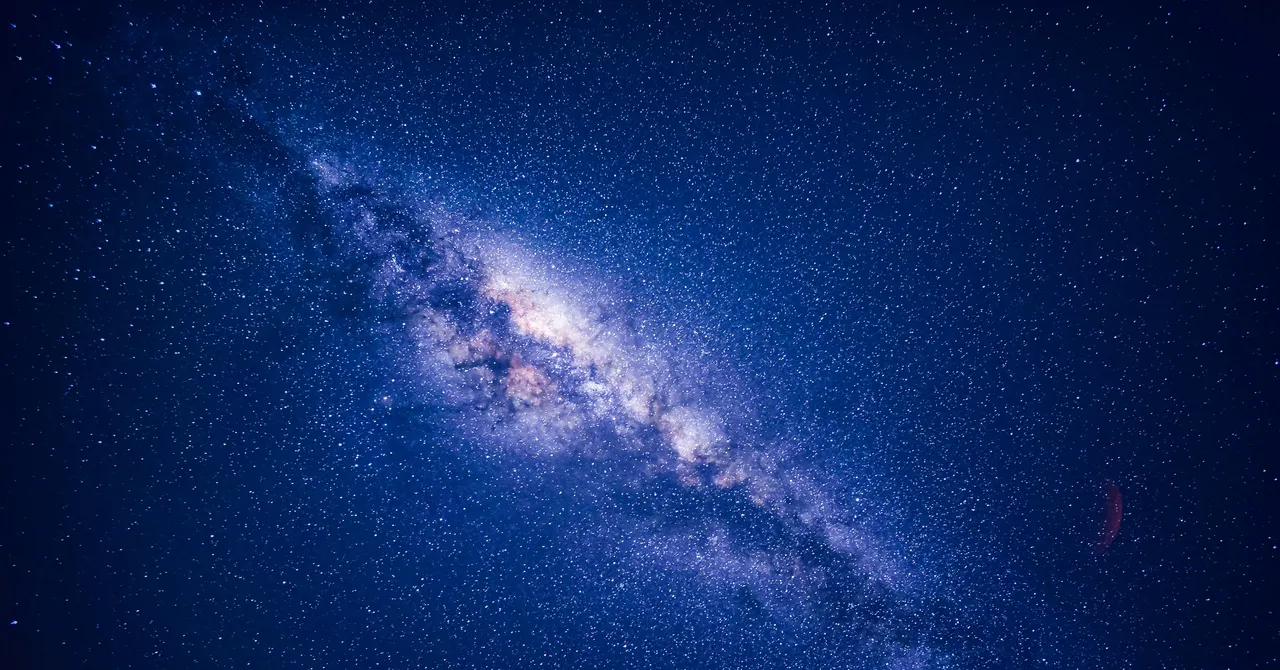
    A Galaxy Composed Almost Entirely of Dark Matter Has Been Confirmed
    Share
    Facebook Twitter LinkedIn Pinterest Email

    Astronomers have just identified what appears to be a cosmic anomaly: a faint galaxy with so few visible stars that, according to calculations, as much as 99.9 percent of its mass is dark matter. The remaining 0.1 percent is conventional matter.

    This galaxy, located about 300 million light-years away, is practically invisible. Only four globular clusters, small concentrations of stars that look like isolated neighborhoods in the middle of the void, stand out. For years, these star collections in the Perseus cluster were considered independent objects.

    Candidate Dark Galaxy-2 is only visible through four globular clusters that contribute to 16 percent of its total brightness. Scientists believe 99.9 percent of this galaxy is dark matter.

    NASA/ESA

    Now, after an exhaustive analysis, a study published in The Astrophysical Journal Letters presents solid evidence that these globular clusters are part of the same galaxy dominated by dark matter. Tentatively named CDG-2 (Candidate Dark Galaxy-2), it is the first galaxy to be detected only by its brightest fragments.

    The authors pooled data from the Hubble, Euclid, and Subaru telescopes, three of the most powerful observatories available. The combined readings reveal an extremely faint glow around the four globular clusters. This residual light is a clear sign of an underlying galaxy so dim that the three telescopes missed it on their own.

    More Than Meets the Eye

    Preliminary analysis indicates that CDG-2 has a total luminosity equivalent to about 6 million suns, with the four globular clusters contributing about 16 percent of that brightness, an unusually large share. This distribution suggests that, despite its low light, the galaxy is a gravitationally bound system, implying a particularly dense dark matter halo. Astronomers estimate that this invisible structure accounts for between 99.94 to 99.98 percent of CDG-2’s total mass.

    According to current models, dark matter constitutes roughly 27 percent of the universe’s total energy density and about 85 percent of its matter. Although the exact nature of what makes up dark matter is still unclear, because it neither emits nor reflects light, scientists infer its existence from its gravitational effects on radiation, visible matter, and the large-scale structure of the cosmos.

    Dark matter is so pervasive throughout galaxies that its presence explains the stability and motion of stars in systems such as the Milky Way. For example, current models indicate that our galaxy is embedded in a halo composed of about 90 percent dark matter.

    However, the case of CDG-2 is extreme: a galaxy with almost no stars, surrounded almost entirely by an invisible halo. These types of systems, so-called “dark galaxies,” are beginning to appear in astronomical records. Beyond their rarity, scientists value them because they serve as natural laboratories for exploring the nature of dark matter and testing current models of galaxy formation.

    This story originally appeared on WIRED en Español and has been translated from Spanish.

    Composed confirmed Dark Galaxy Matter
    Share. Facebook Twitter Pinterest LinkedIn Tumblr Email
    kirklandc008@gmail.com
    • Website

    Related Posts

    NASA’s new dark energy space telescope can also detect killer asteroids

    August 5, 2026

    Detect the Signature of Dark Matter With a DIY Antenna

    July 30, 2026

    Samsung Galaxy Z Fold 8 Ultra vs. Z Fold 7: How the first ‘Ultra’ foldable compares to last year’s model

    July 25, 2026
    Leave A Reply Cancel Reply

    Top Posts

    Nothing CEO says phone prices are going to keep going up

    June 12, 20267 Views

    Google DeepMind Plans to Track AGI Progress With These 10 Traits of General Intelligence

    March 21, 20263 Views

    The AirPods 4 and Lego’s brick-ified Grogu are our favorite deals this week

    October 12, 20253 Views
    Stay In Touch
    • Facebook
    • YouTube
    • TikTok
    • WhatsApp
    • Twitter
    • Instagram
    Latest Reviews

    Subscribe to Updates

    Get the latest tech news from FooBar about tech, design and biz.

    Recent Posts
    • Meetily Lets You Transcribe and Summarize Meetings Without a Subscription—Here’s How
    • These AI Barons Are Ready to Give Away Their Fortunes
    • This Week’s Awesome Tech Stories From Around the Web (Through August 8)
    • How to Disable Gemini in Gmail and Google Docs
    • How ideas of a vast censorship network moved from the online fringe to Trump policy

    Meetily Lets You Transcribe and Summarize Meetings Without a Subscription—Here’s How

    August 9, 2026

    These AI Barons Are Ready to Give Away Their Fortunes

    August 9, 2026

    This Week’s Awesome Tech Stories From Around the Web (Through August 8)

    August 8, 2026

    How to Disable Gemini in Gmail and Google Docs

    August 8, 2026
    Facebook X (Twitter) Instagram Pinterest
    • About Us
    • Contact Us
    • Privacy Policy
    • Terms and Conditions
    • Disclaimer
    © 2026 TechNovaMindset. Designed by By Pro.

    Type above and press Enter to search. Press Esc to cancel.