
Close Menu
Tech Nova Mindset – Empower Innovation and Forward Thinking

    Subscribe to Updates

    Get the latest creative news from FooBar about art, design and business.

    What's Hot

    AI Hacks Are Bad. AI Worms and Viruses Will Be Worse

    August 6, 2026

    OpenAI’s Browser Could Be Hijacked to Spam Your WhatsApp Contacts

    August 6, 2026

    OpenAI Didn’t Notice Its AI Agents Using a Message Board to Plan Their Hacking Spree

    August 6, 2026
    Facebook X (Twitter) Instagram
    Trending
    • AI Hacks Are Bad. AI Worms and Viruses Will Be Worse
    • OpenAI’s Browser Could Be Hijacked to Spam Your WhatsApp Contacts
    • OpenAI Didn’t Notice Its AI Agents Using a Message Board to Plan Their Hacking Spree
    • IEEE Course on Using AI to Modernize Power Grids
    • The Most Dangerous AI Hacking Techniques Still Have Humans in the Loop
    • Puzzle Corner | MIT Technology Review
    • AI Influencers Are Heading Into Uncharted Territory
    • The Download: NASA’s new telescope and Chinese tech import curbs
    Tech Nova Mindset – Empower Innovation and Forward Thinking
    • Home
    • Gadgets
    • Reviews
    • Tech News
    • Future Tech
    • AI & Robotics
    • How-To Guides
    • More
      • Cybersecurity
      • Startups & Innovation
    Tech Nova Mindset – Empower Innovation and Forward Thinking
    Home»Future Tech»The science behind why some auroras have such stunning wave patterns
    Future Tech

    The science behind why some auroras have such stunning wave patterns

    kirklandc008@gmail.comBy kirklandc008@gmail.comFebruary 9, 2026No Comments3 Mins Read
    Facebook Twitter Pinterest LinkedIn Tumblr Email
    The science behind why some auroras have such stunning wave patterns
    Share
    Facebook Twitter LinkedIn Pinterest Email

    February 8, 2026

    1 min read

    Add Us On GoogleAdd SciAm

    The science behind why some auroras have such stunning wave patterns

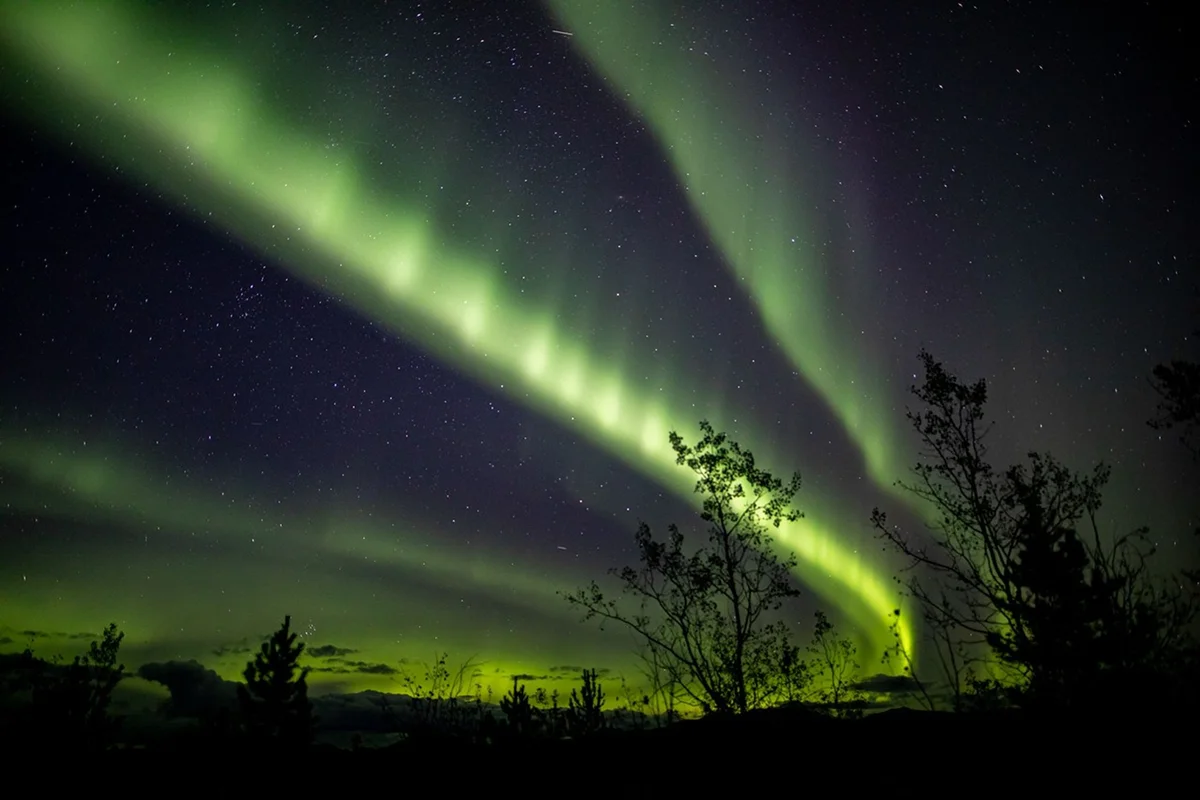
    Auroras, shimmering bands of light that shoot through the night sky near the Earth’s poles, can follow patterns known as arcs

    By Jackie Flynn Mogensen edited by Claire Cameron

    Green auroral arcs extend across the sky in northwestern Canada in 2019

    Auroras are nature’s most special light show: when charged particles from the sun hit our atmosphere, they can generate bright colors that dance across the night sky near the Earth’s poles. Auroras can come in various forms, including bands, rays, patches and more.

    But why auroras form these patterns is less clear. Now, researchers say they’ve identified the “battery” that powers at least one kind of aurora—aurora arcs.

    A green auroral arc appears above the clouds in this photo taken by an astronaut aboard the International Space Station in 2014

    On supporting science journalism

    If you’re enjoying this article, consider supporting our award-winning journalism by subscribing. By purchasing a subscription you are helping to ensure the future of impactful stories about the discoveries and ideas shaping our world today.

    In a new study published in Nature Communications, scientists describe how charged particles in our atmosphere become powered up by “Alfvén waves,” a special kind of plasma wave that travels along Earth’s magnetic lines and acts like a “space battery,” according to NASA. Auroral arcs form when fast-moving electrons, juiced by Alfvén waves, hit atoms in our atmosphere, releasing light in towering bands.

    A panorama of the Northern Lights across the northern, eastern and southern sky on February 27, 2025 near Churchill, Manitoba

    The discovery was something of a stroke of luck, made possible thanks to synchronized measurements of an auroral arc in 2015 by both military and NASA spacecraft. “These combined observations provided different viewpoints over a long enough time to reveal more about the conditions in space that helped create the arc,” NASA said in a statement.

    Although the sun’s latest activity cycle has likely already peaked, 2026 is still expected to see plenty of auroras, with the season for the northern hemisphere running through March.

    It’s Time to Stand Up for Science

    If you enjoyed this article, I’d like to ask for your support. Scientific American has served as an advocate for science and industry for 180 years, and right now may be the most critical moment in that two-century history.

    I’ve been a Scientific American subscriber since I was 12 years old, and it helped shape the way I look at the world. SciAm always educates and delights me, and inspires a sense of awe for our vast, beautiful universe. I hope it does that for you, too.

    If you subscribe to Scientific American, you help ensure that our coverage is centered on meaningful research and discovery; that we have the resources to report on the decisions that threaten labs across the U.S.; and that we support both budding and working scientists at a time when the value of science itself too often goes unrecognized.

    In return, you get essential news, captivating podcasts, brilliant infographics, can’t-miss newsletters, must-watch videos, challenging games, and the science world’s best writing and reporting. You can even gift someone a subscription.

    There has never been a more important time for us to stand up and show why science matters. I hope you’ll support us in that mission.

    auroras Patterns science stunning wave
    Share. Facebook Twitter Pinterest LinkedIn Tumblr Email
    kirklandc008@gmail.com
    • Website

    Related Posts

    Advancing next-gen AI with materials science innovation

    July 21, 2026

    This Free macOS App Will Tell You All About Your Nondescript USB-C Cable

    July 15, 2026

    The US Approves Launch of Mirror Satellite That Can Reflect Sunlight and Illuminate the Earth at Night

    July 15, 2026
    Leave A Reply Cancel Reply

    Top Posts

    Nothing CEO says phone prices are going to keep going up

    June 12, 20267 Views

    Google DeepMind Plans to Track AGI Progress With These 10 Traits of General Intelligence

    March 21, 20263 Views

    The AirPods 4 and Lego’s brick-ified Grogu are our favorite deals this week

    October 12, 20253 Views
    Stay In Touch
    • Facebook
    • YouTube
    • TikTok
    • WhatsApp
    • Twitter
    • Instagram
    Latest Reviews

    Subscribe to Updates

    Get the latest tech news from FooBar about tech, design and biz.

    Recent Posts
    • AI Hacks Are Bad. AI Worms and Viruses Will Be Worse
    • OpenAI’s Browser Could Be Hijacked to Spam Your WhatsApp Contacts
    • OpenAI Didn’t Notice Its AI Agents Using a Message Board to Plan Their Hacking Spree
    • IEEE Course on Using AI to Modernize Power Grids
    • The Most Dangerous AI Hacking Techniques Still Have Humans in the Loop

    AI Hacks Are Bad. AI Worms and Viruses Will Be Worse

    August 6, 2026

    OpenAI’s Browser Could Be Hijacked to Spam Your WhatsApp Contacts

    August 6, 2026

    OpenAI Didn’t Notice Its AI Agents Using a Message Board to Plan Their Hacking Spree

    August 6, 2026

    IEEE Course on Using AI to Modernize Power Grids

    August 5, 2026
    Facebook X (Twitter) Instagram Pinterest
    • About Us
    • Contact Us
    • Privacy Policy
    • Terms and Conditions
    • Disclaimer
    © 2026 TechNovaMindset. Designed by By Pro.

    Type above and press Enter to search. Press Esc to cancel.